Embarking on the journey to overcome addiction is a profound challenge. Many individuals find that a holistic approach, which considers the whole person rather than just the addiction, offers the deepest pathway to healing and lasting recovery. Holistic recovery supports not only physical rehabilitation but also mental and spiritual growth, creating a sustainable foundation for wellness. If you are looking for comprehensive support, such as IOP in Boston, exploring holistic options can greatly enhance your recovery experience.
The holistic philosophy recognizes that substance use disorder often intersects with lifestyle, environment, mental health, and even spiritual fulfillment. Building true resilience requires more than the absence of substances. By focusing on developing the mind, body, and spirit together, individuals can reclaim their lives and create an enduring sense of well-being and purpose.
Understanding Holistic Recovery
Holistic recovery goes beyond addressing the immediate symptoms of addiction. It aims to unravel the underlying factors that contribute to substance use, such as stress, trauma, or lack of purpose. Integrating a range of healing practices and therapies, it encourages individuals to nurture every aspect of themselves. This process fosters not only sobriety but also genuine recovery through mental clarity, physical health, and inner peace.
Unlike exclusively clinical frameworks that may focus heavily on medication or behavioral therapy, holistic recovery weaves traditional and alternative approaches together. Some individuals may pair professional medical treatment with nutritional counseling, creative therapies, or mindfulness practices. Each part of this model works together, contributing to deeper healing and personal transformation. According to the Psychology Today overview of addiction, a multifaceted approach is often necessary to achieve lasting change.
Key Components of Holistic Recovery
Several foundational elements typically form the core of a holistic recovery plan:
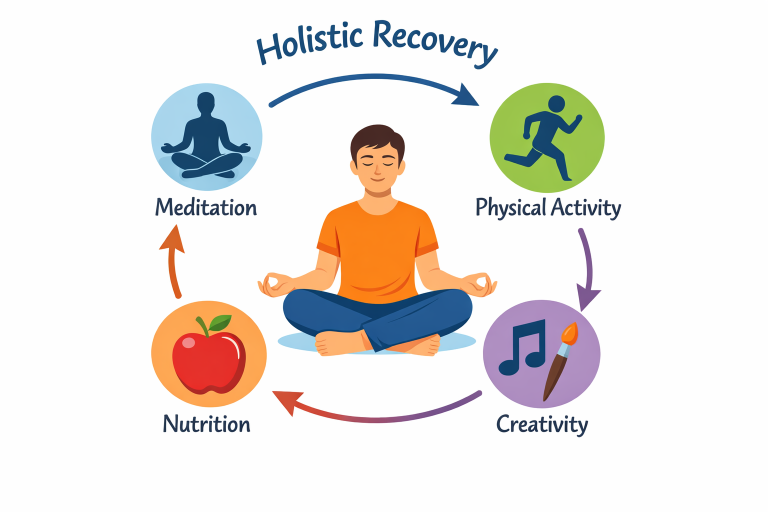
- Mindfulness and Meditation: By supporting present-moment awareness, these techniques help individuals manage cravings, reduce stress, and gain emotional regulation. Regular meditation reduces anxiety and has neurobiological benefits.
- Physical Activity: Exercise, including activities like yoga or tai chi, enhances physical health while also supporting mental and emotional resilience. Regular movement diminishes depressive symptoms and improves self-esteem, which are often impediments in recovery.
- Nutrition Therapy: Balanced nutrition is critical for stabilizing moods and supporting brain chemistry as the body heals. Healthy eating habits restore energy, build immunity, and can help lower relapse rates.
- Art and Music Therapy: Creative therapies help process and release suppressed emotions. Engaging in music or art can offer healthy outlets for self-expression, allowing individuals to communicate their experiences and heal through creativity.
Other important aspects of holistic recovery may include practices such as acupuncture, massage therapy, and journaling. These modalities can further comfort the mind and body, creating more pathways for relaxation, introspection, and growth. Many holistic programs also emphasize outdoor time, animal-assisted therapy, and nature walks, as these experiences can restore balance and provide uplifting energy through connection with the environment.
Benefits of Holistic Approaches
Incorporating holistic practices into addiction recovery generates a wealth of benefits:
- Comprehensive Healing: Addressing the whole person leads to deeper, more lasting recovery by treating the physical, psychological, and spiritual roots of addiction.
- Personal Empowerment: Holistic methods foster self-discovery and self-management, giving individuals the tools to actively participate in their own healing. This empowerment can boost motivation for ongoing recovery.
- Reduced Relapse Rates: Diverse coping strategies, better emotional regulation, and improved general health together support lower rates of relapse. Peer-reviewed studies noted in the National Institutes of Health database support the use of complementary practices for long-term recovery.
On top of these tangible improvements, many people report feeling more hopeful and connected after embracing holistic recovery methods. The sense of agency and mastery over one’s life increases as self-knowledge grows. Moreover, individuals frequently develop stronger relationships, both with themselves and with supportive communities, resulting in deeper empathy, compassion, and social well-being.
Implementing Holistic Practices
Transforming a recovery journey requires daily commitment and a willingness to explore new strategies. Some ways to introduce holistic elements into your life include:
- Establishing a Routine: Building consistency in positive habits, such as daily mindfulness exercises or regular mealtimes, strengthens new neural pathways and disrupts harmful cycles.
- Seeking Professional Guidance: Collaborate with healthcare professionals, therapists, nutritionists, or holistic practitioners to design a personalized recovery plan that reflects your individual needs and preferences.
- Engaging in Support Groups: Recovery groups or group therapies can encourage shared learning and community support, both of which are crucial for overcoming isolation and building accountability.
Experimenting with new healing modalities can be a rewarding process in itself. Start small; perhaps add five minutes of mindful breathing at the beginning of each day or try a new creative outlet that appeals to you. Lean on guidance from professionals and your recovery support network to discover holistic methods that resonate most strongly. Journaling about your experiences, even briefly, can help you track personal growth and gather insights into what strategies have the greatest impact on your well-being.
Challenges and Considerations
Holistic recovery is not one-size-fits-all. Some individuals may face barriers such as limited access to resources or a lack of familiarity with alternative therapies. Personal medical conditions can also impact the suitability of certain practices, so consulting qualified professionals is essential for safety and effectiveness. Being flexible and patient as you integrate new approaches into your life can ensure positive long-term outcomes.
Additionally, certain alternative therapies may not be supported by strong scientific evidence, so it is important to maintain a critical perspective. It may take time to discover which modalities best suit your unique journey. Engaging in open communication with your care team, being honest about your experiences, and remaining adaptable will better position you for a successful holistic recovery. Don’t hesitate to modify your recovery plan as your needs and preferences evolve.
Conclusion
Choosing a holistic path to addiction recovery creates opportunities for meaningful, sustainable change. By nurturing the mind, body, and spirit, individuals can heal at every level, reclaiming not just sobriety but a renewed sense of purpose and connection. A comprehensive, personalized approach lays the groundwork for enduring recovery, better overall health, and a brighter future.
Ultimately, holistic recovery is a journey of continuous discovery, marked by self-compassion and hope. Seeking whole-person healing can empower you to move beyond addiction into a new chapter characterized by balance, self-awareness, and genuine fulfillment. Whether you are at the beginning of your recovery or reassessing your current path, broadening your perspective to include holistic modalities can help reinforce your resilience and spark transformation at every stage.