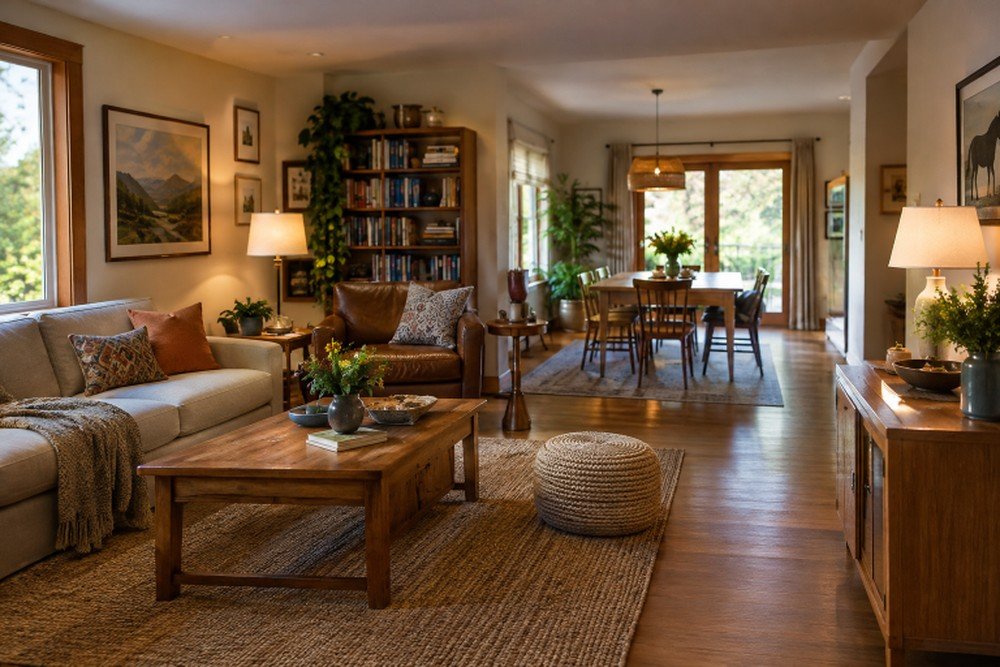
A personal home is not built by copying a catalog page. It develops through the objects, colors, comforts, and routines that matter to the people living there. Whether you are starting with an empty room or refreshing a familiar one, handcrafts personalized home-decor wall art can provide a meaningful starting point for a space that feels distinctly yours.
The goal is not perfection. A welcoming home should make daily life easier while leaving room for memories, hobbies, changing seasons, and the people who gather there. Begin with what you already love, then make thoughtful additions over time.
Approaching a home gradually also takes pressure out of decorating. You do not need to decide on every color, frame, rug, or accessory at once. Living in a space for a while can reveal where you naturally sit, what you reach for most often, and which areas need more comfort or attention.
Key Takeaways
- Personal style comes from real memories, interests, and everyday habits.
- One meaningful focal point can give an entire room direction.
- Texture, natural materials, and warm lighting make simple rooms feel more complete.
- Function should guide decorating choices before trends do.
- Editing displays helps meaningful pieces stand out without creating clutter.
- Decorating slowly can help each new item feel considered rather than temporary.
Why Personal Style Matters More Than Perfect Style
Matching furniture sets and carefully staged rooms can look polished, but they do not always feel lived-in. Personal style is more lasting because it comes from your own history: a favorite painting, an inherited table, a collection of cookbooks, or colors that remind you of a place you love. Good interior design considers both how a room looks and how it supports the people using it.
A reading corner, for example, can be built around one comfortable chair, a lamp, a stack of beloved books, and a framed family photo. It does not need to fit a named style to feel intentional.
Personal does not have to mean overly sentimental or crowded. A room can feel individual through subtle choices, such as a preferred shade of blue, pottery collected over time, or a print that reflects a favorite city or pastime. The strongest spaces often balance familiar details with enough simplicity that the room feels restful.
Start With the Story of the Room
Before buying decor, decide what each room should communicate. Ask yourself: What should this room help us feel? What happens here most often? Which possessions already have meaning? What is missing: comfort, storage, light, or personality?
A room with a clear purpose is easier to decorate because every choice has a job. A dining room may be centered on conversation and shared meals, while a home office may need calm, useful storage, and fewer distractions.
It can help to describe the room in a few simple words before making changes. For instance, a living room might be “comfortable, bright, and conversation-friendly,” while a guest room could be “quiet, practical, and warm.” Those words become a useful filter when deciding whether a new item truly belongs.
Use Meaningful Pieces as Focal Points
Choose one item with visual presence and a story behind it, then let it guide the room. This could be a large artwork above a sofa, a handmade bowl on an entry table, a travel photograph in a bedroom, or an inherited mirror in a dining area.
Give that piece breathing room. A focal point loses its impact when it is surrounded by too many competing objects. Keep nearby colors and materials connected, but not identical.
Scale matters here. A small piece of artwork can feel lost above a wide sofa, while a very large object may overwhelm a compact room. When possible, arrange the furniture first, then choose a focal piece that feels proportionate to the wall, tabletop, or area where it will be displayed.
Layer Texture for Warmth and Depth
Even a neutral room can feel inviting when it includes varied surfaces. Combine smooth ceramic with rough woven fibers, soft linen with wood, or aged metal with glass. A simple approach is to include one soft surface, one textured or natural surface, and one reflective surface in each room.
Try a linen pillow on a leather chair, a woven basket beside a wood console, or a ceramic vase on a stone tray. These small contrasts add depth without requiring a dramatic color palette.
Texture is especially helpful when you prefer restrained colors. A cream, tan, gray, or soft green room can still feel layered when it includes a knit throw, a wood accent, a woven shade, and a glass or metal detail. Varying the finish of objects prevents a simple palette from feeling flat.
Bring Nature Into Everyday Spaces
Natural light, greenery, wood, stone, and earth-inspired colors can make rooms feel calmer and less formal. Renters can add a small plant near a window, use baskets for storage, hang landscape artwork, or bring in linen, rattan, jute, clay, and warm green accents.
Plants are optional, especially in low-light rooms or busy households. If you add them, choose varieties that suit your available light and care routine. Moisture, ventilation, and cleanliness also matter for indoor air quality.
If live plants are not practical, natural influence can come from other sources. A branch in a vase, botanical artwork, a wood-framed mirror, or a textured basket can soften a room without adding another care task. Choose materials that suit how the space is used rather than forcing a look that is difficult to maintain.
Make the Entryway Feel Welcoming
The entryway introduces the rest of the home, so make it useful first. A small table or shelf, a mirror, a basket for keys, a soft lamp, and meaningful artwork may be all it needs. In a narrow hall, one well-placed detail is more effective than several crowded accessories.
Consider the first few minutes after arriving home. A hook for a bag, tray for mail, place for shoes, or small bowl for keys can prevent everyday items from spreading into the rest of the house. Even a very small entry can feel intentional when it supports this simple routine.
Design Around Real Routines
Arrange rooms around the way you actually live. Put a reading chair near light, create a drop zone by the door, place storage near frequently used items, and use soft lamps in spaces used at night. Prioritizing flow and function before finishes helps a home feel easier to use every day.
Leave clear paths through seating areas and avoid forcing furniture into positions that look good but block movement. Comfort is not an afterthought. It is part of the design.
Think about the small repeated actions that happen in each space. If blankets are always carried into the living room, place a basket nearby. If paperwork gathers on the kitchen counter, create a designated spot for it. Decor is more successful when it works with real habits rather than asking everyone to adopt new ones.
Mix Old, New, Handmade, and Found Objects
A room gains character when everything does not come from the same store or era. Pair a modern sofa with vintage frames, handmade pottery, a family side table, or a market find. To keep the mix cohesive, repeat a color, material, or shape in more than one place.
Not every item needs an important history, but a few pieces with visible character can make newer furnishings feel less generic. A worn wooden stool, a hand-thrown mug, or an older brass frame can introduce variation and make a room feel assembled over time rather than purchased all at once.
Add Personality Without Creating Clutter
A collected home still needs editing. Remove objects that no longer serve a purpose, group similar items together, and leave open space around the pieces you value most. Rotate seasonal items or sentimental displays instead of showing everything at once.
Useful objects deserve easy access. Beautiful objects deserve enough space to be noticed. Both can belong in the same room.
Grouping items can make displays feel calmer than scattering them across every available surface. Three related objects on a tray, a small row of favorite books, or a set of framed photographs can read as one intentional arrangement. Leave some shelves and tabletops partly open so the eye has places to rest.
Personalize a Home on Any Budget
Personality does not depend on expensive purchases. Rearrange furniture, frame postcards or handwritten recipes, display books tied to your interests, refresh a lampshade, or gradually create a gallery wall. Decorating slowly often leads to better choices because each addition has time to earn its place.
Before buying something new, consider whether an existing item could be used differently. A chair from another room may solve an empty corner, a favorite scarf can add color when displayed thoughtfully, and storage baskets can be moved where they are needed most. Small changes often have more impact than a long shopping list.
A Simple Seven-Day Home Refresh
- Day One: Identify rooms that feel impersonal or inconvenient.
- Day Two: Remove clutter and unused decor.
- Day Three: Gather meaningful items from storage.
- Day Four: Improve lighting with lamps or warmer bulbs.
- Day Five: Add one natural material or touch of greenery.
- Day Six: Rearrange furniture for easier movement and comfort.
- Day Seven: Step back, edit, and keep only what feels genuine.
This refresh works best when the goal is progress rather than a complete makeover. Take a quick photo before you begin and another at the end of the week. Seeing the room from a new angle can make it easier to notice what has improved and what still needs attention.
Common Mistakes to Avoid
- Buying every item from one collection.
- Filling every wall, shelf, and tabletop.
- Ignoring scale and walkways.
- Choosing decor only because it is popular online.
- Hiding sentimental pieces where no one can enjoy them.
- Designing for photographs instead of everyday life.
- Adding storage or decor without considering how to maintain it.
These mistakes are easy to correct because they usually require editing rather than starting over. Remove one unnecessary item, move one piece of furniture, or give a favorite object a more visible home. Small adjustments can make a room feel clearer, more useful, and more personal.
Conclusion
A warm, personal home does not need a perfect plan or a large budget. Choose objects with meaning, layer comfort and texture, support your routines, and allow the space to change with you. The result will feel less like a display and more like home.
The most successful rooms continue to evolve as life changes. New interests, family milestones, moves, and everyday routines will naturally shape what belongs there. Leave room for that evolution, and let your home reflect not only what you admire, but also the life you are building within it.