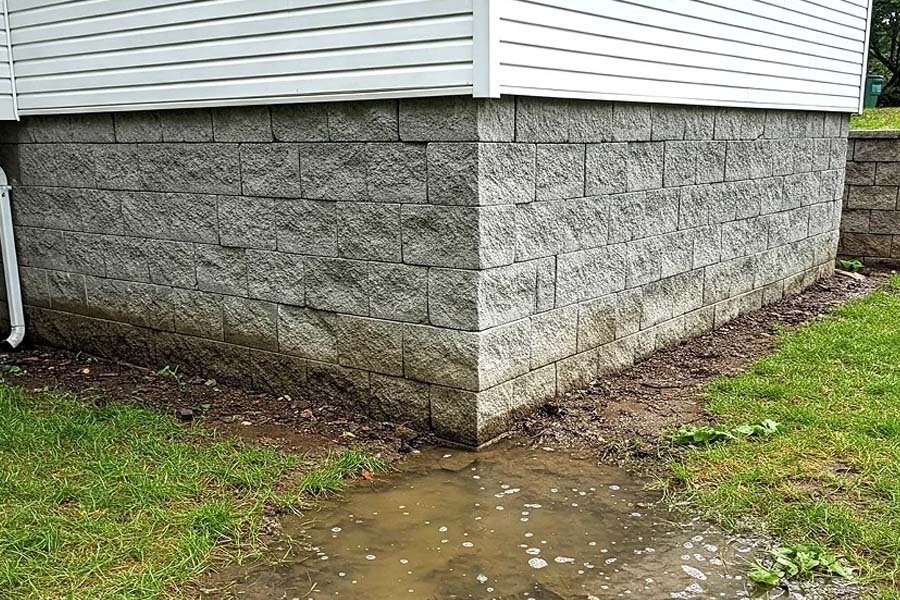
The summer storms are able to expose issues surrounding a home that is barely detectable over a prolonged period of dry weather. Excessive rainfall alters the water flow in lawns, flower beds, driveways and soil around the foundation. In a couple of storms, the homeowners can observe puddles, muddy spots, bare roots, or pooling water near the exterior walls. These indications may indicate the grading, soil, and erosion or drainage problems which are worth considering before they become costly problems.
As a homeowner, trying to find practical solutions in managing stormwater, one of the helpful aspects of the seasonal maintenance can be a collaboration with a Fishers gutter cleaning company. Clear gutters and downspouts aid in directing the roof runoff to suitable discharge locations rather than letting the concentrated water accumulate next to the foundation. Although gutter cleaning cannot eliminate all drainage problems, it can assist in alleviating one of the major causes of unneeded moisture around the residence.
Why Summer Rain Reveals Problems
The ground can conceal changes in dry weather. Landscaping can be changed, and small drainage can be created without causing much attention, and soil can settle gradually. When the rains come, though, water takes the path of least resistance.
A heavy storm basically conducts a temporary test of the drainage system of the property. Where the ground is not falling down as it should, water reveals low places, and pursues new lines of direction, and gathers where it cannot. It is thus obvious that a lot can be learned by homeowners by noting the occurrences immediately after a huge rainfall.
Frequent storms are especially telling. A single heavy rain can cause temporary standing water but when the same issue recurs due to a series of storms, it is possible to conclude that there might be something that has altered in the property.
Settling Soil Can Change the Grade
The soil around a foundation does not necessarily be at the same level as it was before. Gradual settling may be caused by new construction, landscaping activities, natural compaction, and repeated wet-and-dry cycles.
The slope may alter when the soil is compacted around the house. The ground instead of diverting water off the foundation can form a small depression that traps water against the exterior wall.
Such changes can be minor. A lawn may appear as a normal one during dry seasons, but when it rains in a few minutes having a low spot is exposed. The homeowners should be aware of areas where puddles always develop especially when they seem to be at the foundation walls, basement windows, or other open areas.
Erosion Can Switch New Waterways
When rain water falls to the earth, it does not just evaporate. The water can be washed away by a fast flow of water and soil and mulch will be washed away especially in sloping land or where the water is concentrated in a specific area.
With time, erosion may result in shallow channels. These channels can become more effective in channeling water to the foundation.
Erosion is indicated by visible roots, moved mulch, shallow soil gullies, bare areas and soil accumulating at the base of a slope. These hints might appear as small landscaping issues, yet these could be the signs that rain is passing the place in an unwanted manner.
The special attention should be given to downspouts. Repeating storms with the release of a vast amount of water on a small territory can cause soil erosion and form a channel due to downspout. Redirecting the discharge further away in the foundation where suitable can be used to minimize concentrated runoff.
Gutters Are Part of the Drainage Picture
The drainage system of a house starts above the ground. Roofs gather much rain water and gutters are formed to collect the water and channel it to downspouts.
When the gutters are clogged with leaves, twigs, and other debris, the water can overflow into the sides. The runoff may fall on the side of the house instead of flowing down the drainage path which was supposed to be used.
This is the reason why gutter cleaning services can be fitted quite well in summer foundation maintenance. Maintaining gutters and downspouts will have a regulated course of the roof run-off, making sure that the areas susceptible to weathering are not exposed.
Maintenance of gutters is not all of the solution though. Even the cleanest gutters in the world would not help to counter the slope of soil towards the home or a drainage system that cannot sustain the runoff of the property. The homeowners ought to think over the whole route which the water follows on its way off the roof to the ground and off-site.
Watch for Standing Water After Storms
One of the most common signs to notice following a summer storm is standing water. How the water appears is not the big question, but where it is gathered, and how many days it will stay.
The presence of a small puddle that fades away soon might not be the sign of a serious issue. Water that is constantly reoccurring at the base should be given more attention.
Check areas around:
– Foundation walls
– Basement windows
– Downspouts
– Exterior stairways
– Flat areas of the garden.
– Driveways and walkways
– Bed gardens along the house.
Photographing post-major storms can also assist homeowners in monitoring changes. A comparison of pictures taken over a number of weeks can show that a low point or erosion channel is getting deeper.
Search Cracks and Other Changes
Rain seldom causes problems with the foundation on its own but can amplify the existing changes to be more visible. Overrun soil and moisture may influence the environment surrounding a foundation, and water intrusion may render some warning signs more apparent.
Following heavy rain, homeowners should examine accessible places to detect any alterations like new or enlarging cracks, dampness, musty smells or water getting into a basement or crawl space.
Not all cracks imply that a foundation has been structurally damaged. Nevertheless, new or emerging signs must not necessarily be overlooked. The appearance of a problem could be cosmetic, a problem with water management, or something that needs further concern, another drainage expert could know this.
Landscaping Drainage Can be influenced
Depending on the plants, mulch, garden edging and other features of landscaping can alter the movement of water in and out of a property. Flower beds created by adding soil, such as, may sometimes vary the original grade.
Mulch may also be displaced during intense storms. When it constantly drains in the direction of the base or gathers in the drainage sources, it can be a sign that the runoff is more intense or divergent than predicted.
Areas where landscaping intersects the foundation should also be observed by the homeowners. The idea is to ensure that a surface is created that will push water away, instead of towards the house.
Summer Storms Offer a Valuable Inspection Opportunity
Homeowners are equipped with information by the rainy weather when they cannot get the same information during the dry seasons. Homeowners can take advantage of heavy rainfall to test the effectiveness of their property drains instead of taking every storm as an inconvenience.
Go round the property when the rain has subsided and observe the movement of water. Inspect the discharge of downspouts, overflow of gutters, and soil erosion. Alarm areas where water gathers or flows into the house.
Such observations may be used to detect minor issues before they escalate to bigger drainage issues.
Preventive Maintenance Can Protect the Foundation Area
Maintenance of foundation is not just restricted to the inspection of the foundation. It also deals with the treatment of the soil, landscaping, gutters, downspouts and other aspects which affect the movement of water.
Stormwater management can be improved by cleaning the gutters regularly, ensuring the proper grading, erosion repair, ensuring the drainage paths are clear and watching the standing water.
Above all, homeowners ought to take action in response to recurrent warning signals. When the same puddle has been formed following each storm, the soil has been washed away, or water is always heading in the direction of the foundation, then the problem is worth inquiry.
Conclusion
Summer rain may be a natural stress test of the surroundings of a house. Recurring storms may reveal settling soil, bad grading, erosion, clogged gutters and drainage patterns that otherwise would be covered by dry weather.
Homeowners can detect any change earlier by observing the property after a rainfall and maintaining daily routine maintenance. One of the most basic tasks that can be used to manage the roof runoff is gutter cleaning, with the overall movement of water in the property being managed by proper grading and drainage. All of these measures combined can enable the homeowner to ensure that excess moisture is kept out of the foundation and that emerging issues are dealt with prior to becoming even harder to handle.