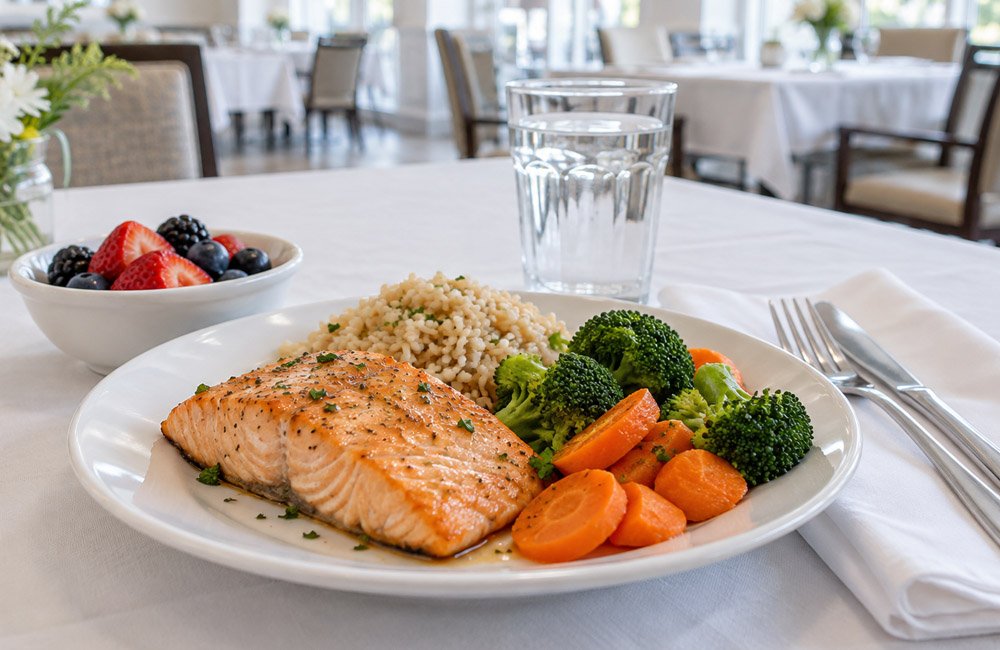
My grandmother ate the same breakfast every morning for the last decade of her life: half a piece of toast, a splash of coffee, and whatever pill bottle happened to be sitting on the counter. Nobody in the family thought much about it at the time. She said she was not hungry. She said she had never been a big eater. We believed her.
It was only later, after she moved into a personal care home and started eating three real meals a day with other people at a table, that we understood what had actually been happening. She was not uninterested in food. She was tired of cooking for one, tired of eating alone, and quietly slipping into the kind of under-eating that health professionals consider one of the most common and most overlooked risks of advanced age.
This is the part of senior nutrition that families rarely hear about until there is a problem. After 75, the way an older adult eats changes in importance. The same skipped meal that meant nothing at 50 can set off a cascade at 80. Here is why structured, balanced meals matter so much in the later chapters of life, and what good senior care dining actually looks like behind the scenes.
Appetite Shrinks, But Nutritional Needs Do Not
One of the strange realities of aging is that the body needs fewer calories but just as many nutrients, and sometimes more. An 80-year-old who is less active than they once were may only need a modest amount of energy from food, but their need for protein, calcium, vitamin D, B12, and hydration stays high or even climbs.
That creates a narrow path to walk. Every bite has to count. A younger person can afford a day of grazing on crackers and tea. An older adult doing the same thing can end up short on protein before lunchtime, and low protein intake is directly tied to muscle loss, slower wound healing, weaker immunity, and a higher risk of falls.
Muscle matters more than most families realize. After age 70, adults lose muscle mass at an accelerating rate unless they actively fight back with protein and movement. Less muscle means less stability, less strength to catch yourself, and less resilience when illness strikes. Three balanced meals a day, each with a real source of protein, is one of the simplest defenses available.
Why Skipping Meals Hits Harder With Age
There are several reasons an older adult might skip a meal without anyone noticing. Medications can suppress appetite or leave a metallic taste in the mouth. Sense of smell and taste dull over the years, making food simply less appealing. Dental problems or ill-fitting dentures can turn chewing into a chore. Depression and loneliness, both common among seniors living alone, are powerful appetite killers.
The danger is that skipping meals does not just mean fewer calories. It can mean:
- Blood sugar swings that cause dizziness, confusion, and falls
- Missed timing with medications that need to be taken with food
- Dehydration, because much of daily fluid intake comes from meals and the drinks that accompany them
- A slow, steady weight loss that family members attribute to “just getting older” when it is actually preventable
That last point deserves emphasis. Unintentional weight loss in older adults is not a normal part of aging. It is a warning sign, and it is far easier to prevent than to reverse.
The Loneliness Factor: Why Eating Alone Changes Everything
Ask anyone who works in senior care dining and they will tell you the same thing: residents who eat in a dining room with other people eat more, and they enjoy it more. This is not sentiment. It is one of the most consistent observations in the field.
Eating alone, day after day, year after year, erodes the whole ritual of a meal. Cooking for one feels pointless. Setting the table feels absurd. Sitting in silence with a sandwich in front of the television becomes the norm, and portions quietly shrink along with the motivation.
A shared dining room reverses that dynamic. There is a reason to show up at noon. There are people to talk to, a menu to consider, a server who knows you take your coffee with cream. Appetite is surprisingly social, and for many older adults, the company at the table does as much for their intake as the food itself.
What a Well-Run Senior Care Kitchen Actually Does
When families tour a senior care community, they often focus on the rooms and the hallways. The kitchen deserves equal attention, because a well-run dining program is doing quiet, careful work all day long. Here is what to look for.
Structured meals and snacks. Three balanced meals plus daily snacks provide a rhythm that the body can rely on. Regular timing helps stabilize blood sugar, supports medication schedules, and prevents the long empty stretches that lead to over-tiredness and poor choices.
Dietary accommodations done gracefully. A good nutrition team can adapt menus for diabetic needs, gluten intolerance, low sodium requirements, heart conditions, or a vegan preference, without making the resident feel like the odd one out. The best kitchens treat a special diet as a puzzle to solve, not a burden to manage.
Monitoring that catches problems early. Care staff in quality communities keep an eye on intake, weight, and overall wellness. If a resident who normally cleans her plate starts leaving half of it, someone notices and follows up. That early attention can catch a medication side effect, a dental issue, or an illness before it becomes a hospital stay.
Food safety taken seriously. Older immune systems are less forgiving of sloppy handling, storage, or temperature control. Sanitation protocols in a senior kitchen are not bureaucratic box-checking. They are a health safeguard.
Dignity at every meal. The best dining programs find ways to preserve independence, offering choices, respecting preferences, and serving food in a way that lets residents do as much for themselves as they safely can. Being served is not the same as being infantalized, and the difference shows in how a dining room feels.
Questions Families Should Ask
If you are evaluating a senior care community, sit down and eat a meal there if you can. Then ask a few pointed questions. Who plans the menus, and are they prepared fresh on site? How are special diets handled? What happens when a resident will not eat? How does staff track weight and nutrition over time? Can families share a meal with their loved one?
The answers tell you whether dining is treated as a core part of care or as a cost to be minimized.
The Bottom Line
After 75, food stops being just food. It becomes medicine, routine, social glue, and a daily signal of whether things are going well or quietly slipping. Three balanced meals a day, eaten in good company and planned by people who know what an aging body needs, is one of the most powerful and least glamorous forms of health care there is.
My grandmother gained weight in her first three months at her care home, and with it came back some of the spark we thought age had taken for good. It turned out age had not taken it. A lonely kitchen had. If someone you love is living on toast and tea, it may be time to look closely at what is really on their plate, and who is sitting across from them while they eat.