The Evolution of Regenerative Aesthetics in Modern Dermatology
The landscape of aesthetic treatments is undergoing a profound transformation. We are moving beyond temporary fixes towards innovative approaches that harness the body’s natural regenerative capabilities. This exciting shift, known as regenerative aesthetics, focuses on stimulating cellular renewal and tissue repair for more lasting and harmonious results.
Central to this evolution are advanced technologies, such as picosecond lasers, which offer unprecedented precision in addressing a range of concerns. These sophisticated tools represent a new era in how we approach various aesthetic skin and body treatments, delivering efficacy with enhanced safety.
We will delve into the science behind regenerative aesthetics, exploring the unique mechanism of picosecond lasers and how they differ from traditional methods. We will examine their effectiveness in diverse applications, from challenging tattoo removal to nuanced pigmentary concerns. We will also discuss crucial safety considerations and the role of adjunctive therapies in optimizing patient outcomes. Join us as we uncover how these cutting-edge techniques are redefining our expectations for skin health and appearance.
For decades, aesthetic dermatology largely relied on ablative techniques that removed superficial skin layers or utilized thermal energy to induce a healing response. While effective, these methods often came with significant downtime and a higher risk of adverse effects. The advent of regenerative aesthetics, particularly driven by ultra-short pulse laser technology, marks a significant evolution, shifting the focus from controlled injury to sophisticated cellular signaling and natural tissue repair.
Picosecond lasers, which emerged in the early 2010s, exemplify this paradigm shift. Unlike their nanosecond predecessors, picosecond devices deliver energy in trillionths of a second (10⁻¹² seconds), fundamentally altering how light interacts with target tissues. This ultra-fast pulse duration generates intense photomechanical energy rather than primarily photothermal energy. This distinction is crucial, as it allows for the precise fragmentation of target particles—whether tattoo ink or melanin—while minimizing collateral thermal damage to surrounding healthy tissue.
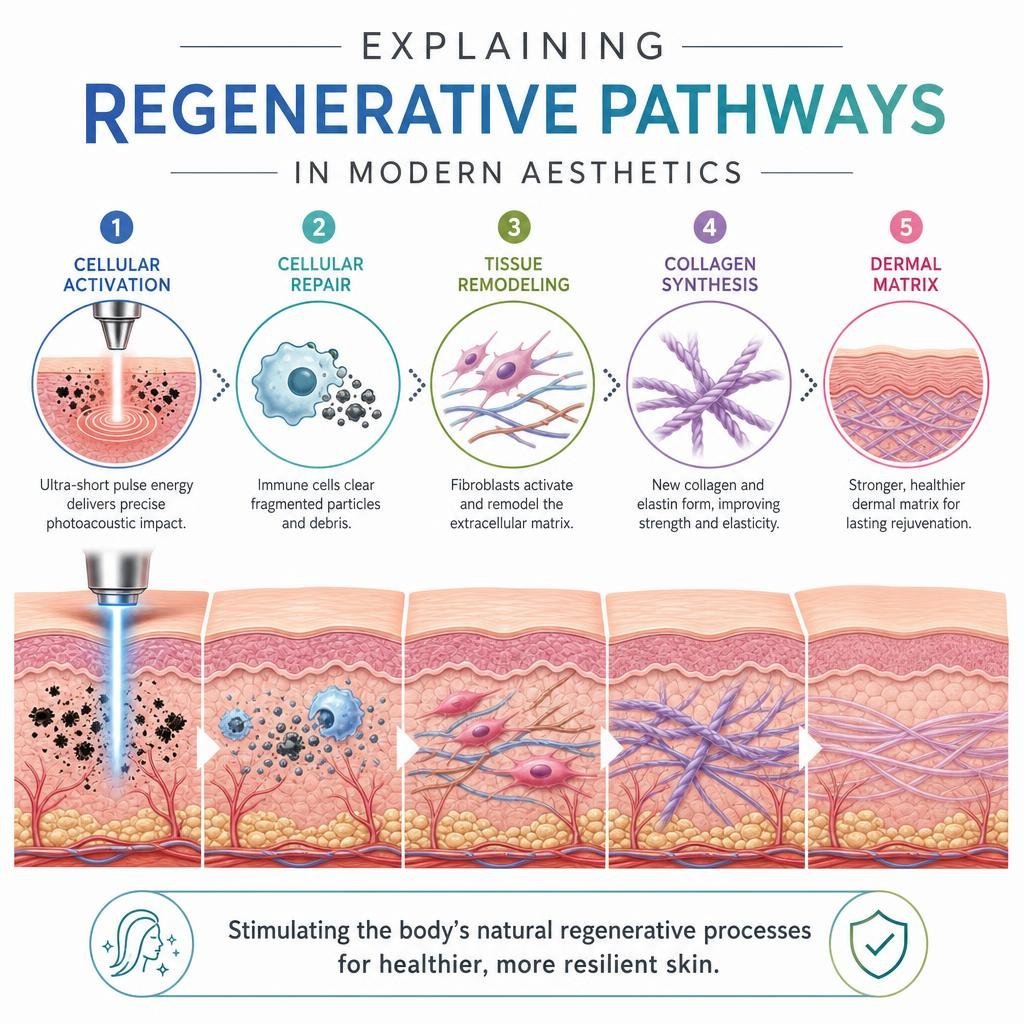
This precise photomechanical action initiates a cascade of beneficial cellular responses. The mechanical stress induces cellular signaling pathways that stimulate neocollagenesis (new collagen formation) and elastin production, vital proteins for skin structure and elasticity. Furthermore, it promotes the remodeling of the extracellular matrix, the intricate network of molecules that provides structural and biochemical support to cells. By triggering these natural regenerative processes, picosecond lasers offer a more harmonious and biologically integrated approach to skin restoration. As of September 2026, this technology is increasingly recognized as a cornerstone of modern regenerative aesthetics, offering superior safety and efficacy across a range of indications.
The following comparison highlights the fundamental differences between traditional ablative therapies and the regenerative photoacoustic technologies that define modern aesthetic practices:
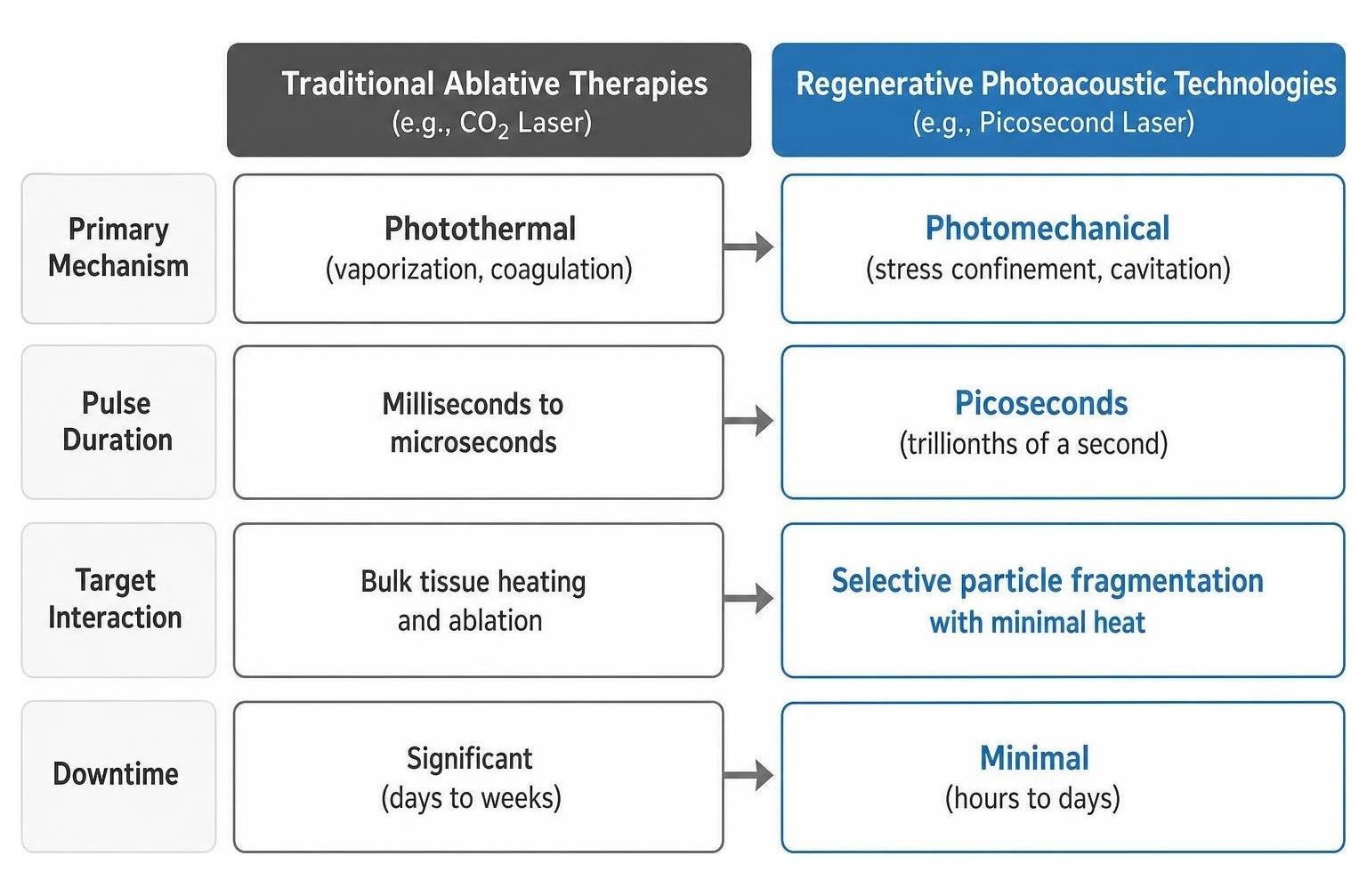
| Feature | Traditional Ablative Therapies (e.g., CO2 Laser) | Regenerative Photoacoustic Technologies (e.g., Picosecond Laser) |
|---|---|---|
| Primary Mechanism | Photothermal (vaporization, coagulation) | Photomechanical (stress confinement, cavitation) |
| Pulse Duration | Milliseconds to microseconds | Picoseconds (trillionths of a second) |
| Target Interaction | Bulk tissue heating and ablation | Selective particle fragmentation with minimal heat |
| Downtime | Significant (days to weeks) | Minimal (hours to days) |
| Collateral Damage | Higher thermal damage | Minimal thermal damage |
| Regenerative Effect | Secondary to wound healing | Primary cellular signaling, neocollagenesis, elastin production |
| Risk of PIH/Scarring | Higher, especially in darker skin types | Lower, with careful parameter selection |
Understanding Photoacoustic Stimulation in Regenerative Aesthetics
The core of picosecond laser efficacy lies in its unique photoacoustic mechanism. When a picosecond pulse, lasting mere trillionths of a second, strikes a target chromophore like tattoo ink or melanin, the energy is absorbed so rapidly that it cannot dissipate as heat. Instead, this rapid energy absorption creates an intense localized thermal expansion, generating an acoustic wave. This phenomenon is known as stress confinement.
The resulting acoustic pressure is so powerful that it leads to the formation of transient cavitation bubbles, which then collapse, creating a shockwave. This shockwave mechanically shatters the target pigment particles into much smaller fragments than nanosecond lasers can achieve. This process, often described as a “photoacoustic effect,” is predominantly mechanical rather than thermal.
The fine fragmentation of ink particles is critical for efficient removal. These microscopic fragments become more manageable for the body’s immune system. The mechanical disruption also triggers a localized inflammatory response, which is a natural part of the wound healing cascade. This cascade involves the recruitment of specialized immune cells, particularly macrophages, to the treatment site. These macrophages then engulf and clear the fragmented ink particles through phagocytosis, which are subsequently removed via the lymphatic system. This precise, non-thermal targeting minimizes damage to the surrounding skin, leading to a safer treatment profile and faster recovery.
Cellular Mechanisms Defining Regenerative Aesthetics Today
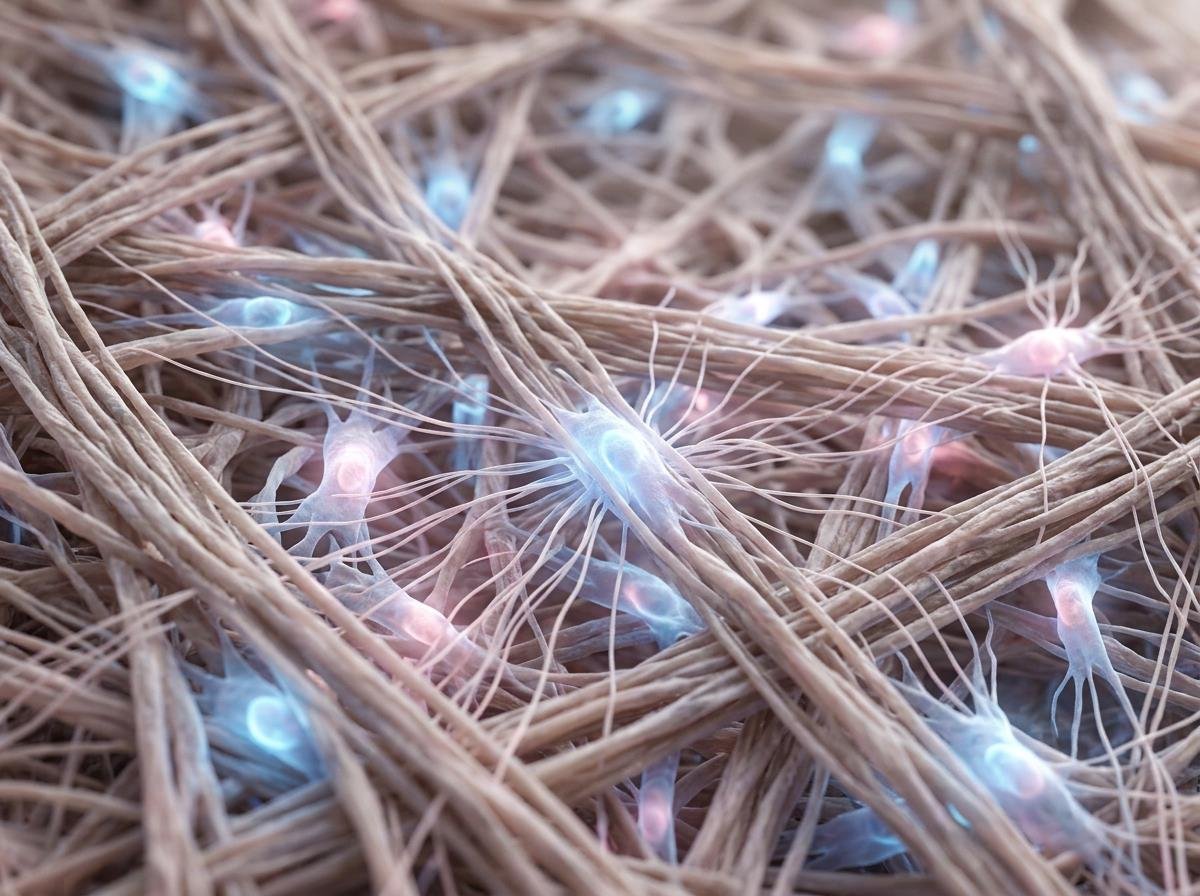
The elegance of picosecond laser technology extends beyond mere pigment fragmentation; it actively engages the body’s intrinsic cellular repair mechanisms, defining its role in regenerative aesthetics. The photomechanical stimulation, while precisely targeting ink or melanin, also induces a controlled micro-trauma within the dermis. This mechanical stress acts as a powerful signal, initiating a complex array of cellular responses.
One of the primary cellular mechanisms is fibroblast activation. Fibroblasts, the main cells of connective tissue, are responsible for producing collagen and elastin. The picosecond laser’s impact stimulates these cells to ramp up their production, leading to neocollagenesis and improved dermal remodeling. This contributes to enhanced skin texture, tone, and overall rejuvenation, reducing the appearance of fine lines and scars.
Simultaneously, the treatment triggers the release of various cytokines and growth factors. These signaling molecules orchestrate the wound healing cascade, guiding immune cells to the site and promoting tissue regeneration. The finely fragmented pigment particles, resulting from the initial photoacoustic disruption, are then efficiently cleared. Macrophage recruitment and subsequent phagocytosis are accelerated, as these immune cells can more easily engulf and transport the smaller debris. This cellular debris, along with the reorganized extracellular matrix components, is then effectively removed through lymphatic clearance, leading to visible pigment reduction and a clearer complexion. The entire process is a testament to how modern aesthetic treatments can leverage, rather than simply override, the body’s inherent capacity for repair and renewal.
Key Clinical Applications for Skin and Pigment Restoration
The precise and regenerative capabilities of picosecond lasers have opened new avenues for skin and pigment restoration, addressing a spectrum of concerns that were once challenging to treat. From the removal of recalcitrant tattoos to the refinement of skin texture and the management of stubborn pigmentary disorders, these devices offer a versatile platform for comprehensive aesthetic enhancement.
The primary application that brought picosecond lasers to prominence is tattoo clearance. Their ability to shatter ink particles into much finer fragments significantly improves the removal rate and effectiveness, particularly for difficult colors. Beyond tattoos, the technology is highly effective for melanin dispersal, treating conditions like sun spots, freckles, and even complex melasma. The controlled dermal remodeling stimulated by picosecond pulses also makes them valuable for scar revision and overall texture refinement.
For those seeking a range of sophisticated options for their skin and body, exploring a facility that offers advanced aesthetic skin and body treatments becomes paramount. Such centers often utilize these cutting-edge technologies to deliver optimal results, ensuring patient safety and satisfaction.
Advanced Laser Rejuvenation and Scars
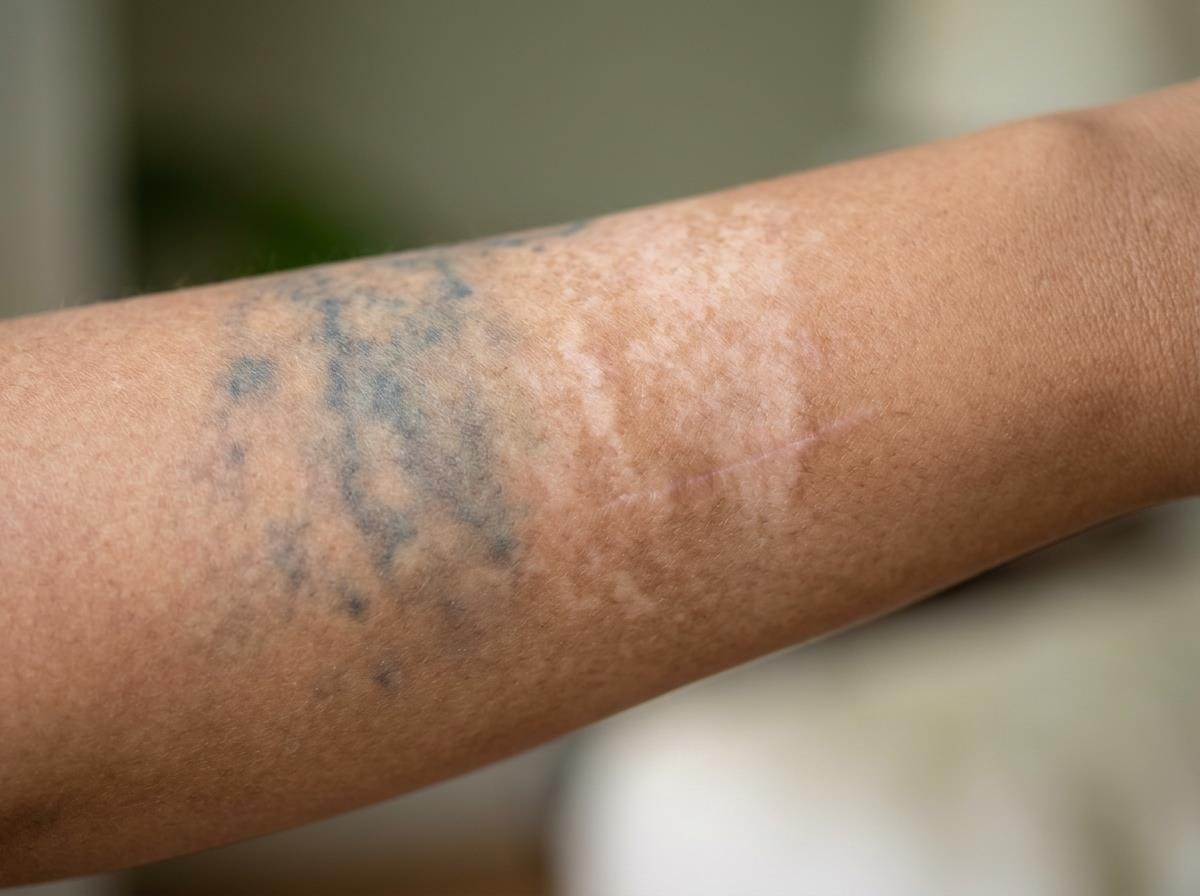
Picosecond lasers have revolutionized approaches to skin rejuvenation and scar revision. Utilizing fractional handpieces, these devices create microscopic zones of dermal injury without ablating the entire epidermal surface. This process, often referred to as Laser-Induced Optical Breakdown (LIOB), leads to the formation of tiny, gas-filled micro-vacuolizations deep within the dermis. This controlled, non-thermal injury triggers a powerful wound healing response.
The subsequent cellular cascade stimulates robust collagen realignment and the production of new collagen and elastin, leading to significant dermal remodeling. For conditions like acne scarring, this translates to improved texture, reduced depth of scars, and a smoother skin surface. The key advantage here is epidermal sparing, meaning the outermost layer of the skin remains largely intact. This significantly reduces downtime compared to traditional ablative lasers, making it a more appealing option for patients seeking effective results with minimal interruption to their daily lives. The ability to induce profound dermal regeneration while preserving epidermal integrity represents a major leap in laser-based skin rejuvenation.
Refractory Pigmentation and Cellular Clearance
One of the most compelling applications of picosecond lasers lies in their exceptional ability to tackle refractory pigmentation, particularly challenging tattoo inks and stubborn melanin deposits. The ultra-short pulse duration ensures highly efficient melanin disruption and photoacoustic dispersal of tattoo ink. By shattering pigment particles into minuscule fragments, picosecond lasers enable the body’s immune system, specifically macrophages, to more effectively clear the debris through phagocytosis.
This leads to superior clearance rates, especially for colors traditionally difficult to remove with nanosecond Q-switched lasers, such as blues and greens. For instance, a case series treating blue and green tattoos reported that 11 of 12 tattoos (91.7%) achieved ≥75% clearance after just 1–2 treatments with a 755 nm picosecond laser. Similarly, yellow tattoo ink, often considered highly resistant, showed remarkable results, with one patient achieving complete clearance in a single treatment and all others achieving ≥75% clearance in 2–4 treatments with a 532 nm picosecond laser. In a broader comparative study, 12 of 16 patients (75%) experienced significantly more lightening with picosecond lasers compared to nanosecond lasers, underscoring their enhanced efficacy.
Furthermore, picosecond lasers offer a significant advantage in terms of post-inflammatory safety and dyspigmentation control. By minimizing thermal damage, they reduce the risk of post-inflammatory hyperpigmentation (PIH) and hypopigmentation, which can be a concern, especially in patients with darker skin types. This makes them a safer and more effective option for a wider range of individuals seeking precise cellular clearance of unwanted pigments.
Multi-Modal Protocols and Synergistic Modalities
While picosecond lasers are highly effective on their own, the field of regenerative aesthetics continually explores multi-modal protocols to further enhance outcomes and mitigate potential side effects. Combining picosecond laser treatment with adjunctive therapies can create synergistic effects, accelerating pigment clearance, improving skin regeneration, and optimizing the patient experience. These integrated approaches reflect a commitment to comprehensive care, tailoring treatments to individual needs and maximizing the regenerative potential of the skin.
Acoustic Energy and Tissue Microcirculation
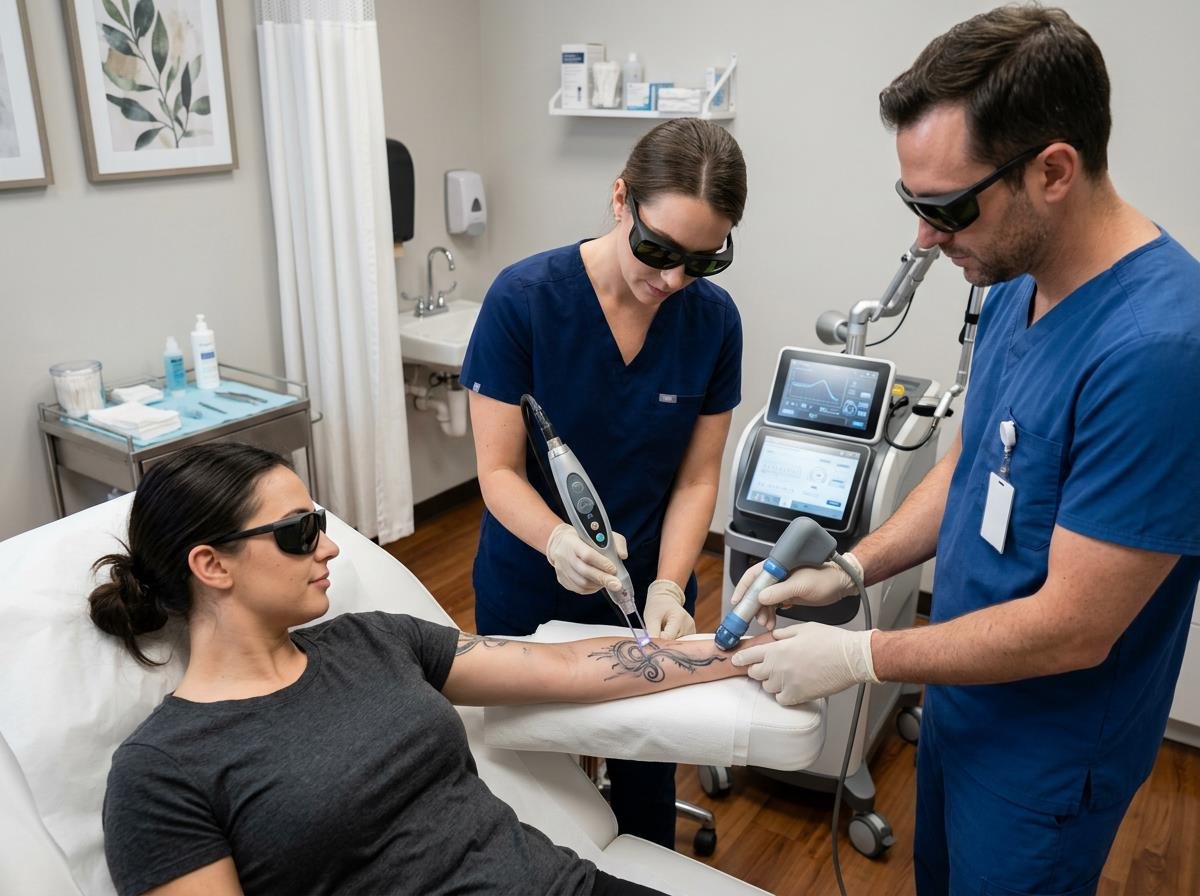
One promising adjunctive therapy gaining traction is acoustic shock wave therapy (ASWT). When applied immediately after picosecond laser treatment, ASWT appears to significantly enhance the removal process. The non-invasive shock waves are thought to work by increasing lymphatic drainage and metabolic activity in the treated area. This accelerated physiological response helps the body to more rapidly clear the fragmented tattoo ink particles.
Beyond mechanical assistance, ASWT has been shown to stimulate angiogenesis (the formation of new blood vessels) and elevate vascular endothelial growth factor (VEGF), which are crucial for tissue repair and microcirculation. This improved blood flow and cellular turnover contribute to expedited clearance of pigments. A case series demonstrated that combined picosecond laser and acoustic shock wave therapy resulted in near-complete or complete tattoo clearance after just 1–3 sessions, with no major side effects. Patients also reported a notable analgesic effect during the acoustic shock wave application, adding to the treatment’s comfort profile. This synergy between photomechanical fragmentation and enhanced physiological clearance represents a significant advancement in efficient and comfortable tattoo removal.
Epidermal Protection in Diverse Phototypes
Ensuring epidermal protection is paramount, particularly when treating individuals across the full spectrum of Fitzpatrick phototypes, from IV to VI. Patients with darker skin tones inherently have more melanin, which can absorb laser energy and increase the risk of adverse effects like post-inflammatory hyperpigmentation (PIH) or hypopigmentation. Picosecond lasers, with their photoacoustic mechanism and reduced thermal spread, offer a safer profile compared to traditional nanosecond lasers, but careful parameter selection remains critical.
Effective thermal management is achieved by using appropriate wavelengths (e.g., 1064 nm for darker skin types, which is less absorbed by melanin), conservative fluences, and larger spot sizes. These adjustments minimize the risk of overheating the epidermis while still effectively targeting the deeper pigment.
Adjunctive therapies can further bolster epidermal integrity and reduce side effects. For instance, combining picosecond laser treatment with fractional CO2 laser ablation has been shown to reduce the incidence of blistering. In a study involving 81 patients, 26 (32%) developed bullae when treated with picosecond laser alone, whereas none of the 20 patients who received combined picosecond laser and fractional CO2 ablation experienced blistering. This strategy allows for effective pigment clearance while actively preventing common side effects, ensuring a safer and more comfortable experience for all patients, regardless of their skin phototype.
Frequently Asked Questions About Aesthetic Skin Regeneration
As regenerative aesthetics continues to evolve, patients often have questions about how these advanced technologies work and what they can expect. Here, we address some common inquiries regarding ultra-short pulse energy devices and their role in skin regeneration.
How do ultra-short pulse energy devices support skin regeneration?
Ultra-short pulse energy devices, such as picosecond lasers, support skin regeneration primarily through a process called photoacoustic disruption. Instead of relying on thermal damage to stimulate healing, these lasers deliver energy so rapidly (in picoseconds) that they create a mechanical shockwave. This shockwave precisely fragments target pigments (like tattoo ink or melanin) into tiny particles. This mechanical action, coupled with minimal thermal relaxation time, not only clears unwanted pigment but also triggers a natural wound healing response in the surrounding tissue. This response involves cellular stimulation, leading to increased collagen induction and elastin production, which are essential for healthier, more youthful-looking skin.
What distinguishes cellular repair treatments from traditional ablative lasers?
The fundamental distinction lies in their mechanism of action and impact on the epidermis. Traditional ablative lasers work by vaporizing the outermost layers of the skin, creating a controlled thermal injury that promotes healing and new tissue growth. While effective, this approach involves significant downtime, increased risk of scarring, and a higher chance of post-inflammatory hyperpigmentation (PIH) duepecially in darker skin types.
In contrast, cellular repair treatments using picosecond lasers operate through a non-thermal, photoacoustic mechanism. They achieve pigment fragmentation and dermal remodeling with epidermal preservation, meaning the outer skin layer remains largely intact. This results in non-thermal injury to the deeper dermis, leading to significantly reduced downtime and a lower dyspigmentation risk. The focus shifts from aggressive tissue removal to stimulating the body’s natural regenerative processes with minimal disruption to the skin’s surface.
How many sessions are typically required to see tissue renewal?
The number of sessions required for significant tissue renewal and pigment clearance can vary widely depending on several factors, including the specific condition being treated, the size and depth of the tattoo or pigment, the ink colors involved, and individual patient response. For tattoo removal, clinical studies often report an average of 4.25 treatments to achieve ≥75% clearance for many tattoos, with some patients seeing this level of improvement after just 2-4 sessions. However, some pigments, particularly black, might require up to 6-8 sessions for near-complete removal.
For skin rejuvenation or scar revision, a series of 3-5 sessions is often recommended for optimal results. Treatment intervals are typically spaced 4-8 weeks apart to allow for adequate metabolic clearance of fragmented particles and progressive remodeling of collagen and elastin. Results are cumulative, with continuous improvement observed over several months following the final treatment as the body’s regenerative processes continue.
Conclusion
The journey through the intricate world of regenerative aesthetics reveals a profound shift in how we approach skin and pigment restoration. Picosecond laser technology stands at the forefront of this evolution, offering a sophisticated blend of precision, efficacy, and safety that was once unimaginable. By harnessing the power of photomechanical energy, these ultra-short pulse devices stimulate the body’s natural cellular signaling pathways, promoting neocollagenesis, elastin production, and efficient pigment clearance.
From addressing challenging tattoo inks and refractory pigmentation to performing advanced skin rejuvenation and scar revision, picosecond lasers demonstrate remarkable versatility. Their ability to achieve significant results with minimal thermal damage and reduced downtime marks a considerable advantage over traditional methods. Furthermore, the integration of multi-modal protocols, such as acoustic shock wave therapy and fractional resurfacing, continues to push the boundaries of what is possible, enhancing outcomes and ensuring epidermal protection across diverse skin types.
As we look towards the future, the principles of regenerative aesthetics, championed by technologies like picosecond lasers, promise not just aesthetic improvement but a deeper, more enduring restoration of skin health and structural integrity. This commitment to cellular longevity and non-invasive restoration underscores a new era in aesthetic medicine, offering patients a path to renewed confidence and revitalized skin.