
Understanding System Types for Residential and Commercial Heating and Cooling
Selecting the right AC unit begins with understanding the various types available and how they suit different environments, from a cozy home to a sprawling commercial facility. Each system offers unique advantages in terms of cooling capacity, installation, and energy efficiency. When evaluating your options, a comprehensive guide on Commercial and residential AC selection can help clarify which setup fits your property’s specific layout.
Deciding Between Ducted and Ductless Configurations
Traditional central air conditioning systems are a common choice for homes and businesses with existing ductwork. These “split systems” consist of an outdoor condenser/compressor unit and an indoor evaporator coil and air handler, distributing cooled air throughout the building via a network of ducts. They provide consistent, whole-home cooling and can be highly efficient when properly sized and installed.
However, for spaces without existing ductwork, or for additions and zoned cooling needs, ductless mini-split systems offer an excellent alternative. These systems feature an outdoor unit connected to one or more indoor air handlers, each controlling a specific zone. This multi-split configuration eliminates the need for extensive ductwork, offering installation flexibility and individual room temperature control, which can significantly reduce energy waste. Ductwork integrity is crucial for ducted systems, as poorly sealed ducts can waste 20 to 30 percent of the energy used to run an AC system.
The Role of Heat Pumps in Modern Climate Control
For year-round comfort and enhanced energy efficiency, heat pumps are increasingly popular. Unlike traditional ACs that only cool, heat pumps provide both heating and cooling by transferring heat rather than generating it. In cooling mode, they extract heat from indoors and release it outside, just like an AC. In heating mode, they reverse the process, drawing heat from the outside air (even in cold temperatures) and transferring it indoors.
This dual functionality makes them a versatile solution for decarbonization efforts. Air-source heat pumps are the most common, but geothermal heat pumps offer even greater efficiency by exchanging heat with the stable temperatures of the earth. Many heat pump systems can also be integrated into dual-fuel systems, which automatically switch to a fossil fuel furnace when outdoor temperatures drop below a certain point, ensuring optimal efficiency in all conditions.
Sizing Methodology and the Pitfalls of Improper Capacity
One of the most critical steps in choosing an AC unit is proper sizing. We often hear that bigger is better, but this couldn’t be further from the truth when it comes to air conditioning. Incorrect sizing, whether too large or too small, leads to significant comfort issues, higher energy bills, and reduced equipment lifespan.
The industry standard for precise AC sizing is the Manual J load calculation. This comprehensive assessment goes far beyond simple square footage measurements. It considers a multitude of factors that influence a building’s cooling and heating load, including:
- Square footage and ceiling height: The total volume of air to be conditioned.
- Insulation quality: R-values of walls, ceilings, and floors.
- Window type and placement: Number, size, type (single, double-pane), and orientation (solar heat gain). For rooms with excessive sunlight, an additional 10 percent more BTUs are often needed.
- Local climate: Average temperatures, humidity levels, and sun exposure.
- Occupancy: The number of people typically in the space (each person adds about 600 BTUs).
- Internal heat gains: Heat generated by appliances, lighting, and electronics (e.g., kitchens often require an additional 4,000 BTUs).
- Ductwork integrity and airflow dynamics: The efficiency of air distribution.
- Building envelope: Overall air tightness and potential for infiltration.
Why Oversized Systems Degrade Performance
An oversized AC unit might seem like it would cool your space faster, but it actually creates more problems than it solves. The primary issue is short cycling, where the unit cools the air too quickly, satisfies the thermostat, and then shuts off before it can effectively remove humidity. This leads to:
- Poor humidity control: Leaving the air feeling clammy and uncomfortable, and potentially fostering mold growth.
- Temperature swings: Rapid cooling followed by warm periods as the unit cycles on and off.
- Increased energy waste: The most energy-intensive part of an AC cycle is starting up. Frequent starts and stops consume more power than continuous, longer runs. Short cycling can increase energy use by 8-30%.
- Premature compressor wear: The constant starting and stopping puts excessive strain on the compressor, shortening the unit’s lifespan.
Consumer Reports data from 2026 indicates that about 19 percent of central AC systems purchased between 2009 and 2024 encountered at least one problem, with 24 percent of those units stopping working as well as they should or altogether. Improper sizing is a significant contributor to these issues.
The Consequences of Undersized Equipment
Conversely, an undersized AC unit struggles to meet the cooling demands of the space. It will run almost continuously, trying in vain to reach the thermostat setting. This results in:
- Continuous operation: The unit runs constantly, leading to higher energy bills.
- Failure to cool evenly: Hot spots and uneven temperatures throughout the space.
- Occupant discomfort: The space never truly feels cool or comfortable.
- Premature failure: Constant operation puts immense stress on components, leading to breakdowns and a significantly reduced lifespan.
For reference, a 1-ton air conditioner rating equals 12,000 BTUh, and home air conditioners are typically rated in tons with increments of 0.5 tons. While 20 BTUs per square foot is a general guideline, a professional Manual J calculation is essential for accuracy.
Efficiency Ratings and Compressor Technologies in Commercial Heating and Cooling
When selecting an AC unit, understanding efficiency ratings is crucial for long-term energy savings and performance. These ratings provide a standardized way to compare models and predict operating costs.
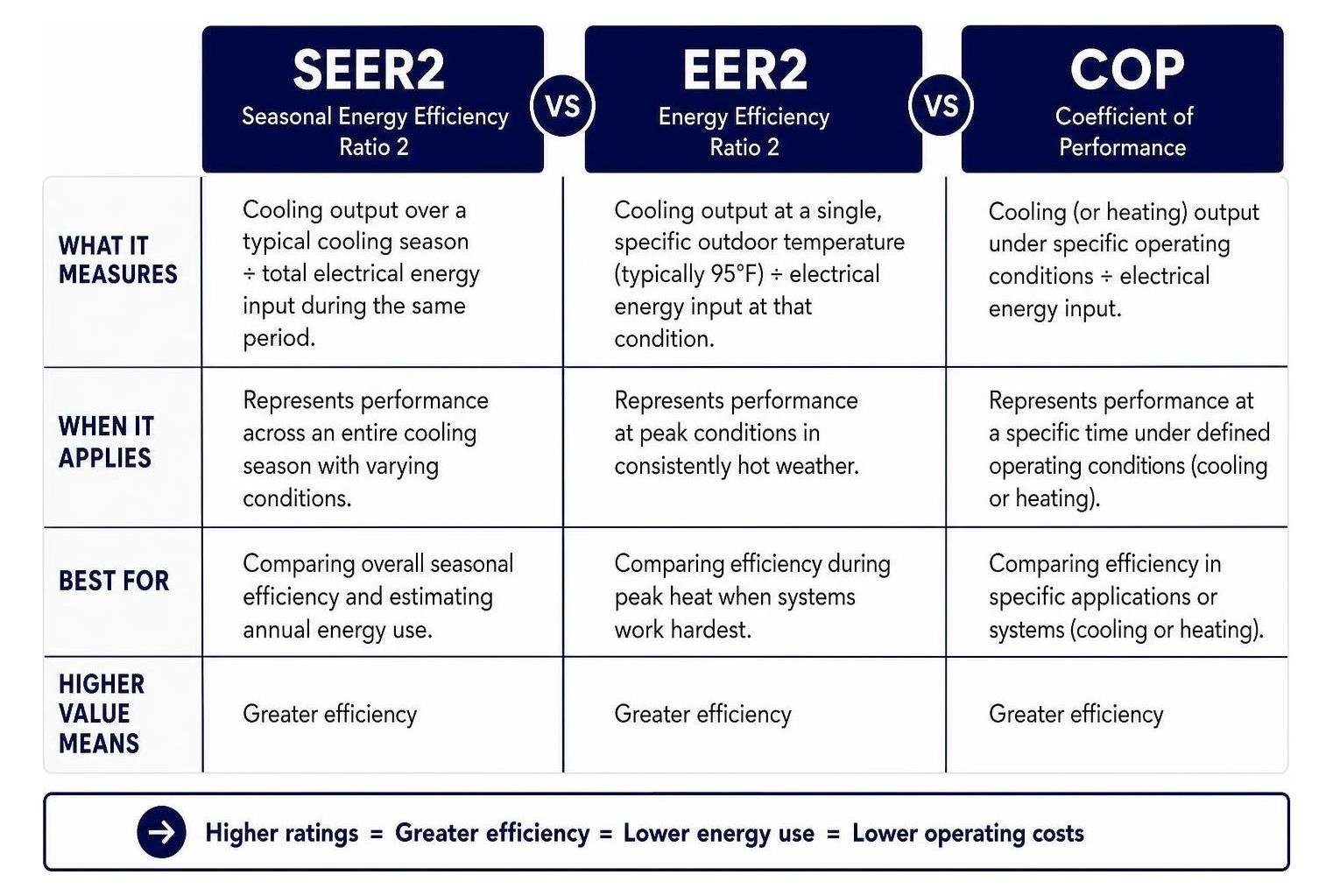
SEER2 (Seasonal Energy Efficiency Ratio 2) measures the cooling output over a typical cooling season divided by the total electrical energy input during the same period. Higher SEER2 ratings indicate greater efficiency. As of July 2026, the minimum SEER2 allowed for new split system central air conditioners in the U.S. is 14.3 for Southern/Southwestern U.S. and 13.4 for Northern U.S. This is at least 20 percent more efficient than minimum-efficiency models made 10 years ago. The most efficient central AC models can reach a SEER2 of 26 or higher.
EER2 (Energy Efficiency Ratio 2) measures cooling efficiency at a single, specific outdoor temperature (typically 95°F). EER2 is particularly relevant in consistently hot climates where peak performance is paramount. A higher EER2 means better efficiency under these extreme conditions.
ENERGY STAR certification identifies products that meet strict energy efficiency guidelines set by the U.S. Environmental Protection Agency. Choosing an ENERGY STAR certified unit ensures it operates more efficiently, leading to lower utility bills and reduced environmental impact.
Comparing Single-Stage, Two-Stage, and Variable-Speed Compressors
The compressor is the heart of an AC system, and its technology significantly impacts comfort, efficiency, and humidity control.
- Single-stage compressors: These operate at 100% capacity whenever the system is on. They are the most basic and least expensive option. While effective at cooling, they offer less precise temperature control and can contribute to temperature swings and higher energy consumption due to frequent on/off cycles.
- Two-stage compressors: These offer two levels of operation: high (100%) and low (typically around 70%). They run on the lower setting most of the time, providing more consistent cooling, better humidity removal, and quieter operation than single-stage units. They only switch to high when demand is greater, improving efficiency.
- Multi-speed compressors: Some manufacturers offer multi-speed systems that provide more incremental steps than two-stage units, without the premium cost of variable-speed models. They offer additional operating speeds, enhancing comfort and efficiency.
- Variable-speed compressors: These are the most advanced and efficient. They can modulate their output anywhere from 25% to 100% (or more, depending on the model), continuously adjusting to meet the exact cooling demand. This results in:
- Unparalleled temperature precision: Maintaining temperatures within half a degree.
- Superior humidity control: Longer, slower run times effectively remove moisture from the air.
- Exceptional energy efficiency: They only use the energy needed, often cutting cooling costs by up to 10%.
- Quieter operation: Soft-start technology and continuous low-speed operation reduce noise.
Navigating Regulatory Standards and Refrigerant Transitions
The HVAC industry is continually evolving to meet stricter environmental regulations, particularly concerning refrigerants. The phaseout of R-410A, a common refrigerant with a high global warming potential (GWP), is underway. Production of R-410A units ended in 2025, with parts support expected until 2028.
Newer, lower-GWP refrigerants like R-454B and R-32 are becoming standard. These refrigerants have a significantly lower climate impact, aligning with environmental compliance goals. When purchasing a new system, it’s important to be aware of the refrigerant type and its long-term availability and environmental implications.
Optimizing Performance Through Advanced Controls and Maintenance
Beyond the unit itself, how we control and maintain our AC system plays a significant role in its overall performance, efficiency, and longevity.
Smart controls and programmable thermostats are essential tools for maximizing efficiency. Using a programmable or smart thermostat at the right temperature can reduce cooling costs by about 10 percent. Features like geofencing can detect when you’re approaching home and pre-cool the house, while remote access allows adjustment from anywhere. Setting your thermostat to 78°F in summer and raising it by a few degrees when away can yield substantial savings, as raising the thermostat by one degree can save about 3 percent on utility bills for central air conditioning.
Air filtration is also critical for indoor air quality and system efficiency. High-quality filters with appropriate MERV ratings (Minimum Efficiency Reporting Value) can capture more airborne particles, but they must be changed regularly to prevent airflow restriction.
The Impact of Duct Sealing and Airflow Management
Even the most efficient AC unit can’t perform optimally if its ductwork is compromised. Duct leakage is a major culprit for energy waste, with 20 to 30 percent of conditioned air escaping through unsealed ducts. This leads to thermal loss, reduced cooling capacity, and higher energy bills.
Proper airflow management involves ensuring ducts are correctly sized, sealed, and insulated. Static pressure should be balanced, and balancing dampers can help direct airflow where it’s needed most, ensuring even cooling and optimal indoor air quality throughout the building.
Essential Preventative Maintenance Protocols
Regular preventative maintenance is non-negotiable for keeping an AC running efficiently and reliably over its lifespan.
- Filter replacement: Check and change air filters every 1 to 3 months, or more frequently with pets or high air pollution.
- Coil cleaning: Professional cleaning of evaporator and condenser coils annually ensures efficient heat transfer.
- Refrigerant charge: An HVAC technician should check refrigerant levels and inspect for leaks annually.
- Electrical connections: Inspecting and tightening electrical connections prevents safety hazards and ensures consistent operation.
- Seasonal tune-ups: An annual professional tune-up, ideally in spring, prepares the system for the cooling season, identifies potential issues early, and maintains efficiency.
Selecting and Collaborating with Professional HVAC Contractors
Choosing the right HVAC contractor is as important as selecting the right AC unit. A skilled contractor ensures proper system design, installation, and ongoing support, which are critical for efficiency and longevity.
When seeking a contractor, always prioritize those who perform thorough Manual J load calculations for sizing and Manual D duct design calculations if ductwork modifications are needed. This demonstrates their commitment to proper engineering rather than guesswork. Verify contractor licensing, insurance, and certifications. Look for technicians certified by organizations like NATE (North American Technician Excellence).
Good contractors will also handle system commissioning, ensuring the unit is installed correctly and operating at peak performance from day one, adhering to all building codes. They should provide clear quotes, outline the project scope, and discuss warranty protection for both equipment and labor.
Key Criteria for Commercial Heating and Cooling Partnerships
For commercial applications, the stakes are even higher, making a robust partnership with an HVAC contractor essential.
- Experience with commercial systems: Ensure they have a proven track record with the specific type and scale of commercial HVAC systems you need.
- Comprehensive service agreements: Look for agreements that include regular preventative maintenance, emergency services, and priority scheduling.
- Energy efficiency expertise: A good partner can advise on the latest energy-saving technologies and help you qualify for any available rebates or incentives.
- Responsive support: Quick and effective response times are crucial to minimize downtime in a commercial setting.
Frequently Asked Questions about Commercial Heating and Cooling
What is the difference between SEER2 and EER2 in commercial heating and cooling applications?
SEER2 (Seasonal Energy Efficiency Ratio 2) measures an AC unit’s average efficiency over an entire cooling season, reflecting performance across varying outdoor temperatures. EER2 (Energy Efficiency Ratio 2), on the other hand, measures efficiency at a single, specific peak outdoor temperature (usually 95°F). For commercial applications, SEER2 provides insight into overall seasonal operating costs, while EER2 is critical for assessing performance during the hottest periods, which can be vital for maintaining comfort and preventing system overload.
How does a Manual J load calculation prevent short cycling in large buildings?
A Manual J load calculation precisely determines the exact cooling and heating requirements of a building by factoring in its unique characteristics like size, insulation, windows, occupancy, and internal heat gains. By accurately sizing the AC unit to meet these specific demands, the system avoids being oversized. An oversized unit would cool the space too quickly and then shut off (short cycle) before adequately removing humidity. The Manual J calculation ensures the unit runs for longer, more consistent cycles, which is essential for effective dehumidification and stable temperatures, preventing short cycling.
Why are variable-speed compressors preferred for commercial heating and cooling systems?
Variable-speed compressors are highly preferred in commercial settings due to their ability to modulate their output continuously, typically from 25% to 100% capacity. This allows them to precisely match the building’s fluctuating cooling or heating demands. This precision leads to superior energy efficiency, as the system only uses the energy required, significantly reducing operating costs. Additionally, they provide much better humidity control, more consistent temperatures, and quieter operation compared to single-stage or two-stage systems, all of which contribute to enhanced occupant comfort and productivity in commercial environments.
Conclusion
Choosing the best AC unit for your home or commercial property is a significant investment that impacts comfort, energy consumption, and indoor air quality for years to come. We’ve explored the diverse types of systems available, from central air to ductless mini-splits and heat pumps, each offering unique benefits for different needs. The importance of proper sizing, guided by a professional Manual J load calculation, cannot be overstated, as it directly influences efficiency and system longevity.
Understanding efficiency ratings like SEER2 and EER2, along with the advantages of advanced compressor technologies, empowers us to make informed decisions. Furthermore, optimizing performance through smart controls, diligent maintenance, and effective airflow management ensures our systems run at their peak. Partnering with a reputable HVAC contractor for expert installation and ongoing support is crucial for maximizing the return on our investment. By considering these factors, we can select an AC unit that provides reliable, efficient, and comfortable climate control for the foreseeable future.