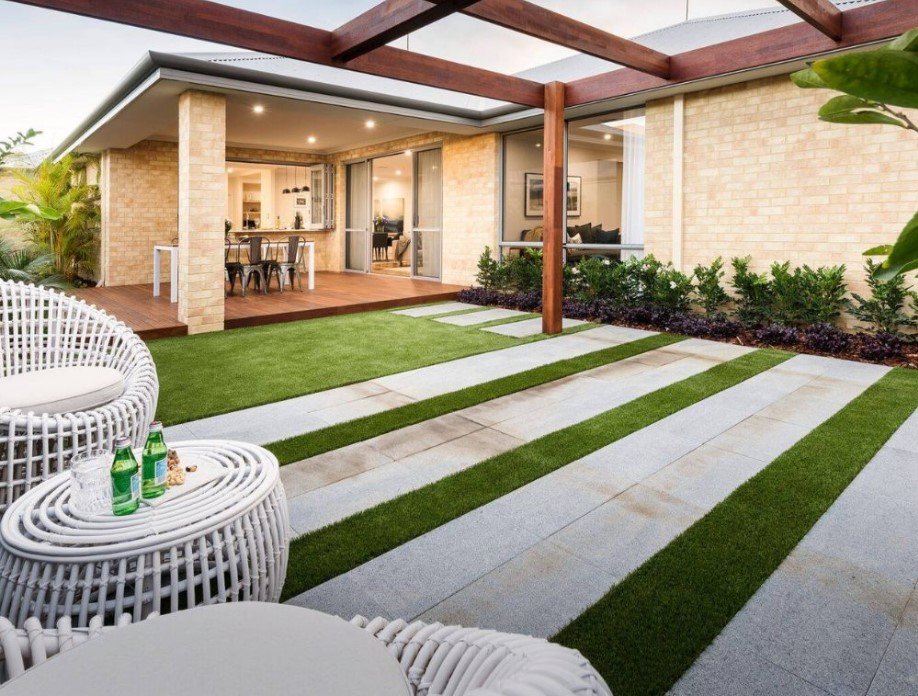
You’ve seen the stunning photos: expansive patios tiled with oversized porcelain planks, and cozy backyard retreats laid with classic pavers in warm earth tones. Both look equally perfect. But now you’re standing in your actual space, cost spreadsheet open, and suddenly “both are beautiful” doesn’t answer the question that matters: which one is right for you? If you’re stuck choosing between large format and standard pavers, pulled in different directions by advice that somehow contradicts itself, you’re not overthinking it. This is genuinely a significant decision, and getting it wrong means living with regret or bills for decades.
You already know your home well enough to recognize good design when you see it, and you’re not looking for hype or trend validation. What you need is a clear diagnostic framework: a way to move past subjective opinions and pinpoint which option actually suits your space, the way you live, and your comfort with maintenance. This article cuts through the confusion by examining three practical factors: how your space’s proportions work, how you actually entertain and use your outdoor area, and how hands-on you want to be with upkeep. These insights will give you the reasoning behind your choice. That way, you’ll move forward with genuine confidence, not just a nice picture.
Section 1: Understanding the Core Visual Difference
Large format pavers are typically 600 × 600mm or larger. Think oversized tiles that create expansive, uninterrupted surfaces. Standard pavers range from small bricks (100 × 200mm) to modest squares (300 × 300mm), creating denser patterns and more visual texture. The mechanical reason is simple: fewer grout lines make a space feel bigger and calmer, while more grout lines create rhythm, detail, and visual interest. This isn’t subjective preference. It’s a design principle that works consistently across every outdoor space.
Colour and finish certainly matter, but paver size is your primary visual lever. In contemporary Australian homes, large format is increasingly the default choice for a clean, modern aesthetic. Heritage and cottage-style properties, by contrast, almost always wear standard pavers more authentically. Not because they must, but because smaller pavers feel proportionally right within those homes’ visual vocabulary. Once you understand what each size communicates, choosing between them becomes less about trend and more about whether your space will feel intentional.
Section 2: Matching Paver Size to Your Space Proportions
Here’s the counterintuitive rule that changes everything: a tiny courtyard (under 20m²) with small, busy pavers feels cramped and fussy, whereas the same courtyard paved in large format feels curated and spacious. Conversely, sprawling patios and driveways can absolutely carry standard pavers without feeling visually overwhelming. They have enough square meterage to absorb the texture without fatigue. So your space’s footprint, not its era, is what determines whether a paver size will feel right.
Walk to your outdoor area and assess it honestly. Is it an intimate, sheltered nook, or does it sprawl across your yard? Does it feel cosy and contained, or open and generous? An intimate space benefits from fewer visual divisions, which means large format creates breathing room. An expansive space can handle, and even be enhanced by, the visual rhythm of standard pavers. And if you’re genuinely torn, here’s the professional move: many skilled installers mix the two, using large format for the main field and standard pavers for edging, borders, or transition zones. This approach gives you visual interest without committing fully to either option.
Section 3: Your Entertaining Lifestyle and Maintenance Tolerance
Before you choose, be honest about how you actually use your outdoor space. Do you entertain regularly, host kids playing, or mostly enjoy quiet mornings with coffee? Standard pavers, with their texture and abundant grout lines, create more visual interest and character. But they also create more places for stains to settle and weeds to creep between joints. The upside is that replacing a single damaged standard paver is straightforward and inexpensive, whereas replacing a cracked large format paver is heavier work and pricier.
Large format pavers, by contrast, offer a cleaner aesthetic and fewer grout lines to trap stains or weeds. They’re easier to sweep and hose down, so high-traffic entertaining zones (think the area around your BBQ or under a tree where leaves drop) look fresher longer. But here’s the honesty: both require annual sealing and maintenance to stay in peak condition, and individual large format pavers are more expensive to replace if damage occurs. There’s one practical detail worth knowing, though. If your soil is reactive clay (common in Australian suburbs), standard pavers with a sand-set base handle ground movement slightly differently than fully mortared large format. This matters if your property sits on clay and you’ve noticed minor settling elsewhere.
Section 4: Budget and Long-Term Resale Value
Large format pavers typically cost more per square metre than standard options, and installation labour is higher too. Large pavers are heavier, demand meticulous base preparation, and take longer to set properly, so get multiple quotes and clarify whether the labour rate reflects that complexity. The good news is that both large format and standard pavers will last 25 to 30+ years if the base is prepared correctly and maintenance is consistent. Durability comes from foundation work, not paver size.
From a resale perspective, modern buyers in your peer group generally favour the clean lines and contemporary aesthetic of large format pavers. That said, a beautifully executed patio with standard pavers, especially if it complements the home’s era and character, absolutely appeals too. The real resale risk isn’t paver size. It’s a poorly chosen colour or a mismatch between the paver style and your home’s architecture. A thoughtful decision made for the right reasons (space proportion, your lifestyle, honest maintenance tolerance) will feel coherent to the next owner, regardless of format. When you’re ready to compare your options, Atlas Paving can provide transparent quotes on both approaches, so you’re comparing apples-to-apples on cost and timeline.
Section 5: Making Your Final Decision
By now, three questions should clarify your path forward. First: Is your space intimate and contained (under 25m²) or expansive and open? Intimate spaces lean toward large format to avoid visual crowding, while expansive spaces can genuinely go either way. Second: Do you entertain regularly and value easy, low-stress maintenance? Large format pavers win here. Cleaner, fewer grout lines, less weeding. If you love texture and visual interest and don’t mind the grout-line upkeep, then standard pavers win. Third: Does your home’s architectural style matter to you? If yes, consider what period-appropriate sizing feels right. If not, choose purely on proportion and lifestyle.
Here’s the permission you need: there’s no universally “right” answer, but for your specific space and your specific life, one option will feel more right than the other. By this point, you should have a genuine lean, even if it’s 60/40 rather than a perfect 50/50. That lean is enough, because it means you’re choosing based on how you actually live, not on Instagram trends or what a neighbour chose. Once you’ve made that choice with confidence, everything else (the colour selection, the sealing schedule, the long-term joy you take in stepping outside) becomes the easy part.
Making Your Choice With Confidence
You now have a framework that actually works: assess your space’s proportions, consider how you entertain and live, and be honest about maintenance tolerance. That reasoning is sound. The next step is to see both options in person, because lighting, scale, and texture are impossible to judge on screen.
Take a week if you need it. Good paving projects aren’t rushed, and the best decisions come when you’ve had time to sit with your choice. You’re closer to certainty than you think.