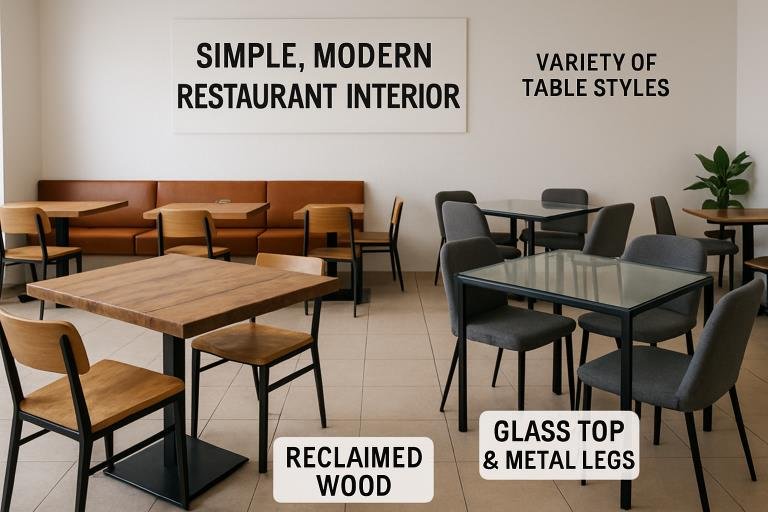
In a more competitive hospitality space, tables are becoming of even greater significance beyond functionality, which also frames how guests experience the energy, ambience, narrative, and brand of the restaurant. As restaurants try to create the perfect experience for their guests, the latest style of restaurant tables articulates three trends – sustainability, technology and style. Trends in tables suggest more than just a style – they suggest flexibility and the overall experience and comfort of guests including their various interpretations. When designing tables in any dining space, the guest experience can change dramatically just from the selection of tables. Table solutions for restaurants need to have a statement and be adaptable to the evolving model in the guest profile. Using eco-friendly materials, interchangeable finish options, and tables in hospitality in 2025 all speak to the commitment to create unique and sustainable dining spaces that are visually inspiring, flexible with dining modes, and efficient upon starting social interactions or dining experiences. The practice of reconfiguring dining spaces to fit the selections of trends above will recruit a more diversified customer audience and keep restaurants ahead of the competition in a fluid and changing segment of the industry. Whether redeveloping a small bistro or a newly constructed new build, understanding what trends mean to the overall concept of modern dining will be important. The attached article in Restaurantware gives information about global dining trends advanced for the social engagement of guests.
Sustainable Materials
The shift towards sustainability in the restaurant segment is leading to a change of how materials are being sourced and used in tables. However, where it can be feasible by specialized features like recycled metals, reclaimed wood, and sustainable composites, tables can easily be utilitarian, stylish, and mindful of their environmental footprint. Being one of the most rapidly renewable materials, bamboo is becoming one of the more common materials used as a moisture-resistant and stable product. Using these eco-friendly materials further strengthens a restaurant’s commitment to sustainable practices and attracts environmentally minded diners.
Various Materials
The use of different materials will greatly affect restaurant table design in 2025. While using inviting woods in combination with shiny metals like steel or iron creates visual balance, increasing durability and sustainability is essential to restaurant dining tables and other surfaces. While using glass with either marble or granite can add an aura of sophistication to the modern and upscale table setting as well. Choosing mixed materials gives restaurateurs creative flexibility in creating uniqueness to their spaces, ultimately enhancing the difference in their experience.
Modularity
Because hospitality now demands enhanced variability, furniture that is modular and flexible is quickly gaining popularity. Stackable, expandable, and reconfigurable tables and chairs can shift quickly between varied dining formats without losing the pace of the restaurant whether for revenue maximization in non-reserved space, or simply flexibility in a compact space. Restaurant owners are utilizing designs that can shift from a small table setting for awaiting dinner service, to a larger table setting for a family, to a fun communal barn-style table layout for events in seconds. This is especially great for patrons who dine and experience the restaurant brand while increasing operational efficiency and guest satisfaction in peak busy dining rushes.
Bold & Textured Finishes
To differentiate from neutral table settings, many restaurants are now incorporating bright, bold colors with their composite or solid wood table tops. These bright and bold tops, whether in a painted primary color or even in one or two solid earth tones, complemented by any textured painted design or finishes, are taking the forefront. Restaurant finishes that are unique to the style of the restaurant likewise establish brand identity. It becomes noticeable that guests begin to consciously associate these custom finishes with their restaurant experience, and many guests appreciate the aesthetic and creative value a custom finish brings to the experience. Restaurants are creating an immersive experience and immersiveness for dining, and this can contribute greatly to the guest’s decision-making for repeat business.
Warm Minimalism
Restaurants have been adopting the less-is-more perspective that values usability and comfort. Once sterile, sleek tables have been warmed up by natural woods and more muted colors. Soft textiles, like cushions or it won’t be leather seats, lend a little more texture that warms the minimalistic approach and welcomes diners to sit back and relax. The trend coincides with the focus of Scandinavian and Japanese aesthetics, upon good smells like harmony, order and comfort. For more information specifically on seeing how minimalism is changing interiors, check out Living, etc. and their phenomenal coverage of this.
Rustic-Industrial Style
The rustic-industrial style continues to embody diner spirit. Components like reclaimed wood surfaces, exposed industrial fasteners, and concrete details confirm the trend is constantly evolving while remaining relevant. One classification of pieces emerges in the dynamic where urban grittiness interacts with rural charm, generating a contemporary yet authentic dining landscape. It’s the mash-up of rough textures against fine details that once built out connects into bigger, lingering conversations when diners occupy their tables and consume their meals and one another, especially contemporary patrons who connect through social media.
Smart Dining Tables
A more innovative aspect is even the application of technology, as restaurants jump into engaging tables that incorporate features such as table-top integrated heating capabilities, even wireless enabled device charging, all with customizable colorful LED lights, while diners bask in the included luxury. Even for diners that may not have encountered technology before each table has its own experience for guests. Of course, eventually the dining experience became a blend of remembering hospitality and live a comfortable experience and over time the restaurant established itself on the experience of expected features at each of their tables. I am not surprised to see more cases of touch screen ordering off the table in parts of North America as well.
Indoor-Outdoor Flow
Finding common ground to create a blurred line of demarcation while indoor and outdoor dining meet has also become a must. With glass walls, accordion doors, and like building materials, a diner finds themselves treading in both directions throughout the eating experience, and rest assured enjoying all the benefits and advantages of natural light during that time. Mainly the designs broaden flexible seating and temperature control in above average weather, plus give some section and area that could even extend leisure dining to be year-round while they strongly pursue offering matching table elements so that their many friends and the recreation is doubled after most every year of working on the part of the chef and restaurant and the guests continually expanding large group dining.
Familiarizing oneself with patterns will allow a restaurant team better flexibility, use of resources, sustainability, and creative designs. Restaurant table trends are changing, but a keen observation of table selection with regard to decades down the road would resonate louder with your customers.