Many individuals dedicate a larger amount of time to researching and selecting a new television than they would ever dream of spending on a mattress. Yet, the television set will only be watched for a few hours each night, while the mattress will be slept on every single night for at least seven hours for the next several years, all while your body is doing some of its most important work for your health and recovery. It’s no wonder so many people are consistently tired, experiencing back pain, and not getting the restful sleep they need, they mistakenly believe it’s normal.
The False Economy of Cheap Bedroom Furniture
Flat-pack bed frames and low-density foam mattresses may be appealing because of their price, but in the long run, they don’t work in your favor.
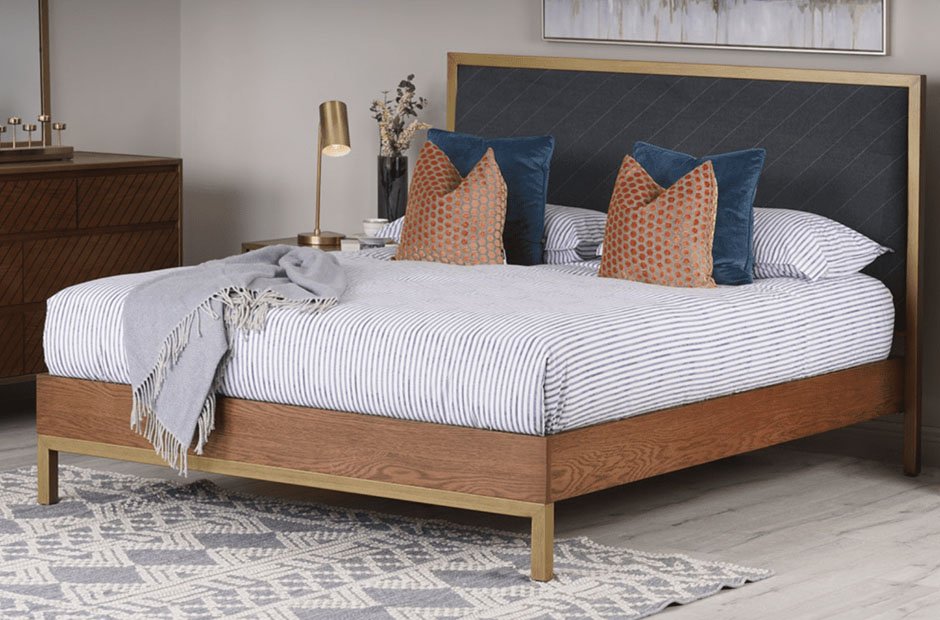
What advantages do solid timber bed frames built with kiln-dried wood and proper mortise-and-tenon or dovetail joinery have over their particle board counterparts? In short, they won’t loosen, warp, or creak for 15 to 20 years. Particle board alternatives will start to fail at the joints and lose their load-bearing capacity after a mere three to five years. When you start thinking about cost-per-use, the “cheap” bed isn’t so cheap after all. You’re postponing the inevitable purchase, all while having a bad night’s sleep.
The same can be said for mattresses. Low-density foam cores will begin to compress in two to three years. You’ll notice that the center sinks and the edges collapse. This is what the industry refers to as the hammock effect. This slight bow pulls the lumbar spine out of its natural curve and it will do so every single night. The result? Terrible, chronic pain.
What Quality Materials Actually do for Your Body
Mattresses that actually perform high quality sleep engineering are often more expensive. This is one case where cost is a fairly reliable proxy for improved rest.
How the Bedroom Environment Affects Cognitive Recovery
According to The Sleep Foundation, it’s estimated that the average person spends roughly 26 years of their life catching Zs, yet 35% of adults report getting less than the recommended seven hours per night, typically due to some kind of environmental discomfort. That’s a pretty big wellness stat. The quality of your sleep affects your immune function, memory, and emotional health.
The physical environment of your bedroom matters more than busy schedules and constant phone notifications aside. Tactile, rest-inviting materials, natural fibers, a mattress surface that realigns your spine, low-emission coatings on large surfaces of furniture that don’t off-gas unhealthy chemicals, communicate to the body that it is entering a time of rest.
For those sourcing furniture locally and wanting something suited to their climate and lifestyle, bedroom furniture adelaide options from established retailers give buyers the chance to assess construction quality directly before committing, checking drawer slides, slat spacing, and material weight in person rather than guessing from a product photo.
Sustainability and the “Forever Piece” Approach
There’s an environmental argument here too, and it’s straightforward. A bed frame replaced every four years generates three times the landfill waste of one solid piece bought once and used for twelve years. The fast-furniture cycle, buy cheap, discard, repeat, carries a real environmental toll that the low price tag doesn’t reflect.
Investing in quality bedroom furniture isn’t just about personal comfort. It’s about stepping off that cycle. Solid wood is repairable. A good mattress can be flipped, cleaned, and maintained. These aren’t disposable goods.
When you’re evaluating a piece for longevity, look for kiln-dried timber framing to prevent warping in humid or temperature-variable environments. Check that the slat system has enough cross-members to distribute weight evenly, and that the gaps between slats don’t exceed about 6 centimetres, wider gaps allow the mattress to sag into them over time. For case goods like dressers, dovetail joinery on the drawer corners and low-VOC finishes are reliable indicators of a manufacturer that’s building for the long term.
The bedroom isn’t a room you decorate. It’s the place where your body and mind do their most critical daily maintenance. The furniture in it either supports that process or works against it.