
Understanding the Mechanics of Geothermal HVAC Installation
Geothermal HVAC systems represent a significant leap forward in home climate control, offering an innovative approach to heating and cooling that harnesses the stable temperatures beneath the Earth’s surface. Unlike conventional systems that burn fossil fuels or rely on outdoor air, geothermal technology utilizes the planet’s natural thermal energy, providing a consistently comfortable indoor environment while drastically reducing energy consumption and environmental impact.
How Ground-Source Heat Pumps Leverage Earth’s Constant Temperature
The core principle behind geothermal HVAC is heat transfer. Below the frost line, the Earth maintains a relatively constant temperature, typically ranging from 45 to 75 degrees Fahrenheit (7 to 24 degrees Celsius) depending on geographic location. Ground-source heat pumps leverage this stability by circulating a water-based solution through a network of buried pipes, known as a ground loop.
During the colder months, the fluid in the loop absorbs heat from the warmer ground and carries it to the heat pump unit inside the home. The heat pump then concentrates this energy and transfers it to the home’s air distribution system, providing efficient heating. Conversely, in warmer months, the system reverses. The heat pump extracts heat from the indoor air and transfers it to the fluid in the ground loop, which then dissipates the unwanted heat into the cooler earth. This continuous exchange ensures year-round comfort, regardless of extreme outdoor temperatures.
The efficiency of a geothermal system is often measured by its Coefficient of Performance (COP), which indicates how much heating or cooling energy is delivered for each unit of electrical energy consumed. Geothermal systems typically boast COPs ranging from 3 to 5, meaning they can deliver three to five units of thermal energy for every unit of electricity used, making them exceptionally efficient compared to traditional systems.
Key Components of a Successful Geothermal HVAC Installation
A complete geothermal HVAC system involves several critical components that work in harmony to deliver optimal performance. The most prominent of these is the ground loop, which can be installed in various configurations, including horizontal, vertical, or pond/lake loops, depending on property size and geological conditions. These are typically closed-loop systems, meaning the fluid circulates within a sealed network of pipes, ensuring minimal environmental impact.
The manifold connects the individual loops of the buried piping system to the main supply and return lines that run into the building. Inside the home, the heat pump unit acts as the central hub, responsible for the heat exchange process. This unit contains a compressor, heat exchangers, and controls that manage the system’s operation. A distribution system, often existing ductwork, then circulates the conditioned air throughout the living space.
Successful geothermal HVAC installation is paramount for maximizing efficiency and longevity. It requires specialized knowledge in geology, excavation, and HVAC engineering. Professional installation ensures proper sizing of the ground loop, correct refrigerant charging, and precise integration with the home’s existing infrastructure. This expertise is crucial for optimizing the system’s performance and ensuring it meets the specific heating and cooling demands of your Evansville home.
Maximizing Energy Efficiency and Savings in Southwestern Indiana
For homeowners in Evansville and across Southwestern Indiana, embracing energy-efficient technologies like geothermal HVAC is a strategic move to significantly reduce utility bills and minimize one’s carbon footprint. The region’s climate, characterized by warm, humid summers and cold winters, makes efficient heating and cooling systems particularly valuable. By investing in advanced solutions, residents can enjoy enhanced home comfort while contributing to a more sustainable future.
CenterPoint Energy Rebates for Evansville Area Homeowners
CenterPoint Energy, a key utility provider in the Evansville area, actively supports its customers in making energy-efficient upgrades through various rebate programs. These initiatives are designed to encourage homeowners to invest in smart savings solutions that not only benefit their wallets but also reduce overall energy demand. For the 2026 program year, CenterPoint Energy offers a range of incentives that can make the transition to more efficient systems, including geothermal, more affordable.
These energy efficiency programs cover a broad spectrum of home improvements, from heating and cooling systems to insulation and smart thermostats. The goal is to provide tangible financial benefits that offset the upfront costs of these upgrades, making them accessible to more Evansville homeowners. We encourage you to explore these opportunities to maximize your savings.
Integrating Geothermal HVAC Installation with Whole-Home Efficiency Upgrades
While geothermal HVAC systems offer remarkable efficiency on their own, their benefits are amplified when integrated into a comprehensive whole-home efficiency strategy. Think of it as creating an energy-efficient envelope around your home. For instance, pairing a new geothermal system with improved attic insulation can dramatically reduce heat loss in winter and heat gain in summer, allowing your HVAC system to work less and consume even less energy.
Similarly, addressing air sealing issues throughout your home, such as gaps around windows, doors, and utility penetrations, prevents conditioned air from escaping and unconditioned air from entering. This creates a tighter building envelope, further reducing the workload on your geothermal system. Smart thermostats, when properly programmed, can optimize your geothermal system’s operation based on occupancy and preferences, leading to additional savings. Duct sealing is another critical upgrade, ensuring that the conditioned air produced by your geothermal system reaches its intended destination without leaks, preventing energy waste.
By combining these measures, Evansville homeowners can achieve unprecedented levels of energy efficiency and comfort. For those considering a holistic approach to energy savings, exploring advanced technologies like geothermal as part of a broader home improvement plan is highly recommended. To learn more about how these various upgrades can work together to create a supremely efficient home, we invite you to read our detailed guide on advanced technologies like geothermal and other energy-saving solutions.
Navigating Rebates and Incentives for Evansville Homeowners
Understanding the array of rebates and incentives available can significantly reduce the cost of energy-efficient home improvements for Evansville homeowners. CenterPoint Energy, along with federal and state programs, provides valuable financial assistance for various upgrades. Navigating these options requires attention to detail regarding eligibility, application processes, and deadlines.
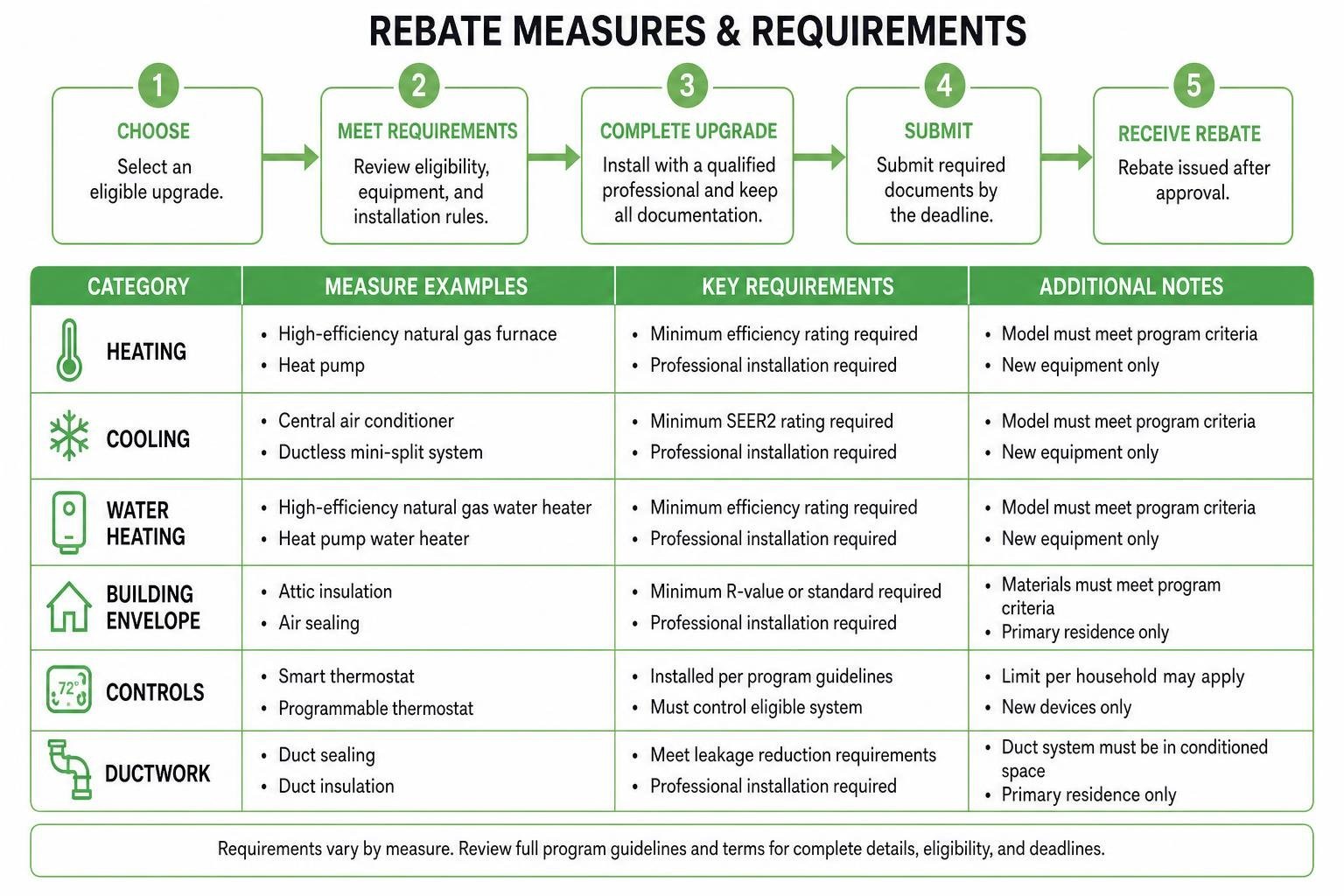
The table above provides a general overview of some CenterPoint Energy rebate measures and requirements for the 2026 program year. Specific terms and conditions apply to each rebate. Homeowners receiving natural gas or electric service from CenterPoint Energy, including those previously served by Southern Indiana Gas and Electric, are typically eligible for these programs.
CenterPoint Energy Heating and Cooling Rebate Requirements
CenterPoint Energy offers a variety of rebates for high-efficiency heating and cooling equipment, designed to help homeowners save on energy costs. For natural gas furnaces, rebates are available for models with high Annual Fuel Utilization Efficiency (AFUE) ratings. For example, a natural gas furnace with 96% AFUE might qualify for one rebate amount, while a 97% AFUE model could receive an even higher incentive.
Heat pump water heaters are another excellent opportunity for savings, especially for homes with CenterPoint Energy electric service. These units are significantly more efficient than traditional electric resistance water heaters and can qualify for substantial rebates. Smart thermostats, which offer advanced control and scheduling features, also come with incentives for ENERGY STAR certified models or other Wi-Fi enabled units. Even routine maintenance is incentivized, with furnace tune-up rebates available once every 24 months per HVAC equipment.
To qualify for these rebates, equipment must be new and installed by a qualified professional. A crucial requirement for most equipment rebates is the submission of an AHRI certificate or number, which verifies the efficiency rating of the installed unit. All rebate applications, along with required documentation, must typically be submitted within 60 days of the equipment installation date to be processed for the 2026 program year.
Federal Tax Credits and the Indiana Energy Saver Program
Beyond CenterPoint Energy’s offerings, Evansville homeowners can often combine local utility rebates with broader federal and state incentives for even greater savings. Federal tax credits, particularly those available through the Inflation Reduction Act, can provide significant financial relief for energy-efficient home improvements, including geothermal systems, high-efficiency HVAC, insulation, and renewable energy installations. These credits typically allow homeowners to claim a percentage of the project cost as a credit against their federal income tax liability.
In Indiana, the Indiana Energy Saver Program, administered by the Indiana Office of Energy Development, offers additional opportunities. This program often bundles federal funding for initiatives like the Home Efficiency Rebates (HOMES) program and the Home Appliance Rebates (HEAR) program. The HOMES program encourages whole-home retrofits that achieve a minimum predicted energy savings, while the HEAR program targets low- and moderate-income households for upgrades such as heat pump HVAC systems and heat pump water heaters. These state-level programs often work by providing upfront discounts through qualified contractors, simplifying the savings process for eligible homeowners.
It is essential for homeowners to research the specific requirements and deadlines for both federal tax credits and the Indiana Energy Saver Program, as these can change. Consulting with a tax professional and an approved energy auditor can help ensure all eligible incentives are claimed.
Frequently Asked Questions About Evansville Home Energy Upgrades
We understand that investing in home energy upgrades can raise many questions. Here, we address some of the most frequently asked questions by Evansville homeowners regarding CenterPoint Energy rebates and other energy-saving initiatives.
What CenterPoint Energy rebates are available for heating and cooling systems?
For the 2026 program year, CenterPoint Energy offers several rebates to encourage the adoption of high-efficiency heating and cooling systems. Homeowners can find incentives for:
- Natural Gas Furnaces: Rebates are available for models with high AFUE ratings, such as $200 for 96% AFUE furnaces and $300 for 97% AFUE models.
- Heat Pump Water Heaters: These highly efficient units can qualify for substantial rebates, often up to $500, especially for customers with CenterPoint Energy electric service.
- Smart Thermostats: Incentives typically range from $30 for Wi-Fi enabled thermostats to $50 for ENERGY STAR certified models, with a limit of two per home.
- Furnace Tune-ups: A $25 rebate is available for professional furnace tune-ups, helping to maintain efficiency and extend the life of your equipment. This rebate can typically be claimed once every 24 months per HVAC unit.
- Electric Pool Heaters: High-efficiency electric heat pump pool heaters with a Coefficient of Performance (COP) of 6 or higher can receive significant rebates, potentially up to $800.
It’s important to verify the most current rebate amounts and specific efficiency requirements on the CenterPoint Energy website, as programs can be updated.
How do Evansville homeowners apply for CenterPoint Energy rebates?
The application process for CenterPoint Energy rebates is designed to be straightforward, though it requires careful attention to detail:
- Determine Eligibility: First, ensure your equipment meets the minimum efficiency ratings and that you are a CenterPoint Energy residential customer in their Indiana service territory.
- Purchase and Install: Buy and install the qualifying energy-efficient equipment. It’s highly recommended to use a qualified contractor for installation.
- Gather Documentation: You will need an itemized invoice that clearly shows the equipment purchased, the installation date, and the cost. For most equipment, an AHRI Certificate of Product Ratings or an AHRI Certificate Number is mandatory to verify efficiency. You will also need your CenterPoint Energy account number.
- Complete Application: Fill out the official CenterPoint Energy rebate application form completely and accurately.
- Submit Application: Applications can typically be submitted online through the CenterPoint Energy website, by email, mail, or fax. A critical deadline to remember is the 60-day submission window from the date of equipment installation. All required documentation must be included with your submission.
- Allow Processing Time: Once submitted, allow up to six weeks to receive your rebate payment.
Always keep copies of your application and all supporting documentation for your records.
Who qualifies for the Neighborhood Weatherization Program in Indiana?
The Neighborhood Weatherization Program is a valuable initiative offered by CenterPoint Energy, specifically designed to assist income-qualified homeowners and renters in improving their home’s energy efficiency. To qualify for this program, households typically need to meet certain income guidelines, often not exceeding 200% of the federal poverty level. Eligibility can also extend to those receiving benefits from programs such as SNAP (Supplemental Nutrition Assistance Program), LIHEAP (Low Income Home Energy Assistance Program), WIC (Special Supplemental Nutrition Program for Women, Infants, and Children), Welfare, or Section 8 housing assistance.
Eligible participants receive a free home energy assessment, which identifies areas for improvement. During this assessment, trained professionals may install on-the-spot upgrades at no cost, such as weatherstripping, aerators, pipe insulation, and even a smart thermostat. The program aims to provide immediate energy savings and enhance home comfort for those who need it most. The home must typically be over five years old and receive CenterPoint Energy gas and/or electric service.
This program offers a unique opportunity for qualifying residents to make significant energy-saving improvements without the upfront cost, fostering a more comfortable and affordable living environment.
Conclusion
Embracing energy-efficient solutions, particularly advanced systems like geothermal HVAC, is a smart investment for Evansville homeowners seeking enhanced home comfort, substantial long-term savings, and a reduced environmental footprint. CenterPoint Energy’s comprehensive rebate programs, combined with federal tax credits and state initiatives like the Indiana Energy Saver Program, create a robust framework of financial incentives that make these upgrades more accessible than ever.
By understanding the mechanics of geothermal technology, strategically combining it with other whole-home efficiency improvements, and diligently navigating the available rebates, you can transform your home into a beacon of energy efficiency. We encourage you to explore these opportunities, consult with qualified HVAC professionals, and take advantage of every available incentive to make your home more comfortable, affordable, and sustainable for years to come.