The Core Math: How Many Square Feet Are in an Acre?
At the heart of understanding land measurement lies a simple, yet profoundly important, conversion factor: one acre is precisely equal to 43,560 square feet. This exact figure is the bedrock of land transactions and property assessments in the United States and other countries that adhere to the imperial or US customary measurement systems. While this number might seem arbitrary at first glance, its origins are deeply rooted in historical agricultural practices, which we will explore later.
Beyond square feet, an acre can be expressed in various other units, offering different perspectives on its size:
- It is equivalent to 4,840 square yards.
- In the metric system, one acre is approximately 4,047 square meters.
- This also translates to about 4047 hectares.
- For a broader scale, one acre represents 1/640th of a square mile.
To help us visualize this, if an acre were perfectly square, each side would measure approximately 208.71 feet. This gives us a tangible dimension to consider when imagining a plot of land.
Formula for Converting Square Feet and Acreage
The conversion between square feet and acres is a fundamental skill for anyone involved in real estate, land development, or even gardening. The process is straightforward, relying on that constant figure of 43,560.
To convert acres to square feet: We simply multiply the number of acres by 43,560.
- Formula: Square Feet = Acres × 43,560
- Example: If you have 2.5 acres, you would calculate 2.5 × 43,560 = 108,900 square feet.
To convert square feet to acres: We divide the total square footage by 43,560.
- Formula: Acres = Square Feet ÷ 43,560
- Example: If a property measures 87,120 square feet, you would calculate 87,120 ÷ 43,560 = 2 acres.
These simple calculation steps allow for precise area determination, which is crucial for everything from property valuation to planning construction projects.
How a Real Estate Platform Helps Buyers Evaluate Property Acreage
In today’s real estate market, having access to accurate and easily digestible property information is paramount. This is especially true when dealing with land, where understanding acreage directly impacts property assessment, potential land usage, and buildable footprint. Modern real estate platforms have become indispensable tools, streamlining the process of evaluating property acreage for buyers, sellers, and developers alike.
When we’re searching for land, whether for a new home, an agricultural venture, or commercial development, a comprehensive listing can provide initial acreage details. However, to truly understand the scope of a property, we often need to go beyond the listed number. This is where a robust platform, such as a national real estate platform, becomes invaluable. These platforms often integrate advanced features that allow us to delve deeper into zoning setbacks, analyze parcel boundaries, and even estimate potential buildable areas. They transform raw data into actionable insights, helping us make informed decisions without needing to manually crunch numbers or consult multiple disparate sources.
Utilizing a Real Estate Platform to Convert Square Footage to Acres
One of the most significant advantages of using a modern real estate platform is the automated calculation and conversion capabilities. Instead of manually dividing large square footage numbers by 43,560, these platforms often do the heavy lifting for us.
For example, when viewing a property listing, we might see the lot size specified in acres. However, for residential planning or material estimation, square feet might be a more practical unit. A good platform will either display both units or provide an instant conversion tool. This means we can quickly understand that a 0.25-acre lot is 10,890 square feet, which helps visualize the space available for a house, garden, or driveway. This immediate access to square feet conversion for parcel boundaries and other listing metrics saves considerable time and reduces the risk of calculation errors.
Key Tools Built Into a Modern Real Estate Platform for Land Buyers
Beyond simple conversions, contemporary real estate platforms offer a suite of tools designed to assist land buyers in thoroughly evaluating property acreage:
- Interactive Mapping: These features allow us to visualize property lines, measure distances, and even trace irregular shapes to get an estimated square footage or acreage. This is particularly useful for lots that aren’t perfectly square or rectangular.
- Tax Records and Parcel Data Integration: Platforms often pull directly from county tax assessor records, providing authoritative data on official acreage, property dimensions, and ownership history. This helps verify listed information and uncover any discrepancies.
- Lot Geometry and Dimensions: Many platforms can display the approximate dimensions of a lot, such as length and width, or even calculate the side length of a theoretical square acre (208.71 feet per side) for comparison.
- Topography Overlays: For larger or more complex parcels, some advanced platforms offer topographical maps. While surveyors use plane surveying (measuring horizontal area as if the land were flat) for legal acreage, topography can influence usable space and development costs. These overlays help us understand the lay of the land, even if it doesn’t change the official acreage.
- Zoning Information: Crucially, platforms can provide access to local zoning regulations. This helps us understand minimum lot sizes, setback requirements (how far a building must be from property lines), and allowed uses, all of which directly impact how much of the acreage is truly buildable or usable.
By integrating these features, a modern real estate platform empowers us to make more informed decisions, ensuring we fully understand the implications of a property’s acreage before making a commitment.
Visualizing Acreage and Common Lot Sizes
Grasping the abstract number 43,560 square feet can be challenging. To truly understand the size of an acre, it’s helpful to compare it to familiar landmarks and common residential lot sizes.
One of the most frequently used comparisons is with an American football field. A standard American football field, including both end zones, measures approximately 57,600 square feet. This means that one acre (43,560 square feet) is slightly smaller than a full football field, roughly 75% of its total area. If we consider just the playing field between the goal lines, which is 48,000 square feet, an acre is still a bit smaller, approximately 90% of that area. This visual helps us picture a significant, yet manageable, expanse of land.
For another perspective, imagine a tennis court. A single tennis court measures about 2,106 square feet. You could fit roughly 20 to 21 singles tennis courts within one acre.
When we look at residential properties, especially in urban and suburban areas, lot sizes are often expressed as fractions of an acre or in square feet. A “city lot equivalent” is sometimes used as a benchmark, often around 6,000 square feet. This means one acre could accommodate about 7 to 8 such city lots.
Here’s a table comparing common lot sizes in both square feet and acres:
Standard Residential Lot Benchmarks
Understanding these benchmarks is vital for homebuyers and developers alike:
- Quarter-Acre Lot: This is a very common size in many suburban developments, measuring 10,890 square feet. It typically offers enough space for a modest-sized home, a small yard, and perhaps a driveway.
- Half-Acre Lot: Doubling the quarter-acre, a half-acre lot is 21,780 square feet. This provides considerably more space, allowing for larger homes, more extensive landscaping, or amenities like a swimming pool.
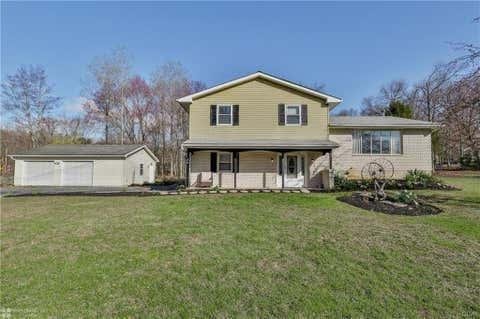
- Full Acre Lot: At 43,560 square feet, a full acre offers substantial space for larger custom homes, significant gardens, outbuildings, or more privacy. This size is often sought after in rural-suburban transitional areas.
It’s also worth noting some informal terms that sometimes surface in real estate:
- Builder’s Acre: This is a non-standardized term, typically referring to around 40,000 square feet. It’s often used informally by developers to simplify calculations, but it’s nearly 10% smaller than a legal acre and should be approached with caution, always verifying the actual square footage.
- Commercial Acre: Similar to a builder’s acre, a commercial acre is an informal unit that can range from 30,000 to 40,000 square feet. It’s sometimes used in commercial development to account for land dedicated to public infrastructure like streets and sidewalks, which wouldn’t be part of the usable plot. Again, always seek the precise square footage for any transaction.
These visualizations and benchmarks help us translate abstract numbers into concrete, understandable spaces, making property evaluation much more intuitive.
Historical Origins and Legal Standards of Land Measurement
The story of the acre is a fascinating journey through agricultural history, royal decrees, and eventually, international standardization. Its roots stretch back to medieval England, long before the precise measurement of 43,560 square feet was officially established.
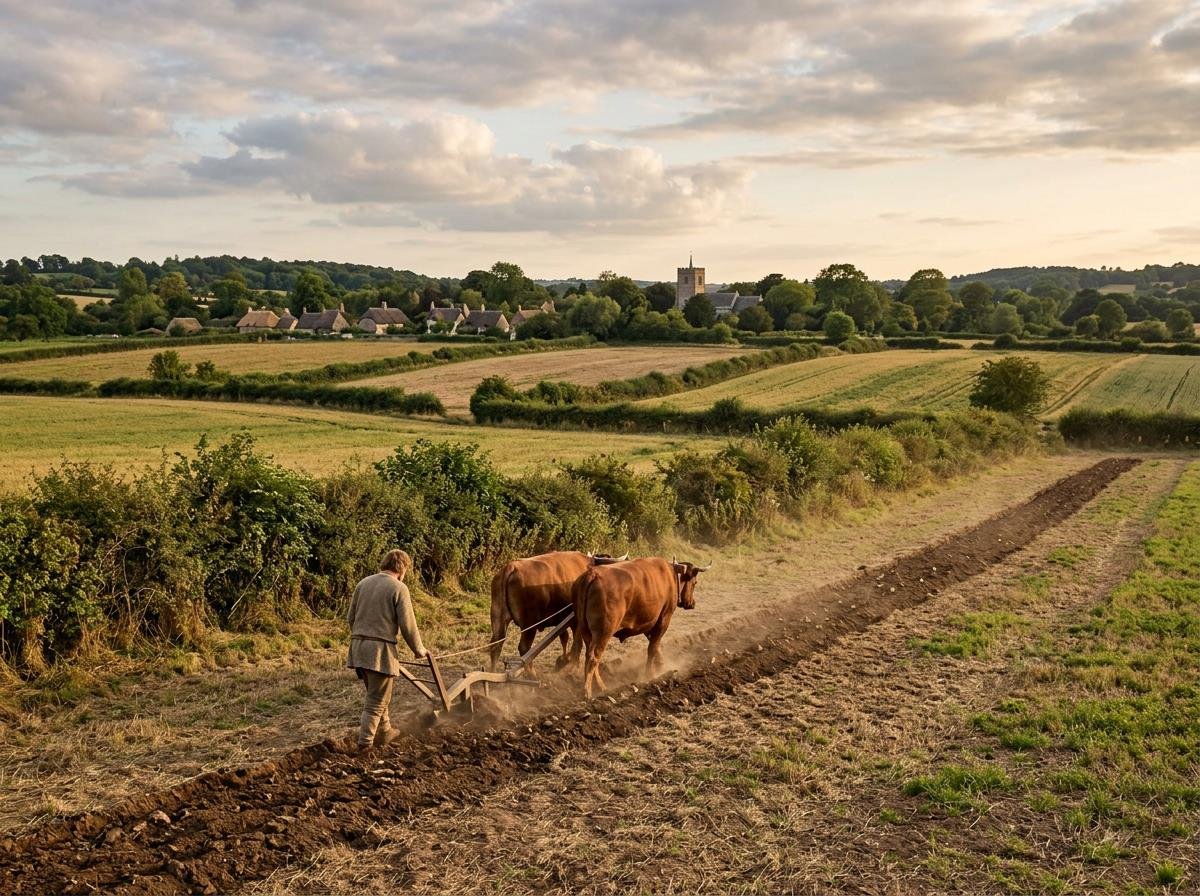
Originally, an acre was not defined by a specific number of square feet, but by practicality: it was the amount of land that a single man could plow in one day with a team of oxen. This ancient definition, often cited as a “yoke of oxen” pulling a plow, highlights the agricultural origins of the unit. The word “acre” itself derives from the Old English word “æcer” and the Latin “ager,” both meaning “open field” or “pasture.”
Over time, as agricultural practices became more standardized, so did the tools and the land they worked. The length of a furrow that oxen could plow before needing a rest became known as a “furlong,” which was standardized at 660 feet. A “Gunter’s chain,” a surveying tool invented in the 17th century, was 66 feet long. The acre then became formally defined as an area one furlong long by one chain wide. When we multiply these two figures: 660 feet (furlong) × 66 feet (chain), we arrive at exactly 43,560 square feet. This “awkward” number, as some might perceive it, was not chosen arbitrarily but was the arithmetic consequence of practical, standardized plowing distances.
This definition was cemented by various English statutes, including the Weights and Measures Act of 1878, and carried over to the United States. The acre became the baseline unit for land measurement in the US Public Land Survey System (PLSS), established by the Land Ordinance of 1785. Under the PLSS, land is divided into townships, sections, and smaller parcels. A “section” of land, for instance, is one square mile, which contains exactly 640 acres.
In the mid-20th century, a crucial distinction emerged regarding the “foot” unit itself. The International Yard and Pound Agreement of 1959 officially standardized the international foot as exactly 0.3048 meters. This agreement fixed the international acre at precisely 43,560 international square feet (approximately 4,046.856 square meters).
However, the United States had historically used a slightly different measurement for surveying purposes, known as the US survey foot. This meant there was a minute difference between an “international acre” and a “US survey acre.” A US survey acre was approximately 43,560.174 square feet. While this difference (roughly 24.8 square inches per acre, or about 3.22 square feet per 640 acres) is negligible for most everyday purposes, it was significant enough for high-precision surveying over vast distances. To eliminate this dual standard, the US survey foot was officially deprecated by the National Geodetic Survey on December 31, 2022. As of August 2026, the international foot is the universal standard for all measurements in the United States, meaning the acre is now universally and unequivocally 43,560 square feet.
This rich history demonstrates how the acre, a unit born from the practicalities of ancient agriculture, evolved through centuries of standardization to become the legally precise measurement we use today for land in the United States.
Frequently Asked Questions
Understanding land measurements can sometimes bring up specific questions. Here, we address some of the most common inquiries regarding acres and square feet.
How many square feet are in 1 acre of land?
There are exactly 43,560 square feet in one acre of land. This is the internationally recognized and legally defined standard used in the United States and other countries that employ the imperial or US customary measurement systems. This precise conversion factor is crucial for all land-related calculations, from real estate transactions to construction planning.
How does 1 acre compare to an American football field?
One acre is slightly smaller than a standard American football field. A full American football field, including both end zones, measures approximately 57,600 square feet. This means that one acre (43,560 square feet) is roughly 75% of the size of a full football field. If we consider only the playing area between the goal lines (excluding end zones), which is 48,000 square feet, an acre is still a bit smaller, representing about 90% of that space. So, while it’s a good visual reference, an acre is not quite the same as a football field.
What is the difference between an international acre and a US survey acre?
Historically, there was a minute difference between an international acre and a US survey acre due to slightly different definitions of the “foot” unit. The international acre was based on the international foot (standardized in 1959), resulting in exactly 43,560 square feet. The US survey acre was based on the US survey foot, making it marginally larger at approximately 43,560.174 square feet.
However, this distinction is now largely historical. The US survey foot was officially deprecated by the National Geodetic Survey on December 31, 2022. As of August 2026, all land measurements in the United States, including the acre, are based on the international foot. Therefore, there is no longer a practical difference; one acre is universally understood as 43,560 square feet.
Conclusion
Navigating the complexities of land measurement, particularly understanding how many square feet are in an acre, is a fundamental skill for anyone involved in real estate, development, or even just property ownership. The constant figure of 43,560 square feet per acre serves as the bedrock for all these calculations, a number rooted in centuries of agricultural practice and solidified by modern standardization.
From visualizing the space of a quarter-acre suburban lot to comprehending the vastness of a 640-acre section of land, a clear grasp of these conversions empowers us to make confident decisions. We’ve seen how historical methods, like the Gunter’s chain and furlong, precisely led to this number, and how modern real estate platforms now offer sophisticated tools to effortlessly convert, visualize, and analyze property acreage.
By utilizing these resources and understanding the core math, we can approach land acquisition, property evaluation, and development planning with greater clarity and precision, ensuring that our understanding of “how much land is that, really?” is always accurate and informed.