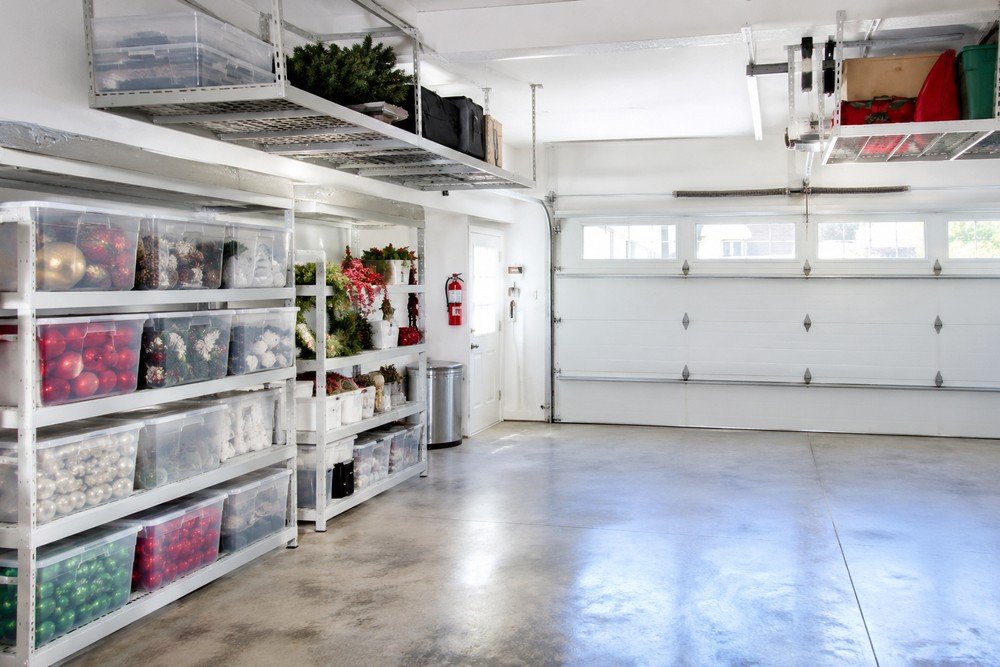
The first frost hits the pavement, and the calendar suddenly flips toward the busiest stretch of the year. The first gift boxes have already arrived by courier, and the plastic bins with the artificial tree and tinsel have come down from the attic right under the hood of the family crossover. A familiar picture?
Within a matter of weeks, a standard two-car garage (usually around 400 to 430 square feet) turns into an impassable warehouse maze, forcing the car to freeze out on the driveway. Scraping ice off the windshield at seven in the morning is nobody’s idea of festive cheer. Saving those precious square feet for your vehicle is entirely possible if you introduce clear zoning on time and rethink your approach to storage.
Why Outdoor Decor Takes Up the Most Space
Of course, the most space-occupying are the massive outdoor decoration items – the inflatable ones, the deer made of metal wire with the frame, the reels of electricity, and the endless plastic totes stuffed with the string lights. Each such bin takes up about 5 cubic feet. As soon as a dozen are in store, a whole wall of your garage would be off-limits for the whole year.
You needn’t keep piles of ladders and endless amounts of wiring at your home at all. When homeowners compare exterior decorating options, professional installation becomes a true lifesaver for a cluttered space. For example, by booking O’Fallon Christmas light installation for homes, you will be offered the complete service: they bring their own LED systems, do the installation on the roofline, take care of them all the while in the season, and in January, they will take the lights down and haul them away to their own storage facility. No boxes lying around. No messy cords hanging on the shelves in July.
Temporary Storage Zones and the Arm’s-Reach Rule
Once large outdoor decorations are no longer pressing against the walls, it’s time to take care of the interior logistics. There is a very particular type of cargo that the holiday season brings: extra folding chairs for extended family, massive roasting pans, bulk beverage packs, and, naturally, secret gift stashes. The worst approach is to randomly distribute this along sidewalks.
Divide the available space based on frequency of use by setting up four specific zones:
- Buffer zone near the house entry door. This is a good place to keep everyday items and non-perishable groceries that you will bring into the kitchen a few times a week (such as cases of juice, canned goods, or spare paper towel rolls).
- Upper tier or overhead ceiling racks. The ideal spot for lightweight yet bulky items like wrapping paper, empty gift boxes, and extra guest pillows needed for only a few holiday days.
- The dead-end space behind the bumper. Folding tables and chairs go right here, since you will pull them out exactly once – right before the big family dinner.
- Closed opaque bins at eye level. This is where purchased gifts stay hidden, ensuring kids don’t accidentally stumble upon a surprise while searching for a bike helmet.
This layout instantly eliminates visual clutter. Even on a dark, rainy evening, you can step out of the driver’s seat without squeezing sideways between cardboard towers. The car pulls inside without any risk of scratching a fender against the sharp corner of a box.
Clear Access to Utility Systems
Safety comes first. In the pre-holiday rush, people often forget that a garage is also the mechanical heart of the home. If a blocked path leads to the electrical panel, the water heater, or the main water shut-off valve, then in the case of a sudden emergency in winter, it can cost thousands of dollars.
There always has to be a completely open walkway of at least 30-36 inches in front of all your utility units. Do not place even lightweight festive bags of tinsel there, telling yourself you can quickly move them aside when needed. However, in a critical moment when everything depends on seconds, you risk tripping over ribbons and wrapping paper in the dark.
An equivalent principle applies to your snow shovel, bag of ice melt, and jumper cables. You should hang them right by the garage door on wall hooks. Winter doesn’t send an advance warning before a blizzard.
Fighting the Cardboard Invasion
Even though web shopping is great, it generates mountains of corrugated cardboard. If you stack empty boxes inside one another in a garage corner, your cardboard tower will be six feet tall within two weeks. It’s a problem because it steals floor space, and it’s also a serious fire hazard.
Make it a rule to break down every box with a utility knife the very day the package arrives. Flat cardboard takes up 85 percent less volume than assembled boxes. Slide the flattened sheets into a narrow gap between a shelving unit and the wall, and once a week – say, every Thursday evening – take everything out for recycling. By the way, large boxes from appliances or kids’ toys are better off never coming inside at all; send them straight to the recycling bin right after checking that all parts are included.
The Secret to a Fast January Cleanup
The real test of your garage system happens after the holidays. When the tree is dismantled and guests have headed home, don’t just leave everything in disarray until spring. Label every bin with wide painter’s tape and a black marker, writing not just a vague word like “Christmas,” but an exact inventory of the contents: “window wreaths,” “table linens,” “glass ornaments.”
Next November, you will thank yourself for those five minutes spent labeling, because instead of turning a dozen totes upside down, you will simply grab the right one and maintain spotless order around your car.