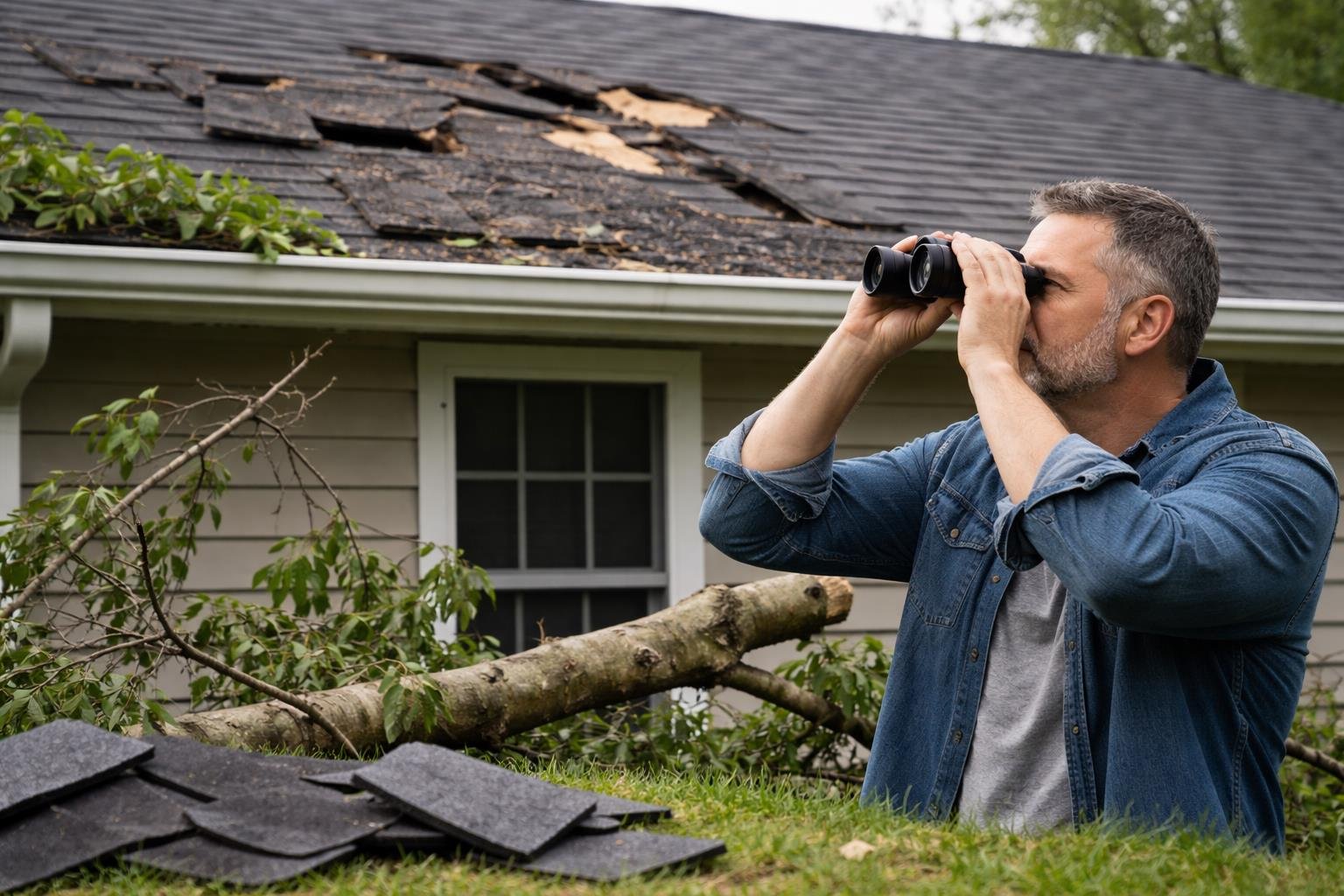
After the property blows a strong wind or hail, the immediate question that comes to mind of many homeowners is whether their roof took the blow and survived. Climbing on the roof to have a closer look can be dangerous—especially if the shingles are loose or the surface is wet—even if it may be a first reaction to grab a ladder. Luckily, there are several safe and effective means to check for storm damage without going on the roof.
Start With a Walkaround Inspection
First of all, slowly go around your house and visually inspect the roof from different angles. Besides looking for the major issues such as missing shingles, bent flashings, or debris lying on the roof, you should be very careful especially in the areas where the roof meets the walls or valleys as these spots are always the first ones to be affected in storms and the highest wind spots.
Shingles that, according to you, have an uneven surface that are curled or lifted in comparison with other areas may be a sign of the wind attack. Hail damage can be recognized by dark spots and little indentations on your roof material. If necessary get a pair of binoculars to have a better look but stay safe by not going on the roof.
Check Gutters and Downspouts for Granules
The most revealing characteristic of hail damage is probably the granule loss from the shingles after which these granules are washed into the gutters and downspouts. Take a close look at the gutters for any such deposits of a sandy material. While it is normal for there to be a little granule loss over the years, a large quantity of granules found in your gutters soon after a storm could mean damage to your roof. Besides, look for dents and cracks or any separations of the gutters as well, which can also be probably damaged by hail.
Look for Debris and Yard Clues
After a storm, your yard might offer a few clues as to what damages the storm may have inflicted on your house. Old tree limbs, broken fences, or damaged garden furniture can be the things that your roof went through. Look down for pieces of shingles, which are small, flat fragments with a rough texture.
If you have roof vents, a satellite dish, or metal flashing on your home, check if they are dented by hail. Damage to these items is an indication that the shingles are also damaged.
Inspect the Attic for Interior Signs
It is possible to check inside the roof without using a ladder. Take a flashlight with you to the attic and look at the following:
- Discoloration on the underside of the ply or wood of the roof
- Insulation not dry
- Light from outside visible through the roof boards
The presence of these signs means that the wind blew away the shingles or that the hail damaged the roofing material, so the water was able to get in.
Review Your Insurance Timeline
Roof damage from storms is generally included in homeowners insurance, but policies usually have very strict deadlines for when you have to report the damage. Look up when the storm occurred and go through your policy to figure out how long after the event you can file a claim. Putting off an inspection or gathering evidence might make it harder to get insurance coverage.
If you think there might be damage, it is best to get in touch with an expert without delay. A licensed roofing contractor Lincoln NE can carry out a comprehensive inspection, discover any hidden storm damage, and supply written documentation together with photos that will back up your insurance claim. In addition to inspecting the exterior shingles, flashing and ventilation components, a standard roof inspection usually includes a structural integrity check.
Prioritize Safety Above All
Being affected by a storm is a very traumatizing experience, but remember you are the most important one. Don’t get on the roof if you see that it is slippery, dangerous or wet. Just by carefully checking the house from the ground and referring to the warning signs given above, you will be able to take the next steps wisely without risking your life.
If you’re unsure, always get help from a professional to be sure the house is protected and your insurance claim is well documented.