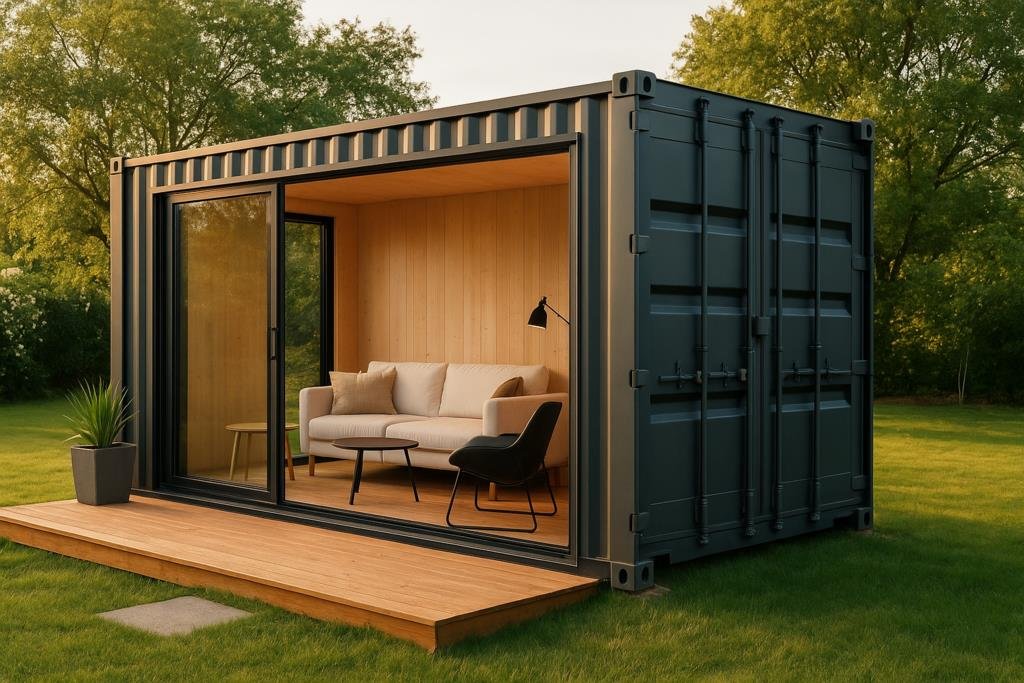
In recent years, unconventional spaces have gained attention as people rethink how they live, work, and relax. Rising housing costs, evolving work patterns, and a growing interest in sustainable living have pushed many homeowners and creators to explore alternatives beyond traditional construction. One option that has quietly shifted from purely functional use into lifestyle design is the shipping container, particularly when repurposed as a flexible personal space rather than simple storage. What was once associated strictly with logistics and transport is now being adapted into studios, wellness rooms, offices, and private retreats that support modern lifestyles.
A shipping container offers a unique starting point for lifestyle transformation because it combines structure, mobility, and adaptability. A standard 40 ft shipping container, for example, provides enough interior volume to accommodate meaningful design choices while remaining compact compared to full-scale building projects. However, turning a steel box into a sanctuary involves a series of trade-offs, decisions, and challenges that must be carefully evaluated to ensure the final space aligns with personal needs, environmental considerations, and long-term practicality.
Why Lifestyle Spaces Are Moving Beyond Traditional Rooms
Lifestyle spaces are no longer limited to spare bedrooms or garage conversions. People increasingly want dedicated areas that serve specific purposes—creative studios, home gyms, meditation rooms, guest accommodations, or focused work environments. These spaces are expected to feel intentional rather than improvised, offering both function and emotional comfort.
Traditional construction often struggles to meet these expectations efficiently. Renovations can be costly, time-consuming, and disruptive to daily life. By contrast, repurposed steel units offer a faster and more modular path to creating separate zones that exist alongside the main home rather than within it. This physical separation can enhance focus, privacy, and psychological balance, especially for remote workers or individuals seeking personal retreats.
That said, the appeal of these alternative structures should not overshadow the importance of thoughtful planning. Lifestyle transformation is not just about novelty; it is about usability, comfort, and long-term value.
Understanding the Spatial Potential
One of the most significant advantages of using a converted storage container is predictability. The dimensions are standardized, which simplifies design planning and cost estimation. A 40 foot shipping container, for instance, offers enough length to divide the interior into multiple functional zones—such as a seating area, workspace, and storage—without feeling cramped.
However, this predictability also introduces limitations. The width is fixed, and while it can feel spacious once properly finished, it requires careful interior planning to avoid a narrow or tunnel-like effect. Design choices such as window placement, lighting, and color schemes play a crucial role in shaping how the space feels.
There is a trade-off here between simplicity and flexibility. While a cargo container provides a ready-made shell, it does not offer the same freedom as building from scratch. The challenge lies in maximizing what is available rather than expanding outward.
Comfort Versus Durability: Finding the Right Balance
At its core, a steel container is designed for durability, not comfort. This creates one of the most important trade-offs in the transformation process. On one hand, the structure is weather-resistant, secure, and long-lasting. On the other, it requires significant modification to become a comfortable living or lifestyle space.
Insulation is a primary concern. Without proper thermal treatment, the interior can become uncomfortably hot or cold depending on the climate. Adding insulation improves comfort but reduces interior space and increases costs. Similarly, installing windows enhances natural light and emotional well-being but compromises some of the original structural simplicity and security.
Balancing durability with comfort involves deciding what matters most for the intended use. A meditation room or home office may prioritize temperature control and acoustics, while a workshop or hobby space might accept a more utilitarian finish. These decisions shape not only the experience of the space but also its long-term maintenance requirements.
Design Choices and Their Lifestyle Impact
Design is where a transformed container truly becomes a sanctuary rather than a novelty. Interior finishes, layout, and lighting all influence how the space supports daily life. Minimalist designs often work well because they align with the linear shape of the structure, reducing visual clutter and enhancing calmness.
However, minimalism is not without compromise. Built-in furniture saves space but limits flexibility. Open layouts feel airy but can lack privacy or sound separation. Each design choice reflects a broader lifestyle preference, whether that is adaptability, simplicity, or personalization.
The exterior design also matters. A raw industrial look may appeal to some, while others prefer cladding or landscaping that helps the structure blend into its surroundings. This choice affects not only aesthetics but also how the space is perceived by neighbors and how it integrates with the environment.
Environmental Considerations and Responsible Use
One of the most frequently cited benefits of repurposing steel containers is sustainability. Reusing existing structures can reduce the demand for new construction materials and minimize waste. From a lifestyle perspective, this aligns with growing interest in eco-conscious living and responsible consumption.
However, sustainability is not automatic. The environmental impact depends heavily on how the unit is modified and used. Extensive alterations, energy-intensive climate control systems, or long-distance transportation can offset some of the ecological benefits. Thoughtful design choices—such as natural ventilation, energy-efficient lighting, and responsible material sourcing—play a critical role in maintaining a lower environmental footprint.
The decision to repurpose a container should consider not only personal convenience but also its broader impact. A well-planned transformation can support a more sustainable lifestyle, while a poorly planned one may simply shift environmental costs elsewhere.
Mobility Versus Permanence
Another key factor in container-based lifestyle spaces is mobility. Unlike traditional buildings, these structures can theoretically be relocated, offering flexibility for people who anticipate changes in location or property use. This can be appealing for individuals who value adaptability or see their lifestyle needs evolving over time.
However, increased permanence often improves comfort and functionality. Permanent foundations, utility connections, and landscaping make the space more livable but reduce its mobility. Choosing between a semi-permanent setup and a fully integrated structure involves weighing future uncertainty against present comfort.
This trade-off highlights a broader lifestyle question: is the space meant to evolve with changing circumstances, or is it intended as a long-term extension of the home? The answer influences everything from design choices to budget allocation.
Cost Considerations Beyond the Initial Purchase
While converted containers are often perceived as cost-effective, the total investment extends beyond acquiring the structure itself. Interior finishes, insulation, electrical systems, plumbing, and permits all contribute to the final cost. In some cases, these expenses can approach or exceed those of traditional construction, particularly when aiming for high comfort standards.
The advantage lies in cost predictability and scalability. Projects can be phased, allowing owners to prioritize essential features first and add refinements later. This approach aligns well with lifestyle-focused projects, which often evolve as needs become clearer over time.
An objective assessment requires acknowledging that cost savings are not guaranteed. The value comes from customization, speed, and the ability to create purpose-built spaces without major disruption to the main home.
Challenges in Regulation and Planning
One often overlooked challenge is regulatory compliance. Zoning laws, building codes, and local regulations vary widely and can affect what is possible. Lifestyle spaces intended for personal use may face fewer restrictions than those designed for rental or commercial purposes, but this is not universal.
Navigating these requirements adds complexity and may influence design decisions. For example, limitations on size or placement could affect how the space is used or how visible it is from the street. Addressing these challenges early helps avoid costly changes later and ensures the project aligns with both personal goals and community standards.
Emotional and Psychological Impact
Beyond physical considerations, lifestyle spaces have a psychological dimension. A well-designed retreat can support mental well-being, creativity, and focus. The act of stepping into a separate environment—distinct from daily household routines—can signal a shift in mindset, whether toward work, relaxation, or self-care.
However, achieving this effect requires intentional design. Poor lighting, inadequate ventilation, or cluttered layouts can undermine the sense of sanctuary. This reinforces the importance of aligning design decisions with the emotional purpose of the space, not just its practical function.
Making Informed Lifestyle Decisions
Transforming a steel structure into a personal sanctuary is not a one-size-fits-all solution. It requires balancing comfort, cost, sustainability, and adaptability while remaining realistic about limitations. Each decision—from insulation to layout—has ripple effects that influence how the space functions and how it feels over time.
The most successful projects begin with clarity about purpose. Whether the goal is productivity, relaxation, creativity, or storage-enhanced living, defining priorities helps guide trade-offs and avoid unnecessary compromises.
Wrapping Up
The shift from simple storage to meaningful lifestyle space reflects broader changes in how people define home and personal well-being. Repurposed containers offer a compelling combination of structure, flexibility, and creative potential, but they demand thoughtful planning to truly become sanctuaries rather than temporary solutions.
By objectively evaluating design choices, environmental impact, comfort requirements, and long-term use, individuals can create spaces that genuinely enhance their lifestyle. When approached with intention and balance, a transformed container can become more than an alternative structure—it can become a purposeful extension of how people live, work, and recharge.