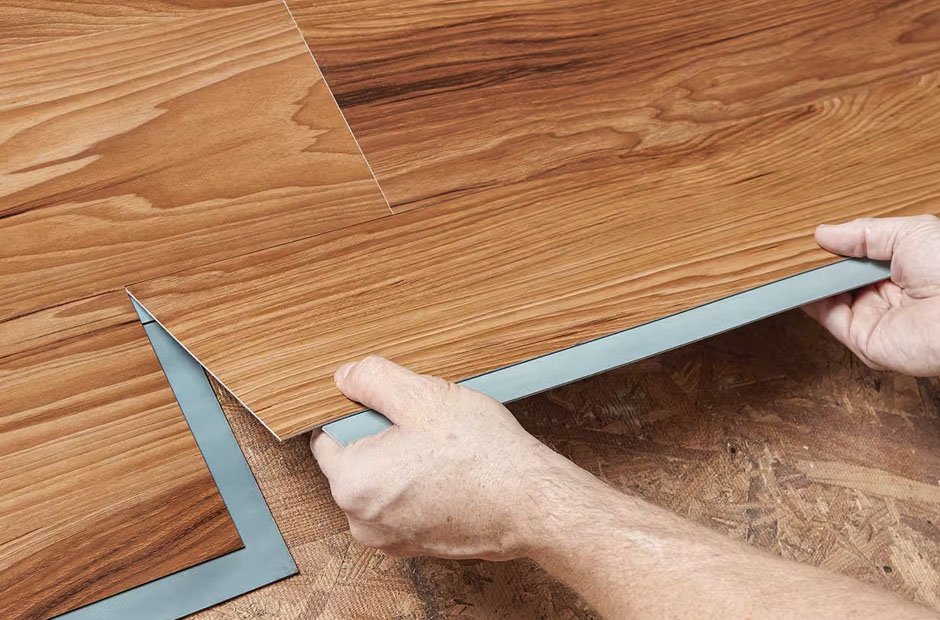
Luxury vinyl planks have become a favorite for their durability, style, and easy upkeep. If you’ve chosen them for your floor upgrade, you might be wondering whether to tackle the installation yourself or hire a professional.
The approach you choose in installing LVP flooring can influence costs, timing, and the final look of your space, so it helps to understand the key considerations before getting started.
This article walks you through those points, helping you feel confident in choosing the option that best fits your skills, schedule, and home.
Budget and Long-Term Value
Labor can take up a large part of your budget, which is why some homeowners consider installing LVP flooring themselves. However, even with a DIY approach, additional materials and supplies can increase overall costs. These expenses often range from about $190 to $385 beyond the price of the flooring itself and may include:
- Basic tool rental (saws, spacers, tapping block): $40–$75
- Underlayment: $60–$120
- Replacement planks for waste or miscuts (about 5–10% extra): $50–$100
- Adhesive (if required): $20–$40
- Miscellaneous supplies (blades, knee pads, sealants): $20–$50
Professional installation, by comparison, typically ranges from $1.50 to over $3.50 per square foot for LVP flooring, depending on the space’s complexity and local labor rates. For a 400-square-foot area, average expenses are roughly $600 to $1,400, with total project costs increasing based on materials and preparation needs.
As part of the installation service, most professionals handle subfloor leveling, moisture checks, and layout planning, which helps lower the likelihood of costly errors. Proper installation can also support property resale value by ensuring the floor looks consistent and holds up over time.
Skill and Technical Requirements
LVP flooring installation involves understanding how the materials behave and how different surfaces affect the final result. Professionals often rely on techniques and tools that help maintain consistency and precision throughout the project.
Consider your comfort with hands-on, detailed work before deciding on a DIY approach. Use this quick checklist to see if you may be ready to tackle the project yourself or if hiring a professional would feel more comfortable:
- Can you make accurate, straight cuts with basic tools, such as a saw?
- Can you measure carefully and keep seams aligned across a room?
- Can you follow step-by-step instructions and troubleshoot minor issues?
Timeline and Household Impact
Installing new flooring can take longer than expected, especially in larger rooms or spaces with tricky layouts. For an average home, professional installation usually takes 1 to 3 days. A DIY approach can stretch to 4 to 5 days or more, especially if you only work on weekends and need time for adjustments.
It’s worth asking yourself: What could you do with the extra two weekends spent on this project? Would you miss out on family events, delay side projects, or lose relaxation time? Thinking about these trade-offs makes it easier to figure out which approach fits best with your lifestyle and priorities. The project can also disrupt daily life in several ways, such as:
- Limiting access to rooms
- Creating noise from cutting and moving materials
- Requiring furniture to be moved or stored
- Demanding coordination with other ongoing projects
Protection and Liability Considerations
Hiring professionals usually comes with labor warranties, so mistakes during installation are covered, and repair costs are handled. Doing it yourself means you’re responsible for any errors, like gaps, shifting, or moisture damage.
The fine print on manufacturer warranties can carry serious consequences for a DIY installation. There have been cases where homeowners had to replace sections of floor out of pocket after failing to meet specific guidelines.
For example, some LVP flooring brands offer a 25-year residential warranty. However, if you skip crucial steps, such as installing a vapor barrier in a moisture-prone room, your entire warranty could be voided. Before you start, carefully review the requirements and learn to use tools properly to reduce the risk of injury or property damage.
Make the Right Choice for Your Floors
As we wrap up, it’s clear that installing LVP flooring requires weighing your priorities and understanding what matters most. Doing it yourself can save money, but it takes extra time and effort. Hiring a professional costs more upfront, yet it frees you to focus on other priorities and provides greater peace of mind.
Take the time to research your options and reach out to local flooring suppliers for guidance and estimates. With the right approach, you can enjoy a floor that looks polished, stands up to daily wear, and adds long-term value to your home.