
Understanding Georgia Motorcycle Accidents: Causes, Injuries, and Liability
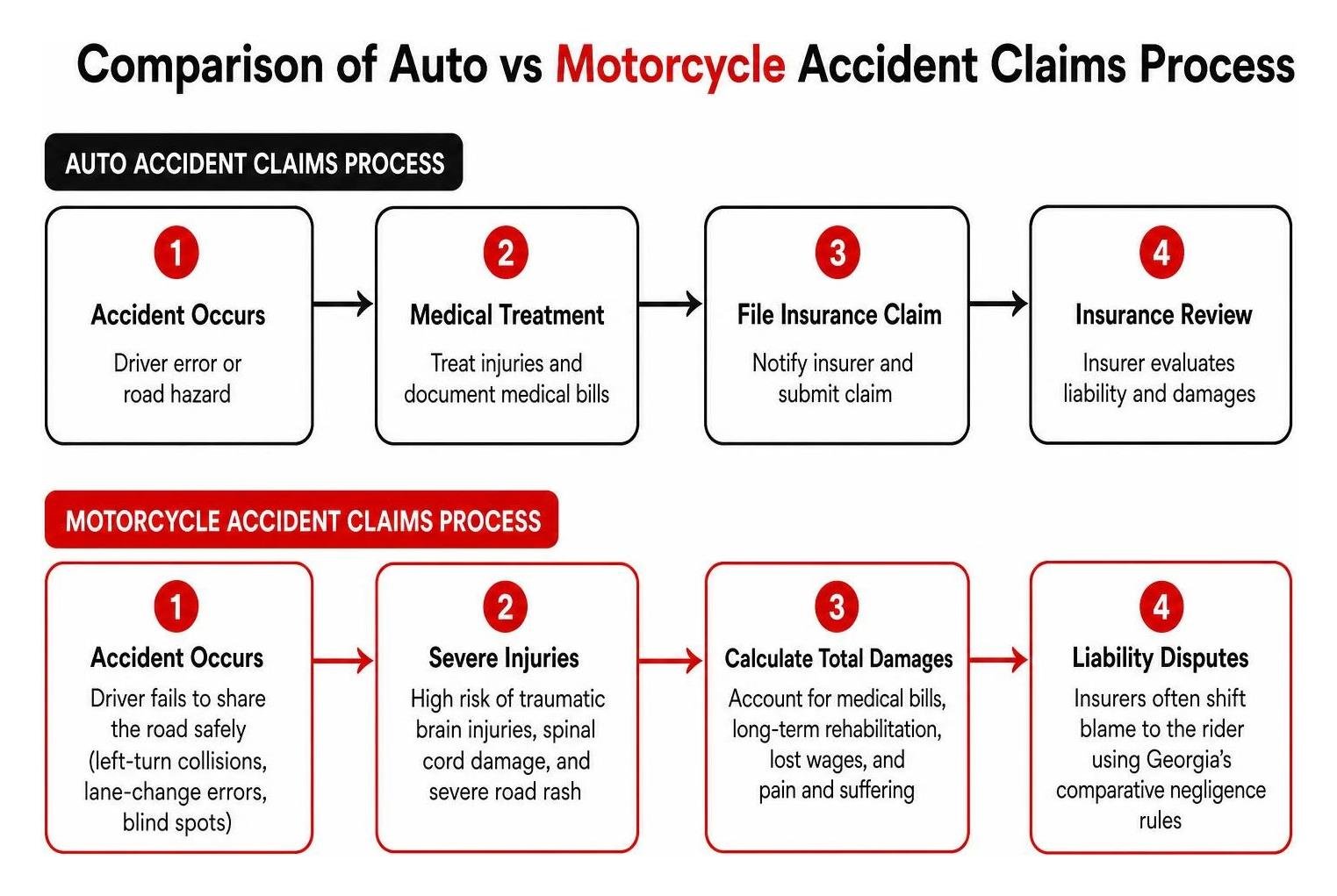
Motorcycle accidents in Atlanta often stem from the failure of other motorists to share the road safely. Common triggers include left-turn collisions, where a driver fails to yield to an oncoming bike, and lane-change errors where the rider is ignored in a driver’s blind spot. Furthermore, urban hazards like uneven pavement, oil spills, and road debris can turn a routine commute into a life-altering event.
Severe Injuries and Calculating Total Damages
The lack of an external frame makes riders uniquely vulnerable. We frequently see cases involving traumatic brain injuries, spinal cord damage, and severe “road rash” that requires skin grafting. Beyond the physical toll, the financial burden is significant. Calculating total damages requires accounting for immediate medical bills, long-term rehabilitation, lost wages, and the non-economic impact of pain and suffering.
Determining Fault and Comparative Negligence Rules
Georgia follows a “modified comparative negligence” rule. This means that as long as you are not 50% or more at fault for the accident, you may still recover damages, though your payout will be reduced by your percentage of fault. Insurance companies often exploit this rule to shift blame onto the rider.
When and Why to Hire a Motorcycle Injury Lawyer
Professional legal advocacy is often the deciding factor in whether a victim receives fair compensation. An experienced attorney does more than just file paperwork; they conduct independent investigations, secure expert testimony from accident reconstructionists, and ensure your damages are accurately assessed. If you are currently navigating the aftermath of a crash, speaking with a motorcycle injury lawyer can provide the clarity needed to handle complex liability disputes.
Overcoming Insurance Company Tactics
Insurance adjusters are trained to protect their bottom line, often by offering quick, lowball settlements before the full extent of your injuries is known. They may attempt to record your statement in hopes that you inadvertently accept partial blame. Having legal counsel ensures that all communications are managed by someone who understands these tactics and can prevent you from signing away your rights prematurely.
The Legal Process: From Initial Claim to Trial or Settlement
The journey from a claim to a resolution involves several phases: filing the initial demand, negotiating with insurers, and, if necessary, moving into the discovery phase of a lawsuit. While many cases settle out of court, being prepared for trial is essential to maintaining leverage.
Navigating the Claim Timeline and Statute of Limitations
In Georgia, you generally have two years from the date of the accident to file a lawsuit. This is the statute of limitations. While two years may seem like a long time, evidence can vanish quickly, and medical milestones must be carefully tracked. Delaying action can weaken your position significantly.
Legal Fees and Contingency Fee Agreements
Most reputable injury firms operate on a contingency fee basis. This means there are no upfront costs; the firm’s fee is typically a percentage of the final settlement or verdict. This structure ensures that legal representation is accessible regardless of your current financial status.
Criteria for Selecting the Right Motorcycle Injury Lawyer
When choosing representation, look for a firm with a proven track record in motorcycle-specific litigation. You want a team that understands the unique physics of bike crashes and has the resources to challenge large insurance firms. Communication is key—ensure your attorney is transparent about your case’s progress and realistic about potential outcomes.
Frequently Asked Questions About Atlanta Motorcycle Accident Claims
How long do I have to file a lawsuit? You have two years from the date of the collision to initiate legal action. Failing to meet this deadline typically results in the permanent loss of your right to sue.
Can I recover compensation if I was partially at fault? Yes, provided your assigned percentage of fault is less than 50%. Your final compensation will be reduced by that percentage.
Who pays for my medical bills while my claim is pending? You remain responsible for your bills initially. However, your attorney can help coordinate payment through health insurance, MedPay coverage, or by negotiating medical liens with providers to be paid out of your eventual settlement.
Conclusion
Recovering from a motorcycle accident is a marathon, not a sprint. By securing professional legal support, you shift the burden of the insurance battle onto experts, allowing you to focus on your physical and emotional recovery. With the right strategy, you can pursue the justice and compensation you deserve.