Drywall can develop holes, dents, cracks, and raised nails that leave interior walls uneven or damaged. The extent of the damage and the condition of the panel determine the type of repair needed. Drywall repairs restore the wall’s surface, and proper sanding leaves it smooth and ready for paint. Here is more information on the steps for effective drywall repair:
Assess Drywall Damage
The size and type of drywall damage determine the appropriate repair method. Small punctures and shallow dents typically require filling compound; larger holes often need a backing patch before finishing. Cracks along taped seams require joint repairs. Damaged corner beads need repair or replacement to restore a straight edge.
The condition of the wall determines whether patching is sufficient or panel replacement is necessary during drywall repair. Holes with firm, intact edges are generally easier to patch than openings surrounded by crumbling material. Panels with soft, moisture-damaged cores often require removal and replacement rather than surface repairs.
Recurring nail pops and seam cracks can indicate loose fasteners, joint-tape failure, or movement around drywall joints. Nail pops create small bumps on the wall, while seam cracks form along the lines where drywall panels meet. The location and condition of each defect help determine whether the repair requires:
- Securing the fasteners
- Replacing joint tape
- Applying new joint compound
Prepare the Damaged Surface
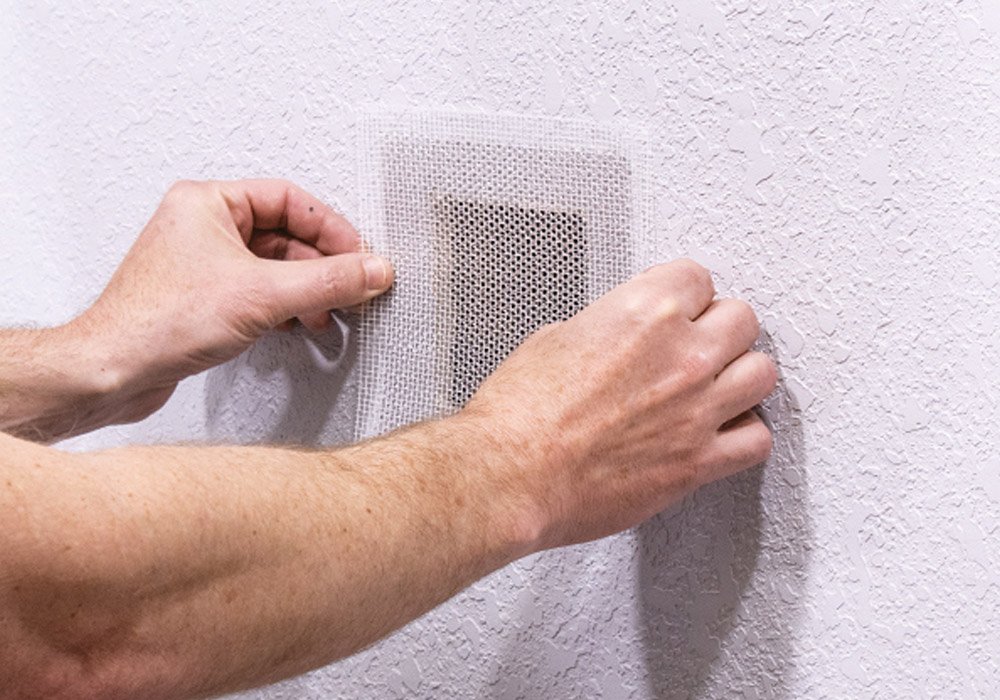
Loose drywall paper, crumbling gypsum, and flaking material prevent a patch from bonding securely. Trim damaged edges back to stable material and remove protruding fragments before applying compound or patching materials. For holes that extend beyond the surface, use a patch or replacement piece of drywall to cover the damaged area.
Dust and debris affect the quality of the repair. Protective coverings keep sanding residue and drywall fragments off nearby floors and furnishings. Before applying joint compound, remove dust from the repair area to provide proper adhesion.
Patch Holes and Cracks
Drywall patching helps cover holes and damaged areas in interior walls. Cracks along seams may need filling to create an even surface, while badly damaged panels require replacement. Joint compound covers the patched areas and helps blend them with the surrounding wall. Sanding and finishing smooth the surface, and the repaired area can then be prepared for primer before painting. Properly finished patches help the repaired sections blend with the rest of the wall.
Sand and Smooth Repairs
Dried joint compound often leaves ridges and uneven edges that need sanding before the wall is ready for its final finish. Fine-grit sandpaper or a sanding sponge helps smooth these areas without removing excessive material. Careful sanding protects the surrounding drywall paper and keeps the repaired surface even.
Wall texture affects how well a repair blends with the existing finish. Smooth walls require an even surface, while orange-peel and knockdown finishes need their characteristic patterns replicated across the repaired area. Skim coating involves spreading a thin layer of compound over the wall to create a uniform surface and help patched areas blend with the surrounding wall before painting.
Schedule Drywall Repair Solutions Today
Professional drywall repair services address holes, cracks, and panels that need replacement. Experienced handymen assess the damage and determine the appropriate repair method. Timely repairs help stop cracks from spreading, and technicians are able to secure loose drywall sections before they break away. Contact a handyman service provider today to discuss the work needed for your walls.