
Understanding the spectrum of care available is the first crucial step in navigating senior living options. These communities are designed to provide varying levels of support, ensuring residents receive the assistance they need while maintaining as much independence as possible. Key considerations include the availability of daily support, robust safety protocols, access to medical services, and efficient emergency response systems. Each community type is tailored to address specific needs, from active, independent lifestyles to comprehensive memory care.
Independent Living and Active Adult Options
Independent Living communities, often referred to as active adult communities, cater to seniors who are generally healthy, self-sufficient, and eager to embrace a vibrant, maintenance-free lifestyle. These environments typically offer private residences, ranging from apartments to cottages, where residents manage their own daily routines. The emphasis here is on community engagement and convenience.
Residents can expect a rich social calendar filled with diverse activities, from fitness classes and hobby groups to educational seminars and cultural outings. Wellness programs are often integrated, promoting physical and mental health. Community dining options provide delicious, chef-prepared meals, eliminating the need for daily cooking, while recreational clubs foster new friendships and shared interests. These communities are ideal for those looking to downsize, shed homeownership responsibilities, and expand their social circle in a supportive environment.
Assisted Living and Memory Care in Senior Living Communities
For seniors who require more daily assistance, Assisted Living communities offer personalized support with Activities of Daily Living (ADLs) such as bathing, dressing, grooming, and mobility. These communities strike a balance between independence and assistance, providing a helping hand when needed without compromising dignity. Medication administration is carefully managed by trained staff, and residents benefit from regular health monitoring.
Memory Care, a specialized form of assisted living, is designed for individuals living with Alzheimer’s disease or other forms of dementia. These secure environments feature specialized staffing trained in dementia care, therapeutic programs focused on cognitive stimulation, and environments designed to minimize confusion and maximize safety. Residents engage in tailored activities that promote engagement and well-being, all within a supportive and understanding community.
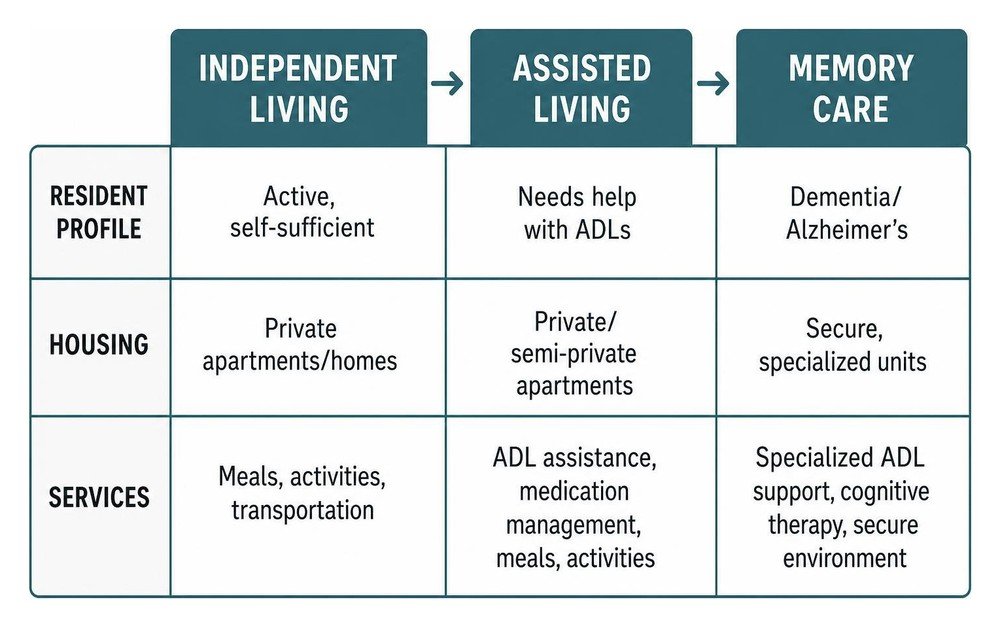
Here’s a brief comparison of these core options:
| Feature | Independent Living | Assisted Living | Memory Care |
|---|---|---|---|
| Resident Profile | Active, self-sufficient | Needs help with ADLs | Dementia/Alzheimer’s |
| Housing | Private apartments/homes | Private/semi-private apts | Secure, specialized units |
| Services | Meals, activities, transport | ADL assistance, meds, meals, activities | Specialized ADL, cognitive therapy, secure environment |
| Medical Support | Minimal, emergency only | Available as needed | High, specialized |
| Security | Standard | Enhanced | High, secured perimeters |
Essential Factors to Evaluate When Touring Communities
Once you have a clearer understanding of the care levels, the next step is to embark on campus tours. This hands-on experience is invaluable, allowing you to observe the community’s atmosphere, interact with staff, and assess the facilities firsthand. Pay close attention to staff engagement – are they friendly, attentive, and knowledgeable? Observe the overall cleanliness standards and the quality of maintenance. Crucially, scrutinize the safety features, from emergency call systems in rooms to secure entryways and well-lit common areas. A welcoming dining and common area is often a good indicator of the community’s social heart.
Assessing Dining, Wellness, and Daily Amenities
The quality of life in a senior living community is heavily influenced by its amenities. Dining, for instance, should go beyond mere sustenance, offering nutritional dining options that are varied, delicious, and cater to dietary restrictions. Many communities feature chef-prepared meals in restaurant-style settings, fostering social interaction. Inquiring about meal plan flexibility, guest dining privileges, and snack availability throughout the day provides valuable insight into the daily dining experience.
Wellness is another cornerstone. Look for well-equipped fitness centers, access to physical therapy, and a range of exercise programs tailored to different mobility levels. Outdoor spaces, such as gardens, walking paths, and courtyards, contribute significantly to residents’ well-being and offer opportunities for fresh air and light activity. Additionally, consider the availability of scheduled transportation, which can be vital for medical appointments, shopping trips, and community outings, ensuring residents remain connected to the wider world.
Navigating Costs, Contracts, and Selecting a Qualified Senior Living Provider
Understanding the financial aspects of senior living is paramount. Fee structures can vary widely, often including an initial community fee, which is a one-time charge, followed by monthly pricing tiers that depend on the level of care and accommodation chosen. It is helpful to ask whether pricing follows an all-inclusive model or a tiered fee-for-service schedule where care assistance with activities of daily living is billed separately. It’s essential to thoroughly review all contract terms, including cancellation policies, service inclusions, deposit refund policies, and potential future cost adjustments. Don’t hesitate to ask for a detailed breakdown of all expenses and historical annual rate increase trends to avoid surprises.
For those seeking guidance on selecting a qualified senior living provider and understanding the nuances of pricing and available services, resources like Arbor Village at Hillcrest can offer valuable insights and support. Financial planning for senior living often involves exploring long-term care insurance, personal assets, veteran aid and attendance benefits, and various assistance programs to ensure a sustainable solution over time.
Preparing for the Transition and Family Involvement
The transition into a senior living community is a significant life event, and careful preparation can make it smoother for everyone involved. Emotional adjustment is a key component, requiring open communication and empathy. Families play a vital role in supporting their loved one through this change, helping them understand the benefits and addressing any anxieties. Practical aspects like downsizing guidance, managing moving logistics, and establishing clear transition timelines are also critical.

When families are involved in this process, especially if they are traveling from out of town, finding comfortable and convenient accommodations becomes a practical consideration. For instance, if you’re assisting a loved one with a move into a Boise senior living community, securing a suitable Boise ID hotel for your stay is often a key part of the planning. Many hotels in the area offer amenities that can make your visit more comfortable, allowing you to focus on supporting your family member.
Accommodating Pets and Visitors in Senior Living Communities
Many senior living communities recognize the importance of family and pets in a resident’s life. It’s common for communities to have pet-friendly guidelines, allowing residents to bring their beloved companions, often with specific size or breed restrictions and potential pet fees. These policies can significantly enhance a resident’s sense of home and well-being. Similarly, guest accommodations, such as guest suites or designated areas, are often available for visiting family members, making it easier for loved ones to stay close.
For longer visits, or when guest accommodations within the community are not available, families often seek nearby lodging. When visiting a loved one in a Boise senior living community, for example, finding a pet-friendly Boise ID hotel is paramount for those traveling with furry companions. The Riverside Hotel, for instance, allows pets in designated guest rooms (not suites) for a fee, and its proximity to the Boise River Greenbelt offers excellent walking opportunities. The Sparrow, another chic downtown option, is also highlighted as pet-friendly, featuring unique social spaces.
Beyond pet policies, consider hotels that offer family-friendly amenities. The Riverside Hotel boasts indoor and outdoor saltwater pools, a splash pad, and a dry sauna, providing recreational options for all ages. Hotels like Oxford Suites Boise are often praised for their complimentary breakfast, which can be a great convenience for families. For those seeking to explore the city during their visit, choosing a Boise ID hotel with walkability to attractions like the Basque Block, Freak Alley Gallery, or direct access to the 25-mile Boise Greenbelt (like The Grove Hotel or The Riverside) can enhance the experience. Some hotels, such as The Grove Hotel, even offer special rates for Idaho residents, which can be a valuable perk for local family members planning a staycation around their visit. Always inquire about visiting hours and policies regarding family gatherings to ensure a seamless experience for everyone.
Frequently Asked Questions About Senior Living
Navigating senior living often brings forth a host of questions. Here, we address some common inquiry points to help families make informed decisions about care assessments and decision timelines.
What is the primary difference between independent living and assisted living?
The primary difference lies in the level of personal assistance provided. Independent living communities cater to seniors who are largely self-sufficient and do not require daily help with personal care. They enjoy maintenance-free living, social activities, and culinary services, but manage their own medical and personal care needs.
Assisted living, conversely, is for individuals who need support with Activities of Daily Living (ADLs) such as bathing, dressing, medication management, and mobility aid. While still promoting independence, these communities offer a structured environment with caregivers available around the clock to provide personalized care, alongside dining and social programs.
When is the right time to transition into a residential senior community?
The “right time” is highly individual, but several indicators often suggest a transition might be beneficial. These include concerns about safety indicators at home (e.g., falls, inability to manage medications), increasing caregiver strain on family members, social isolation leading to loneliness or depression, and significant health changes that necessitate more consistent oversight or medical access. Proactive planning, rather than waiting for a crisis, often leads to a smoother and more positive transition.
How do families effectively budget for residential senior living?
Effective budgeting for residential senior living involves a comprehensive review of financial resources. Families typically explore options such as long-term care insurance policies, which can cover a significant portion of costs. Bridge funding, often through short-term loans or reverse mortgages, can help cover expenses until other assets are liquidated. Personal assets, including savings, investments, and the sale of a home, are frequently utilized. Additionally, it’s important to investigate federal and state benefit programs, such as Medicaid or Veterans’ benefits, for which the senior may qualify. Consulting with a financial advisor specializing in elder care can provide tailored strategies.
Conclusion
Choosing the right senior living community is a deeply personal journey, but one that can lead to enhanced quality of life, greater security, and vibrant social engagement. By thoroughly researching core care levels, evaluating essential community factors, and preparing thoughtfully for the transition, families can make informed decisions that prioritize the lifestyle enhancement and long-term wellness of their loved ones. Whether it’s finding a community that feels like home or ensuring comfortable accommodations for visiting family members in a city like Boise, Idaho, every detail contributes to a successful and fulfilling new chapter.