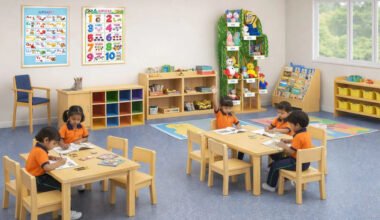
Early childhood education (ECE) is a critical phase that greatly influences a child’s future learning capabilities and success. This foundational stage encompasses various learning experiences and milestones that shape cognitive, social, and emotional development. By investing in high-quality early education, we can ensure that children have a strong start, leading to improved educational and life outcomes.
Cognitive Development through Early Education
Early childhood education plays a vital role in nurturing the cognitive development of children. It is in these formative years that children begin to develop basic language skills, such as forming simple sentences and learning new vocabulary. According to Today’s Parent, many toddlers reach significant language milestones, such as combining words into simple sentences and enjoying nursery rhymes, by the age of three.
Interactive activities, such as storytelling and singing, stimulate brain development and encourage language acquisition. Children who are exposed to a rich linguistic environment in their early years tend to perform better academically as they grow older. As a result, early cognitive development serves as a cornerstone for lifelong learning and academic success.
The skills acquired during early education not only enhance language development but also support problem-solving abilities. Engaging children in diverse activities helps them to understand and process information effectively. This early cognitive engagement is essential for fostering critical thinking and laying a solid foundation for future educational pursuits.
The Social Benefits of Early Childhood Education
Aside from cognitive gains, early childhood education significantly impacts a child’s social development. In a structured educational environment, young learners develop essential social skills, such as cooperation, sharing, and empathy. These skills are crucial as they enable children to build meaningful relationships and work effectively in a team.
Children who participate in early education programs are often more adept at handling social situations and interactions. Through guided play and group activities, they learn to navigate social dynamics in a safe and supportive setting. These early experiences provide a framework for developing the emotional intelligence necessary for lifelong social success.
Moreover, the social skills developed during early education translate into improved academic outcomes later in life. Studies suggest that children who engage in such educational programs are better prepared for formal schooling and often display higher levels of motivation and engagement. These benefits underscore the importance of investing in early education as a means to promote overall growth and development.
The Long-term Impact on Educational Success
Quality early childhood education has a profound long-term impact on educational success, influencing outcomes well into adulthood. It sets the stage for a positive educational trajectory, increasing the likelihood of higher academic achievement and graduation rates. A report by Gitnux highlights that early involvement in educational settings can boost high school graduation rates by as much as 15%.
This correlation indicates that early educational experiences equip children with the skills and attitudes essential for academic perseverance. Such programs help instill a love of learning from a young age, driving students to strive for excellence in their academic endeavors. Subsequently, these students often pursue higher education, which provides further opportunities for personal and professional growth.
As important as academic achievements are, early education also fosters a lifelong habit of learning and adaptability. These qualities are invaluable in today’s fast-paced and ever-changing world, where the ability to continually acquire new skills is key to success. Achieving high educational outcomes places early childhood education at the forefront of educational priorities.
The Broader Importance of Early Educational Opportunities
The landscape of educational opportunities, including early childhood education, is continuously evolving. As of 2025, there are over 32,000 private schools in the United States, according to Research.com, highlighting the growing need and demand for quality educational settings. Providing access to early education ensures that more children can benefit from a nurturing and stimulating learning environment.
Early educational programs are integral for bridging gaps and leveling the playing field for all children, regardless of socioeconomic background. They offer invaluable experiences that shape a child’s perspective, enabling them to make informed decisions as they grow. Such foundational experiences greatly influence future educational paths and life choices.
Investing in early education is an investment in the nation’s future workforce and societal well-being. Offering high-quality educational opportunities to young children paves the way for a generation that is better prepared to meet the challenges of tomorrow. Hence, the emphasis on early childhood education cannot be overlooked in efforts to enhance the global educational landscape.
Early childhood education is pivotal in establishing a robust foundation for future learning and development. It encompasses cognitive, social, and emotional growth that translates into better educational outcomes and societal contributions. By supporting early educational initiatives, we can unlock the potential of every child, fostering a brighter future for individuals and communities alike.