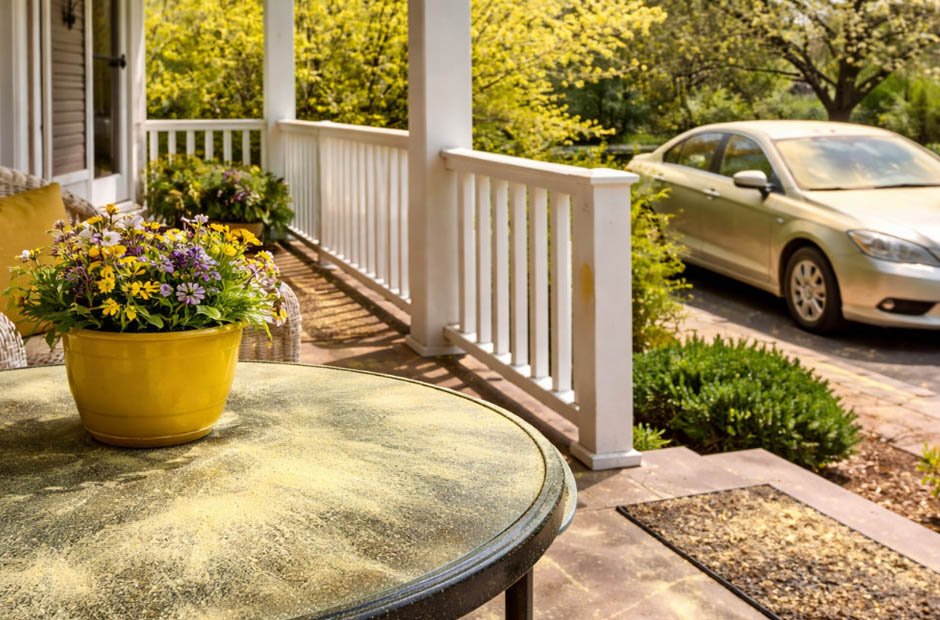
In the height of spring in May, a majority of homeowners see the yellow dust accumulating on their cars, outdoor furniture, and window sills. However, some of the worst pollen accumulation occurs on exterior surfaces that people seldom think of. Pollen grains are very light and can be carried for a long distance before they fall on the rough or textured materials of a property.
Although rain may appear to be a natural cleaning agent, it usually just presses pollen into the pores of the surface instead of washing it away completely. This explains why after a few days of rain most houses still look dusty or stained. In the long run, pollen that is trapped may not only reduce the attractiveness of a house but it can also aggravate allergy problems and make outdoor spaces look abandoned.
Textured Concrete Holds More Pollen Than Smooth Surfaces
Textured concrete is one of the major areas where pollen can stay unnoticed. Driveways, patios, walkways, and pool decks with rough finishes naturally hold the airborne pollen particles in small grooves and pores. Unlike the smooth ones, rough concrete surfaces retain moisture and dirt longer.
Even after heavy rain, pollen is often found under the surface. When the concrete is dry, the yellow color is the first to be noticed again. This accumulation can make the outdoor spaces look unclean even when they have been rinsed recently.
Vinyl Siding Quietly Collects Yellow Residue
Vinyl sidings are surfaces where high pollen collection happens throughout the spring season. Properties near trees, gardens, or grassy areas are at greater risk. Pollen getting stuck to siding is influenced by static electricity, humidity, and the nature of the surface.
Often homeowners don’t notice how much buildup there is until the siding starts to appear faded or discolored. During spring cleaning season, many homeowners rely on local house washing experts in Towson to safely remove persistent pollen from exterior surfaces before it mixes with dirt and mildew.
Stone Columns and Masonry Features Trap Hidden Debris
Stone columns, brick accents, and decorative masonry can also become magnets for pollen much more than homeowners think. Natural stone is full of micro-pores that can soak up moisture, dust, and pollen particles. Areas such as porch columns and retaining walls are very susceptible to picking up pollen because not only are they always exposed to the wind but they are often close to vegetation.
It is unlikely that rain alone will be able to clean these types of surfaces efficiently. What happens instead is that pollen will get caught in the rough surfaces and cause yellowish staining which is very difficult to remove.
Deck Railings Often Stay Yellow After Rain
Deck railings represent yet another part of the house that most homeowners forget to clean during the period when there is a lot of pollen in the air. Both wooden and composite railings accumulate layers of pollen due to their constant exposure to the elements. The worst pollen buildup can be found on flat surfaces, especially those near the trees and shrubs.
It is common for homeowners to keep wiping their railings only to find that the yellow coating comes back in a few days. If you do not clean your railings properly, pollen will keep being spread to your furniture, clothes, and your outdoor space.
Seasonal Cleaning Helps Protect Exterior Surfaces
Expert power washing is an effective way to get rid of deeply embedded pollen in concrete, siding, stone, and deck materials before staining becomes an issue. Doing a thorough cleaning of the home exterior twice a year not only increases the value of the home but also helps reduce the health symptoms caused by pollen in the outdoor environment.
Homeowners who focus on the areas that collect the pollen the most will be able to maintain their homes better and their outdoor spaces will be cleaner all through the spring and summer.