Lighting is often the element that quietly determines whether a home feels finished. A room can have beautiful furniture, refined materials, and a carefully chosen color palette, but if the lighting feels too harsh, too small, or disconnected from the architecture, the entire space can lose its sense of warmth.
In modern homes, lighting is no longer treated as a final accessory. It shapes atmosphere, defines transitions, highlights architectural details, and supports the way people actually live. The glow beside a front door makes the home feel welcoming before anyone steps inside. A chandelier over a dining table turns an everyday meal into a more intentional moment. A fixture in a high-ceiling foyer can transform empty vertical space into a dramatic first impression.
The best lighting choices begin with one question: what does this space need the light to do?
1. Outdoor Lighting: The First Layer of Welcome
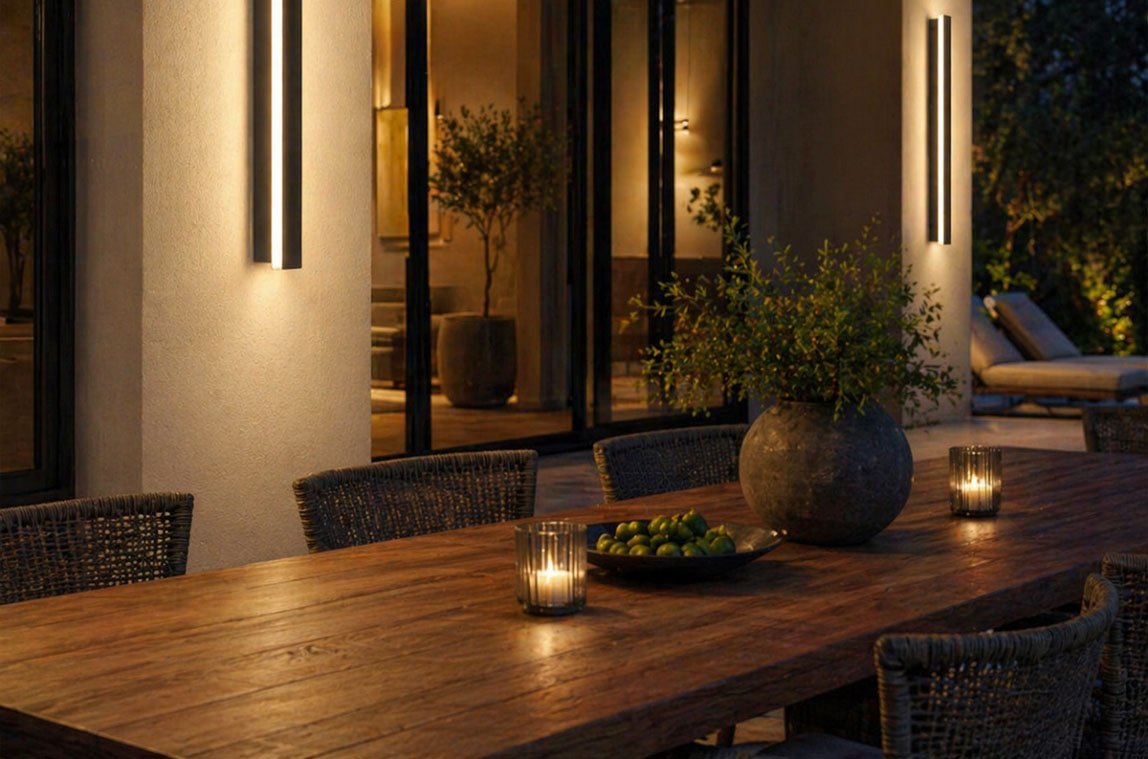
The exterior of a home sets the tone before the interior is ever seen. A front porch, garage, patio, or side entry can feel much more polished when the lighting feels connected to the architecture rather than simply attached to the wall.
For outdoor areas, proportion matters. A wall sconce that is too small may disappear beside a tall door or wide garage facade. A fixture that is too ornate may compete with stone, siding, brick, or wood. In many modern homes, slim black fixtures and clean linear silhouettes work especially well because they add definition without visual clutter.
Brightness also deserves attention. Outdoor lighting should make steps, doors, locks, and pathways easier to see, but it should not feel cold or overexposed. A softer, controlled glow often creates a more inviting atmosphere than a harsh beam of light.
For homeowners refreshing an exterior entry, modern outdoor wall sconces can help balance scale, finish, placement, and everyday function in one architectural detail.
Styling Tip: Repeat the finish of your outdoor fixture somewhere else on the exterior, such as door hardware, house numbers, window frames, or planters. This small detail makes the entire entry feel more cohesive.
2. Interior Chandeliers: Choosing Between Sparkle and Softness
Inside the home, chandelier material changes the emotional tone of a room. Crystal and glass can both feel elegant, but they create very different effects.
Crystal is best when you want light to feel brilliant, reflective, and more formal. It catches brightness, creates sparkle, and naturally draws attention. This makes crystal a strong choice for dining rooms, foyers, bedrooms, and spaces where the chandelier is meant to become a focal point.
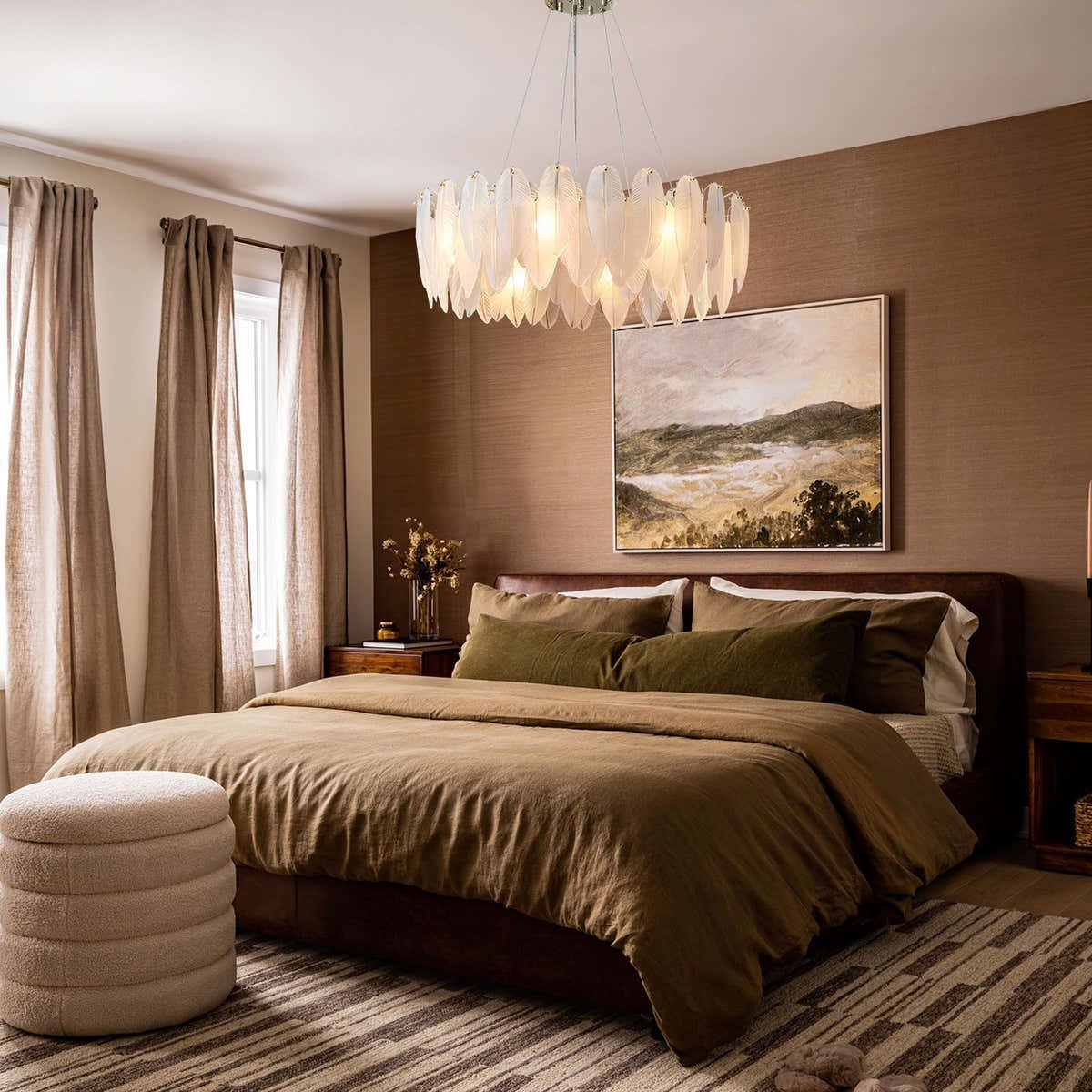
Glass has a different kind of beauty. It can feel softer, more sculptural, and more atmospheric. Clear glass can keep a room feeling open, while textured or layered glass can diffuse brightness and create a calmer glow. For modern interiors, glass chandeliers are especially useful when you want the fixture to feel artistic without making the room too formal.
The choice is not simply about which material looks more luxurious. It is about the mood you want the room to hold. A dining room used for formal dinners may benefit from crystal’s reflective quality. A relaxed living room may feel better with layered glass that softens the ceiling and adds quiet movement.
Styling Tip: If your room already has strong furniture, bold artwork, or dramatic finishes, choose a softer glass fixture. If the room feels too plain or lacks a focal point, crystal can add the visual energy it needs.
3. High Ceilings: Lighting That Connects the Room Vertically
High ceilings are beautiful, but they can also be difficult to light well. A small fixture may provide brightness, yet still look visually lost in the space. When the ceiling rises far above the furniture, lighting has to do more than illuminate. It must connect the upper architecture with the life happening below.
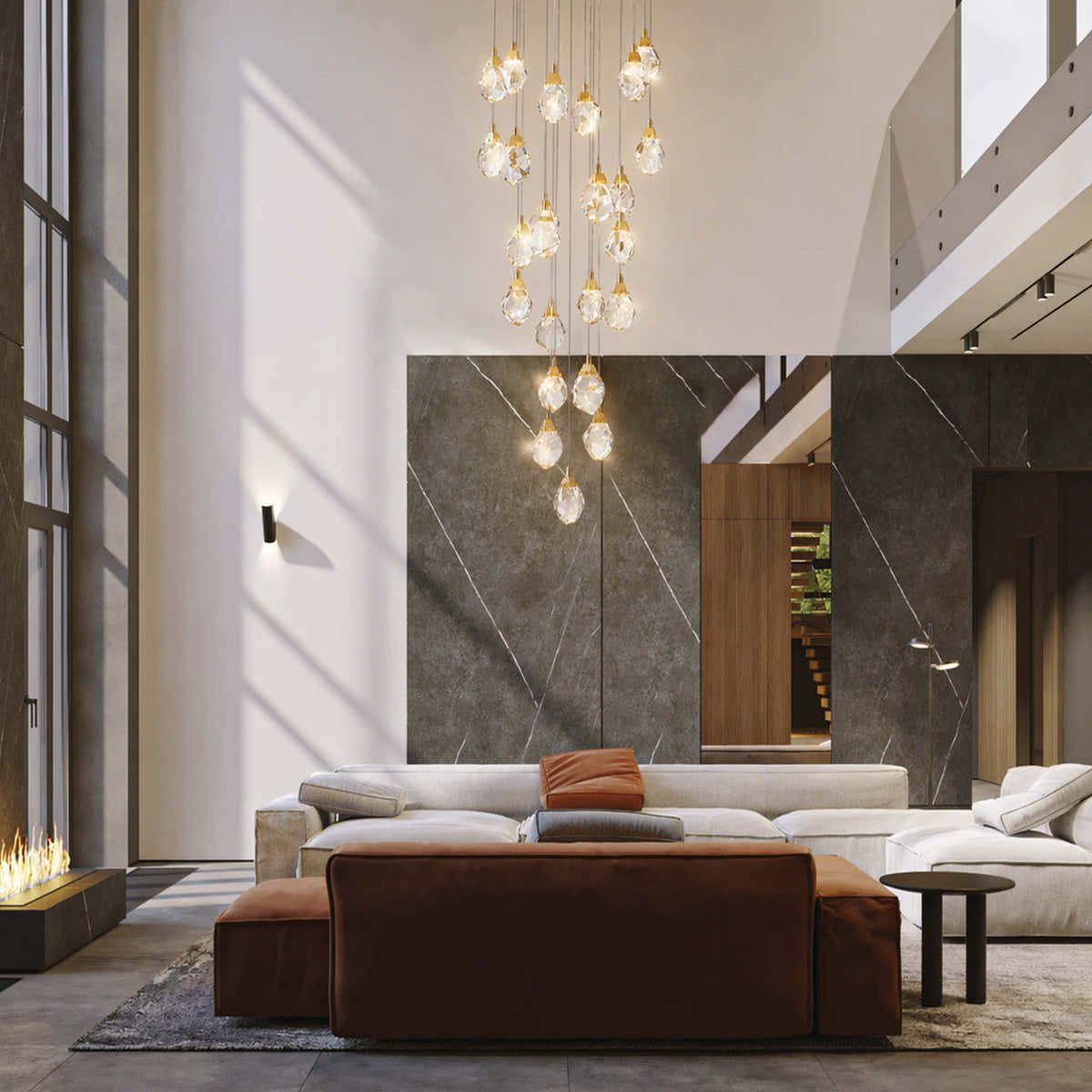
This is where scale becomes essential. A high-ceiling chandelier can add presence through height, diameter, tiers, repeated light points, or sculptural form. Long staircase chandeliers work well in foyers and stairwells because they fill vertical space. Tiered glass chandeliers bring layered volume over dining areas or open living rooms. Ring chandeliers offer a cleaner architectural glow for modern interiors that need scale without heavy ornamentation.
For taller spaces, explore chandelier styles for high ceilings that are designed to add proportion, structure, and visual balance rather than simply hanging from above.
Styling Tip: In rooms with high ceilings, do not rely on the chandelier alone. Wall sconces, table lamps, floor lamps, and recessed lighting can create layers of light at different heights, making the room feel warmer and more human.
4. Creating a Complete Lighting Plan
A well-lit home does not use the same type of light everywhere. It moves through layers. Outdoor sconces create a sense of arrival. Chandeliers define rooms from above. Accent lighting adds softness. Task lighting supports daily routines.
When these layers work together, the home feels more intentional. The transition from exterior to interior becomes smoother. Tall rooms feel less empty. Dining areas feel more intimate. Living rooms feel more relaxed after sunset.
The most successful lighting choices are not necessarily the most dramatic ones. They are the fixtures that understand the space: its scale, materials, traffic flow, and mood.
Final Thoughts
Good lighting does more than brighten a room. It gives architecture a sense of purpose, softens transitions, and helps each area of the home feel complete. Whether you are choosing a wall sconce for the front door, a glass chandelier for a relaxed living space, or a statement fixture for a high ceiling, the best choice is the one that supports how the home feels after the light is on.
About HOULTE
HOULTE curates furniture and lighting designed to help homes feel finished, functional, and cohesive. With modern silhouettes, warm materials, and thoughtfully selected pieces, HOULTE helps customers create polished spaces with less guesswork.