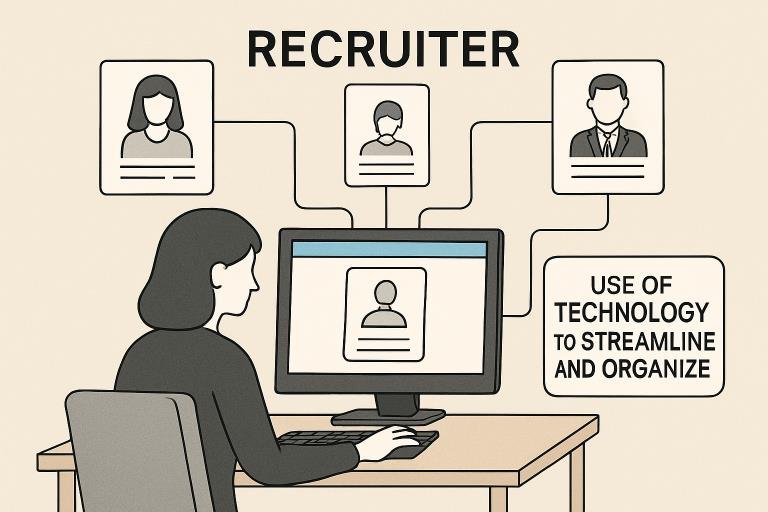
In today’s ever-evolving job market, technology has taken center stage in how companies recruit and onboard talent. Businesses large and small are harnessing the power of digital solutions to transform their recruitment strategies for faster, smarter hiring. One of the core tools at the heart of this shift is the ATS tracking system, which is redefining the way organizations attract and evaluate candidates.
Applicant Tracking Systems (ATS) have become more than just organizational tools. They are now a critical driver for increasing efficiency and consistency throughout the recruitment process. With the right implementation, these systems can save hours of administrative labor and help ensure a better fit between employers and prospective employees.
The rapid development of these technologies has implications beyond operational convenience. ATS platforms play a vital role in candidate experience, diversity, and overall fairness in hiring. As more companies adopt these systems, understanding their strengths and potential pitfalls is essential for recruiters hoping to stay competitive in today’s labor market.
This article examines the evolving function of ATS, the transformative impact on hiring, and the changing landscape of recruitment in a tech-driven era.
Evolution of Applicant Tracking Systems
Applicant Tracking Systems emerged in the late 1990s and early 2000s, initially serving as digital filing cabinets to help recruiters manage the growing volume of online job applications. Over time, these systems evolved through the integration of advanced analytics, artificial intelligence, and automation. Modern ATS solutions can now not only store resumes but also parse content, score candidates, and offer recommendations using highly sophisticated algorithms. As the technology matures, it continues to integrate more deeply with other HR platforms, bridging gaps between job postings, candidate assessments, and onboarding tools.
Enhancing Recruitment Efficiency
One of the standout benefits of ATS platforms is the automation of administrative tasks that once consumed recruiters’ time. Automated resume screening, candidate status tracking, and digital interview scheduling help eliminate bottlenecks that previously slowed the recruitment cycle. For example, Unilever leveraged an AI-supported ATS to reduce its time-to-hire from 4 months to 4 weeks, saving over 50,000 hours of labor. These efficiencies free up recruiters to focus on higher-value activities, such as engaging and evaluating top candidates.
In addition to process improvements, ATS platforms often integrate with job boards and social media, enabling recruiters to expand their talent reach quickly. By analyzing trends across large pools of applicant data, organizations can adjust sourcing strategies to attract better-fit candidates and more accurately predict hiring needs. More insights on how technology is impacting HR can be found on Greenhouse’s coverage of digital recruitment.
Reducing Bias in Hiring
Another significant advantage of ATS lies in its ability to reduce unconscious bias. By establishing standardized evaluation criteria, ATS platforms compel recruiters to consider each applicant based on merit and qualifications. These data-driven assessments help promote fairness, preventing individual preferences or unintentional biases from swaying decisions. Still, it is important to recognize the limitations of algorithms, which can sometimes reflect the biases present in existing datasets, underscoring the need for ethical oversight and careful configuration.
Efforts to mitigate bias extend beyond software updates. Researchers and organizations are increasingly focused on designing ATS that are regularly audited and refined for fairness. For more on best practices for unbiased hiring, visit the insights shared by Algorithmic Hiring and Diversity: Reducing Human-Algorithm Similarity for Better Outcomes.
Challenges and Limitations
Despite these advantages, ATS platforms are not without challenges. One of the most commonly cited issues is the reliance on keyword-based matching, which may filter out qualified candidates simply because they use alternate phrasing on their resumes. This can create frustration for skilled individuals and limit companies’ talent pools. Additionally, the impersonal nature of highly automated systems may leave candidates feeling their applications were never seen by a human, resulting in reduced engagement and a weaker employer brand.
Maintaining a human touch remains a delicate balance. Companies need to ensure that while automation handles repetitive tasks, recruiters still engage directly with prospects to maintain relationships and provide constructive feedback. As competition for talent increases, organizations that master this balance are more likely to retain top candidates’ interest throughout the hiring journey.
Future Trends in ATS
The demand for more personalized, human-centered recruitment experiences is pushing the boundaries of what ATSs can deliver. Notable trends on the horizon include:
- AI-Powered Chatbots. These digital assistants offer real-time interaction, promptly answering applicant questions and delivering feedback throughout the application process.
- Video Interview Analysis. Artificial intelligence is being used to analyze facial cues and communication skills, providing deeper insights beyond written resumes.
- Predictive Analytics. ATS platforms are increasingly equipped to forecast future employee success based on historical hiring data, helping companies make more strategic decisions.
These developments aim to create more holistic hiring experiences by blending the consistency of automation with meaningful human touchpoints, signaling a more thoughtful and candidate-driven era in recruitment.
Conclusion
Applicant Tracking Systems have fundamentally reshaped the recruitment landscape. While they deliver unparalleled efficiency and consistency in hiring, there is a growing recognition that technology must be paired with empathy and active human engagement. Striking this balance will determine which organizations are best equipped to attract and retain top talent in a competitive, technology-driven world.