In the punishing world of mining operations, engine overheating isn’t just an inconvenience—it’s a critical threat that can bring multi-million dollar projects to a grinding halt. When temperatures soar and dust chokes conventional systems, equipment operators face a stark reality: their engine either performs flawlessly or costs them dearly. The CAT C15 engine has earned its reputation as a workhorse precisely because it thrives where others fail. At the heart of this legendary durability lies an often-overlooked hero: its advanced cooling system. This sophisticated network of components doesn’t merely prevent overheating; it’s the fundamental architecture that enables the C15 to deliver unwavering power, maintain peak efficiency, and offer remarkably straightforward maintenance protocols. For heavy equipment operators battling extreme environments—from scorching open pits to high-altitude construction sites—understanding how this cooling system works translates directly into competitive advantage. This article reveals how the C15’s thermal management technology solves the most pressing challenges facing industrial operations today.
Understanding the Demands: Why Robust Engines are Non-Negotiable for Mining
Mining operations present an unforgiving gauntlet of environmental extremes that would cripple ordinary engines within weeks. Equipment faces relentless exposure to abrasive dust clouds that infiltrate every system, ambient temperatures exceeding 120°F in open-pit environments, and continuous heavy loads that push mechanical components to their absolute limits hour after hour. In this context, engine failure triggers a devastating cascade: a single disabled haul truck can halt an entire production chain, costing operators upward of $50,000 per hour in lost productivity. Repair costs compound the damage, as emergency part procurement and specialized labor in remote locations multiply standard expenses tenfold. These brutal realities establish non-negotiable requirements for mining-grade powerplants. The engine must deliver unwavering reliability through thousands of operating hours without performance degradation. It needs to sustain full power output even when ambient conditions would cause conventional engines to derate or shut down protectively. Most critically, it must demonstrate resilience against thermal cycling, vibration, and contamination that systematically destroy lesser designs. The CAT C15 was purpose-engineered to dominate precisely these conditions, with every system calibrated to transform extreme operating environments from threats into routine workdays. Its advanced cooling architecture forms the defensive foundation that makes this transformation possible.
Deep Dive: The Engineering Behind the CAT C15 Advanced Cooling System
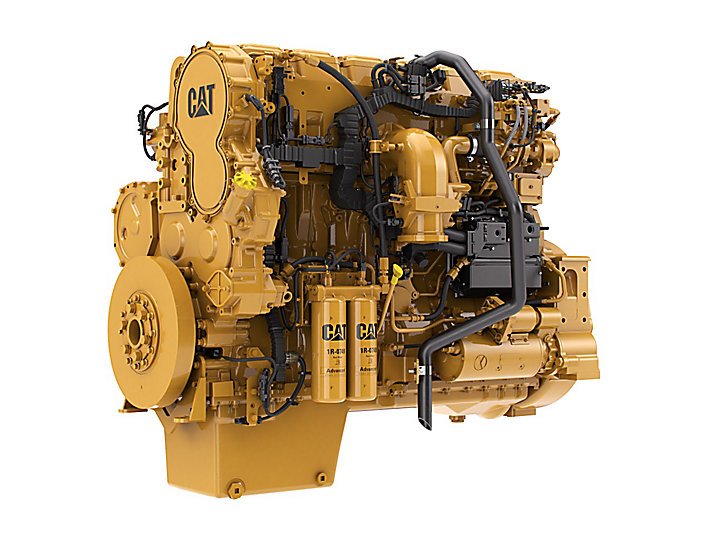
The CAT C15’s cooling system represents a masterclass in thermal engineering, where every component functions as part of an integrated defense against heat-induced failure. At its foundation sits an oversized, high-capacity radiator featuring densely packed aluminum fins engineered to maximize surface area for heat exchange. This radiator isn’t simply larger—its internal tube configuration creates turbulent coolant flow patterns that dramatically improve heat transfer efficiency compared to conventional straight-tube designs. Feeding this radiator is a gear-driven water pump calibrated to circulate coolant at precisely calculated volumes, ensuring every critical engine zone receives adequate flow without creating excessive system pressure that could compromise seals or hoses. The coolant pathways themselves follow meticulously optimized routes, prioritizing flow to the cylinder head’s exhaust valve bridges and piston crown areas where thermal stress concentrates most intensely. An intelligent, viscous fan clutch completes the system by modulating airflow based on actual cooling demand rather than running continuously. When temperatures rise, the clutch engages progressively to pull maximum air through the radiator core; as conditions stabilize, it disengages to reduce parasitic power loss and noise. This coordination between components creates a self-regulating thermal management ecosystem. Where basic cooling systems simply react to temperature spikes with crude on-off responses, the C15’s architecture anticipates thermal loads and adjusts proactively, maintaining the narrow temperature band where combustion efficiency peaks and component wear minimizes. The result is an engine that runs cooler under maximum load than competitors do at idle.
How Advanced Cooling Translates to Consistent Performance
Thermal stability is the invisible foundation of everything operators value about the C15’s performance. When combustion temperatures remain within the optimal 180-210°F range, fuel atomization occurs with laboratory precision, extracting maximum energy from every drop of diesel while minimizing unburned hydrocarbons that waste fuel and clog exhaust systems. This temperature consistency prevents the power derating that plagues lesser engines—there’s no frustrating loss of horsepower when ambient heat climbs or when the operator demands sustained full-throttle operation during critical production windows. Beyond immediate power delivery, stable thermal conditions dramatically extend component lifespan by eliminating the expansion-contraction cycling that fatigues metal structures. Piston rings maintain proper tension against cylinder walls, valves seat consistently without warping, and head gaskets remain sealed through thousands of thermal cycles. For mining operations planning equipment deployment across multi-year projects, this predictability transforms from engineering detail into financial certainty—the C15 delivers its rated 475 horsepower on day one and day one thousand with equal reliability, enabling accurate production forecasting and maintenance budgeting that directly impact project profitability.
Achieving Easy Maintenance: How Smart Design Minimizes Downtime
For mining operators, every hour of unplanned maintenance represents lost revenue that can never be recovered, making serviceability as critical as raw power. The CAT C15’s cooling system was engineered with this reality at its core, incorporating design features that transform routine maintenance from a dreaded production interruption into a swift, straightforward process. Service access points are strategically positioned for maximum convenience—coolant fill ports, drain valves, and inspection points are located where technicians can reach them without dismantling surrounding components or requiring specialized lifting equipment. The radiator and aftercooler cores mount on hinged frames that swing open for cleaning without disconnecting hoses, allowing operators to blast away accumulated dust and debris in minutes rather than hours. Coolant sampling ports enable quick fluid analysis without system shutdown, letting maintenance teams monitor additive concentrations and contamination levels during shift changes. Perhaps most significantly, the system’s inherent efficiency extends service intervals substantially beyond industry norms. Because the cooling architecture prevents thermal stress and contamination buildup, coolant changes stretch to 3,000-hour intervals under typical conditions, while the robust fan clutch and belt drive system require inspection only during scheduled 500-hour services. These design decisions compound into dramatic operational advantages: maintenance windows shrink, parts inventory requirements decrease, and the skilled labor hours required per operating hour drop measurably. For remote mining sites where technician availability is constrained and parts logistics are complex, this accessibility doesn’t just reduce costs—it fundamentally enables sustained operations that would otherwise be economically unfeasible.
Practical Maintenance Checklist for the CAT C15 Cooling System
Implementing a disciplined maintenance routine prevents the catastrophic failures that devastate production schedules. Begin each shift with a visual walkaround inspection, scanning for coolant puddles beneath the engine, wetness around hose connections, or green staining indicating slow leaks that will worsen under load. Check the coolant reservoir level when the engine is cold, ensuring fluid reaches the “full” mark; consistent low levels signal leaks or combustion gas intrusion requiring immediate investigation. Every 250 operating hours, test coolant condition using field test strips to verify proper inhibitor concentration and pH levels between 8.0-11.0, as degraded coolant loses its ability to prevent corrosion and cavitation. Clean the radiator core and aftercooler fins monthly in dusty environments by carefully blowing compressed air from the engine side outward, removing the accumulated debris that chokes airflow and forces the system to work harder. Monitor the temperature gauge during operation, noting any creeping baseline increases that suggest developing problems before they trigger alarms. Replace coolant filters and add supplemental coolant conditioner at the manufacturer-specified 500-hour intervals, as these additives actively protect against liner pitting and pump seal degradation. Finally, inspect fan belt tension and condition every 500 hours, checking for glazing, cracking, or deflection exceeding specification—a failed belt can cause overheating in minutes. This systematic approach catches minor issues when they’re inexpensive to address, preserving the cooling system’s protective capability and ensuring the C15 delivers its legendary reliability shift after shift.
CAT C15 in Action: Reliability Across Diverse Industrial Applications
While mining operations showcase the C15’s capabilities under the most punishing conditions, this engine’s advanced cooling architecture delivers equally compelling advantages across a spectrum of demanding industrial sectors. In heavy construction environments, where excavators and dozers operate in confined, dust-laden spaces with minimal airflow, the C15’s efficient heat dissipation prevents the thermal buildup that forces competitors to derate power during critical grading or excavation work. Oil and gas operations benefit profoundly from the system’s reliability in remote drilling sites where equipment failure can idle entire crews for days awaiting parts and specialized technicians—the extended service intervals and straightforward maintenance protocols mean smaller on-site parts inventories and reduced dependency on expert service personnel. Marine propulsion applications present unique challenges of saltwater corrosion and space constraints, yet the C15’s corrosion-resistant cooling components and compact radiator packaging make it the preferred choice for workboats and fishing vessels operating in harsh coastal waters where engine rooms offer limited ventilation. Power generation facilities value the cooling system’s ability to maintain consistent output temperatures during continuous baseload operation, ensuring stable electrical generation without the frequency variations that damage sensitive equipment. Across these diverse applications, a common thread emerges: when operations cannot tolerate downtime and environmental conditions challenge conventional equipment, the C15’s thermal management excellence transforms potential vulnerabilities into operational certainty, delivering the performance consistency that defines professional-grade industrial power. For operators seeking to maintain or rebuild these engines with quality components, suppliers like GRT provide diesel engine parts that support the rigorous maintenance standards these applications demand.
The Strategic Value of Advanced Thermal Management
The CAT C15’s advanced cooling system stands as far more than an assemblage of radiators, pumps, and hoses—it represents the engineering foundation upon which the engine’s legendary performance and durability are built. In the unforgiving environments where mining operations stake their profitability, this sophisticated thermal management architecture delivers precisely what operators cannot compromise on: unwavering power output when ambient conditions would cripple lesser engines, and the thermal stability that prevents costly derating during critical production windows. Equally important, its maintenance-friendly design philosophy transforms routine service from a dreaded interruption into a swift, manageable process, directly slashing the downtime that erodes project margins. For equipment managers evaluating powerplant investments, the C15’s cooling system exemplifies a fundamental truth about industrial operations—engineered reliability isn’t an expense, it’s a strategic asset that compounds value across every operating hour. As mining projects grow more complex and environmental conditions more challenging, the competitive advantage belongs to operations that recognize thermal management excellence as the invisible force multiplying productivity, extending equipment lifecycles, and ultimately securing long-term profitability in the world’s most demanding industrial arena.