Shared public spaces tend to get messy quickly, as people move through them in waves, touch everything, and rarely feel ownership over cleanup. That’s why facility teams often start by determining the riskiest, most used areas. In this article, we explore the top cleaning challenges for shared public spaces, along with how they’re addressed.
High-Touch Surfaces
Door handles, elevator buttons, railings, light switches, faucet handles, microwave keypads are used by dozens or even hundreds of people every day. Due to this constant contact, germs spread easily. If these surfaces are only cleaned once at night, they are already contaminated again by mid-morning. Here’s how facilities handle it:
- More frequent wipe-downs during peak hours, not just one big clean at night.
- Route-based cleaning; a repeatable loop of touchpoints, done multiple times daily.
- Hand hygiene stations placed where hands actually go, like near elevators and break rooms.
Restrooms
Restrooms are the stress test of any shared facility which this janitorial services Dallas understands. High traffic leads to fast buildup of grime, wet floors, empty soap dispensers. Odors also develop when waste and moisture are not handled properly and traffic is high. Some common cleaning fixes include:
- Short inspection cycles during busy blocks. In some facilities this can be every 30 to 60 minutes.
- No-touch fixtures, such as sensor faucets, soap, and flush systems, where possible.
- Enzymatic cleaners for odor sources to break down what causes smells instead of covering them up.
Floors
Entrances, hallways, and elevators collect dirt from shoes all day. Rain, dust, and mud get tracked inside and spread across the building. Over time, this makes floors look dull and unsafe. Wet or dirty floors also increase the risk of slips and falls. Here are a few things that can be done to help:
- Proper entrance matting sized to the traffic to trap soil effectively
- Scheduled machine scrubbing rather than manual mopping
- Spot-cleaning during opening hours
Trash and Food Waste Creates Odors and Pests
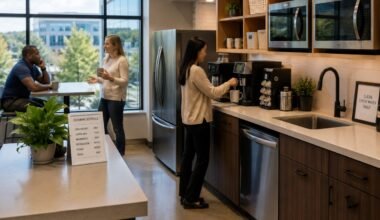
Shared kitchens and break areas produce a lot of waste. Coffee cups, food wrappers, and leftovers fill bins quickly. When trash sits too long, it starts to smell and attracts insects. Once odors appear, they spread through nearby offices and meeting rooms. Here are some useful controls:
- Empty trash more frequently after busy periods
- Use covered bins with sealed liners for food waste
- Use simple bin labels to help people sort their trash
- Clean bin areas to remove residue
Cleaning Standards Drop Between Shifts
Large buildings often have different cleaning staff working at different times. Without clear systems, one shift may clean well while another misses important tasks. Over time, this leads to uneven results. Some areas stay clean, while others are ignored.
Teams often use:
- Digital checklists or QR logs to confirm tasks happened.
- Assign staff to the same areas regularly.
- Inspect key zones for quality.
- Color-coded tools to reduce cross-contamination (restroom tools don’t touch office desks).
- Spot verification, including ATP swab testing in some settings to check surface hygiene.
Endnote
Clean facilities are a product of steady routines, and frequent checks. When high-touch areas are wiped regularly, restrooms are inspected often, floors are maintained, and waste is handled on time, problems stay small instead of becoming complaints.