
Higher education is changing fast. Institutions face new challenges in attracting and enrolling students. Student enrollment declined by 4.1% between spring 2021 to 2022. This tells us we need new approaches.
This is where the enrollment funnel becomes vital. It’s a step-by-step process. It shows how a potential student moves from their first interest to becoming a fully enrolled student.
Understanding and optimizing this journey is crucial. It helps institutions achieve sustainable growth and support student success. We aim to guide students effectively through every stage.
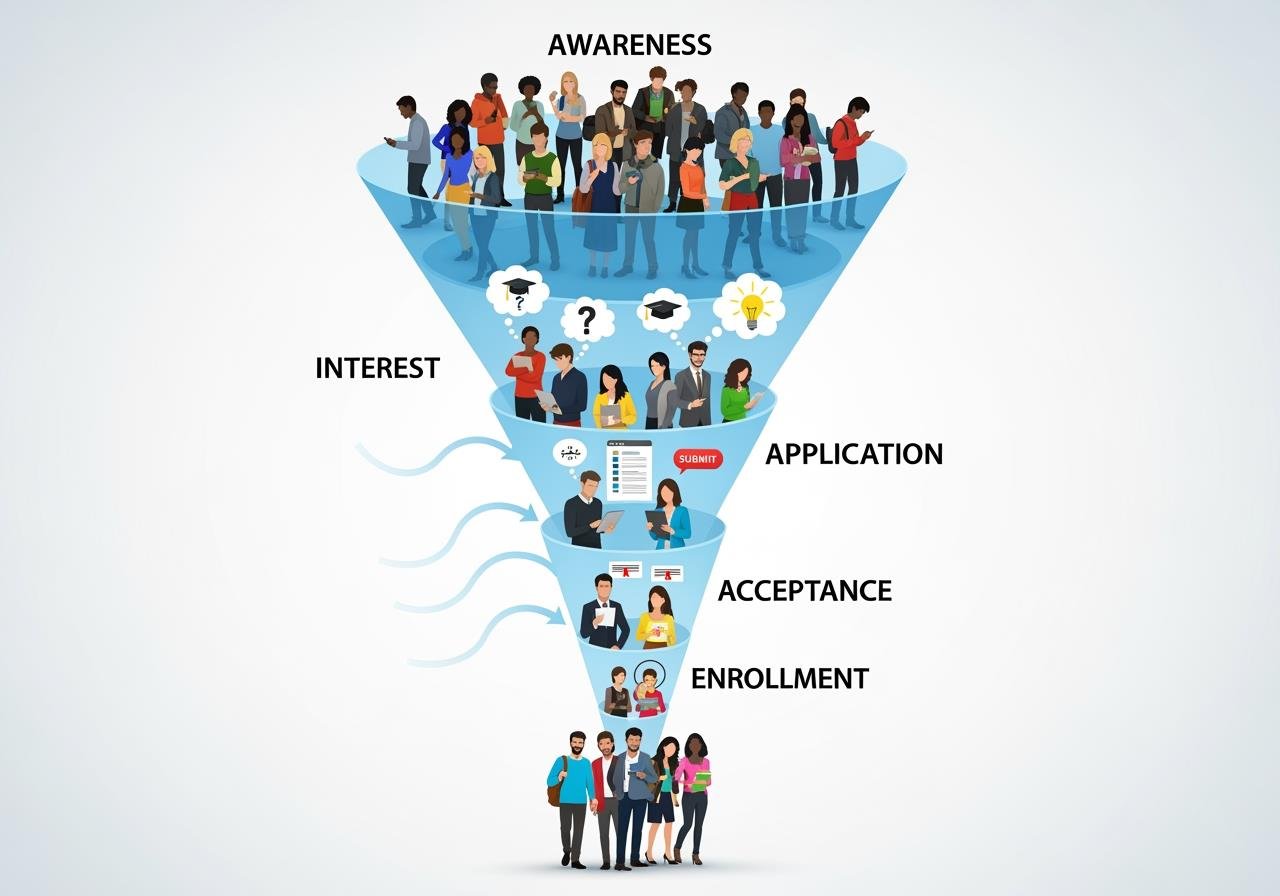
This guide will explore the enrollment funnel in depth. We will look at its evolution and key strategies for each step. Imagine a visual map showing six main stages of this journey:
- Prospect: Someone who might attend our college.
- Inquiry: They’ve shown interest, perhaps by asking for information.
- Applicant: They’ve sent in their application.
- Admit: They’ve been accepted into a program.
- Deposit: They’ve committed by paying a deposit.
- Enroll: They are officially registered for classes.
Join us as we explore how to build a stronger, more effective enrollment funnel for the future of higher education.
For decades, the enrollment funnel was largely understood as a linear, top-down process. Institutions would cast a wide net to attract prospects, filter them through inquiries and applications, and ultimately enroll a select group. This traditional model, while foundational, no longer fully captures the complexities of today’s student journey.
Modern student behavior has fundamentally reshaped this landscape. Prospective students are more informed, more discerning, and often begin their university search much earlier than before. In fact, nearly 40% of surveyed students say they began their university search between eighth and tenth grade. This extended timeline means institutions must engage with students over a longer period, building relationships and providing value long before an application is even considered. This is especially important for specialized programs, such as a PNP post masters certificate, where students may require detailed guidance on prerequisites, clinical placements, and career pathways.
The rise of digital information and easy-to-use online application systems has also led to phenomena like “stealth applicants” – students who engage with an institution’s online resources, conduct extensive research, and then apply without ever formally inquiring. This bypasses traditional funnel stages, making it harder for institutions to track engagement and personalize outreach.
Furthermore, the higher education market is more competitive than ever. Students are not just applying to one or two schools; approximately 40% of prospective students plan on applying to between five and eight colleges, and 32% apply to more than nine. This increased choice means institutions must work harder to differentiate themselves and maintain engagement throughout the entire decision-making process.

This shift necessitates moving from a rigid, linear funnel to a more dynamic, student-centric model. We need to acknowledge that students may enter and exit the funnel at various points, revisit stages, or even bypass them entirely. This requires a flexible and adaptive approach, focusing on continuous engagement and personalized support. Embracing this evolution means reimagining the applicant journey and enrollment funnel to meet students where they are, rather than expecting them to conform to an outdated process.
Strategies for a Sustainable Enrollment Funnel
To thrive in this evolving environment, institutions must adopt a full-funnel marketing approach that prioritizes the student experience and leverages personalization at every turn. This involves creating seamless interactions, providing relevant information, and building genuine connections that guide students through their unique journeys.
Our communication strategy is paramount. It must be consistent, empathetic, and custom to the individual needs and preferences of each prospective student. This holistic perspective ensures that every touchpoint, from initial awareness to post-enrollment support, reinforces the institution’s brand promise and commitment to student success.
Building a Sustainable Enrollment Funnel from the Top Down (Awareness & Inquiry)
The top of the enrollment funnel is all about creating awareness and sparking interest. This is the Prospect stage, where individuals are just beginning to consider their higher education options. Our goal here is to get on their radar and make a memorable first impression. This involves broad outreach through:
- SEO for Higher Education: Optimizing our website content to appear prominently in search results when students research programs, careers, or institutions. This includes creating valuable blog posts, program pages, and FAQs that answer their initial questions.
- Content Marketing: Developing engaging and informative content – videos, infographics, student testimonials, virtual campus tours – that showcases our unique offerings and campus culture.
- Social Media Engagement: Actively participating on platforms where prospective students spend their time, sharing stories, hosting Q&A sessions, and running targeted campaigns.
Once a prospect shows initial interest, they move into the Inquiry stage. This is when they actively seek more information, perhaps by requesting a brochure, downloading a guide, or filling out an online form. This is a critical juncture for personalized engagement.
Interestingly, 64 percent of prospective students surveyed indicated that their desired first point of contact is a recruiter who can respond to general questions about timeline, cost, admissions criteria, and the like. This highlights the importance of human connection even in an increasingly digital world. Furthermore, up to 76 percent of prospective graduate students indicated that email was their preferred contact method, with a strong expectation for quick responses.
The speed-to-lead is paramount here. Students often interpret slow responses as a lack of interest or institutional quality. Our aim should be to respond to inquiries within hours, if not minutes, providing relevant information and offering a clear next step.
Nurturing the Middle: From Applicant to Admit
As students progress, they enter the middle of the funnel, moving from the Applicant stage to the Admit stage. This phase is characterized by deeper engagement and critical decision-making.
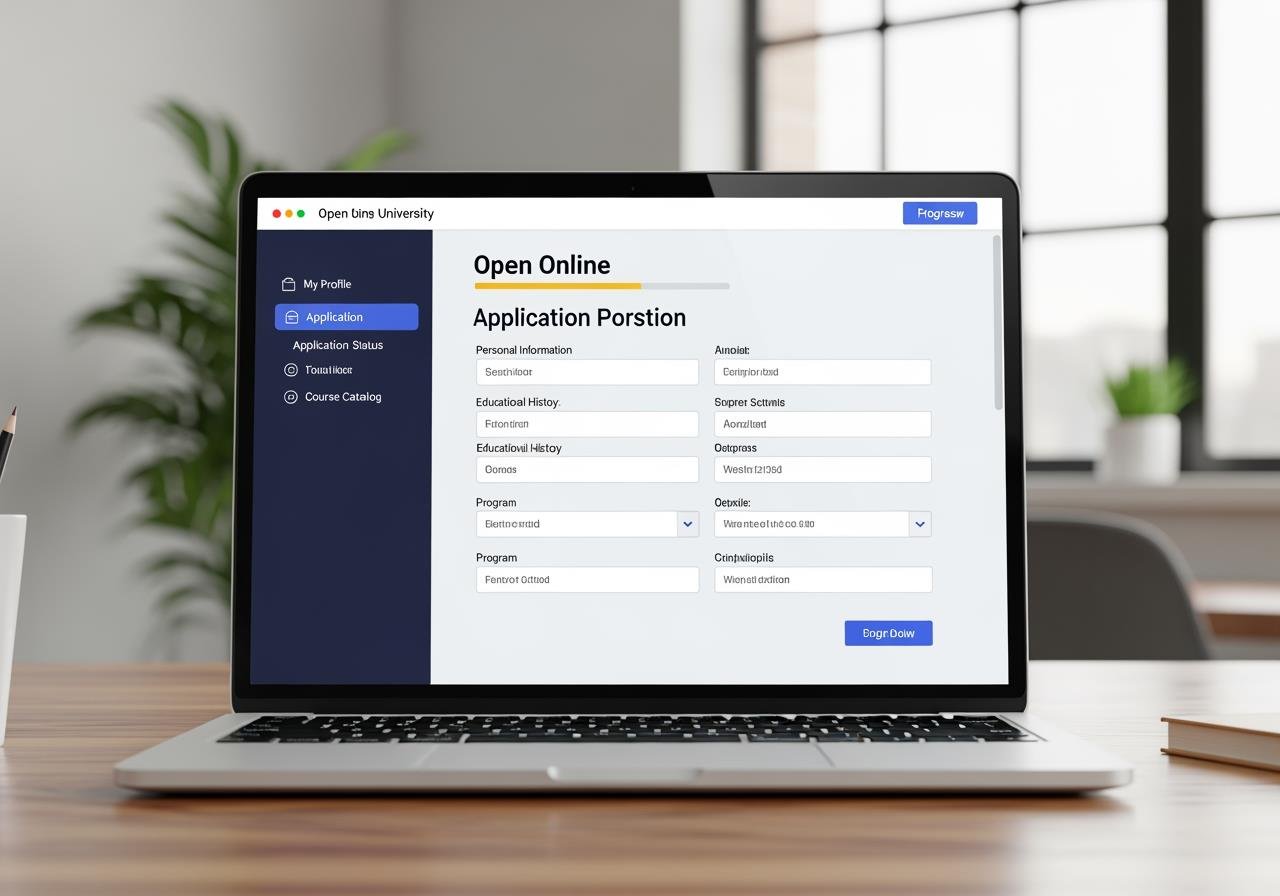
The Applicant stage begins when a prospective student submits their application. Our focus here is on making this process as smooth and transparent as possible. This means simplifying the application process, providing clear instructions, and offering readily available support for any questions. A clear, user-friendly online application portal is essential to prevent drop-offs.
Using a robust CRM (Customer Relationship Management) system becomes indispensable at this stage. It allows us to track every interaction, manage documents, and ensure no applicant falls through the cracks. Personalized communication continues to be vital, acknowledging their application, informing them of next steps, and offering opportunities to connect with faculty or current students.
Showcasing career prospects is also a powerful motivator. Nearly half of students surveyed say they chose their institution based on career prospects. We must clearly articulate how our programs lead to successful careers, featuring alumni stories, internship opportunities, and career services support.
A well-designed Archer enrollment growth funnel framework emphasizes nurturing prospects with targeted content that addresses their specific concerns and aspirations at each stage. This could involve sending custom emails about program specifics, financial aid options, or student life. Effective email marketing for higher education campaigns, segmented by program interest or academic profile, can significantly improve engagement and keep applicants moving forward.
Securing Commitment and Preventing Melt (Deposit & Enroll)
The bottom of the funnel, encompassing the Deposit stage and Enroll stage, is where commitments are solidified. This is also where institutions face the challenge of “enrollment melt” – when admitted students withdraw their commitment before officially enrolling.
Once a student is admitted, the Deposit stage begins. Our goal is to encourage them to commit by submitting a deposit. This involves celebrating their acceptance, reinforcing the value proposition of our institution, and providing clear, easy steps for depositing. Fostering a sense of community is crucial here; connecting admitted students with future classmates, faculty, and current students can build excitement and belonging.
Transparent and proactive financial aid communication is also key. Many students’ final decisions hinge on understanding their financial options. Providing personalized financial aid counseling can alleviate concerns and help students steer this complex aspect.
Finally, the Enroll stage marks the official start of their academic journey. This is where a smooth and welcoming onboarding experience makes all the difference. Students with a great onboarding experience are 35 times more likely to have a great university experience. This includes clear instructions for registration, orientation programs that build connections, and welcome kits that make them feel valued and excited to join our community. Preventing melt at this stage means continuing personalized communication, addressing any last-minute questions, and ensuring they feel fully prepared and supported.
The Role of Data and Technology in Funnel Optimization
In today’s data-rich environment, optimizing the enrollment funnel is impossible without leveraging data and technology. These tools provide the insights needed to understand student behavior, identify areas for improvement, and personalize the student journey at scale.

Key Performance Indicators (KPIs) are essential for measuring success at each stage. These include:
- Application Rate: The percentage of inquiries who submit an application.
- Admit Rate: The percentage of applicants who are accepted into a program.
- Yield Rate: The percentage of admitted students who submit a deposit.
Beyond these, we also track metrics like Cost Per Inquiry (CPI) and Cost Per Enrolled Student (CPES) to assess the efficiency of our recruitment efforts.
Many institutions are already embracing this data-driven approach. For instance, CSUs are using analytics to solve enrollment challenges, a trend highlighted by Deloitte. This involves using predictive analytics to forecast enrollment numbers, identify at-risk students, and tailor interventions.
CRM systems are the backbone of this technological infrastructure. They serve as a central hub for all student data, enabling us to manage communications, track interactions, and automate workflows. When integrated with marketing automation platforms, CRMs allow for highly personalized and timely outreach across multiple channels.
Data-Driven Strategies for a Sustainable Enrollment Funnel
To truly optimize our enrollment funnel, we must adopt data-driven strategies that inform every decision:
- Tracking Multi-Channel Engagement: Understanding how students interact with us across various platforms – website, social media, email, phone – provides a holistic view of their journey. This data helps us identify which channels are most effective at different stages.
- A/B Testing Communications: Experimenting with different messaging, call-to-actions, and visual elements in our emails and marketing materials allows us to continuously refine our approach and improve conversion rates.
- Identifying Friction Points: Analyzing conversion rates between each funnel stage helps us pinpoint where students are dropping off. For example, if our inquiry-to-applicant rate is low, we might need to simplify our application process or provide more support during that transition.
- Resource Allocation: Data allows us to strategically allocate our marketing and recruitment resources to the most impactful activities and stages, ensuring we get the best return on investment.
- Using Data to Personalize the Journey: With detailed student profiles in our CRM, we can deliver hyper-personalized content and experiences. This could mean sending specific program details to a student interested in engineering, or connecting a prospective transfer student with an advisor who understands their unique needs. Effective communicating through the enrollment funnel relies heavily on these data-driven insights.
Overcoming Common Enrollment Management Challenges
Despite the advancements in technology and strategy, institutions still face significant challenges in managing the enrollment funnel. Recognizing these problems and developing proactive solutions is critical for sustainable growth.
Here are some common challenges and how we can overcome them:
- Data Silos: Often, student data is scattered across different departments (admissions, marketing, financial aid, academic departments), leading to an incomplete view of the student.
- Solution: Implement a unified CRM system that integrates data from all relevant departments, creating a single source of truth for each student record.
- Inconsistent Branding and Messaging: Different departments or even individuals might communicate with prospective students using varying tones, visuals, or messages, leading to confusion.
- Solution: Develop clear brand guidelines and communication protocols that all staff involved in recruitment and enrollment must adhere to. Provide training and templates to ensure consistency.
- Lack of Personalization: Generic, one-size-fits-all communication fails to resonate with today’s students, who expect custom experiences.
- Solution: Leverage CRM data to segment prospective students based on interests, demographics, and stage in the funnel. Use marketing automation to deliver personalized content and messages.
- Slow Response Times: As highlighted earlier, students expect quick responses. 42 percent of graduate students surveyed interpreted a slow response as a sign that they were not important to that school.
- Solution: Implement clear service level agreements (SLAs) for response times. Use chatbots for instant answers to common questions and empower admissions staff with tools for rapid, personalized follow-up.
- Difficulty in Tracking ROI: Without proper tracking and analytics, it can be hard to determine which recruitment efforts are truly effective.
- Solution: Establish robust tracking mechanisms for all marketing campaigns and recruitment activities. Regularly analyze KPIs and conversion rates to attribute enrollment to specific initiatives.
- Enrollment Melt: Losing committed students before they enroll remains a significant concern.
- Solution: Maintain continuous, personalized engagement with admitted students, focusing on community building, financial aid clarity, and a seamless onboarding experience.
- Aligning Marketing and Admissions Teams: Historically, marketing and admissions teams have sometimes operated independently, leading to disjointed student experiences.
- Solution: Foster a culture of collaboration. Establish shared goals, regular communication, and integrated workflows between marketing and admissions to ensure a cohesive and supportive student journey.
By proactively addressing these challenges, institutions can create a more resilient and effective enrollment funnel, leading to more sustainable growth and improved student satisfaction.
Frequently Asked Questions about the Enrollment Funnel
What is the biggest difference between a traditional and a sustainable enrollment funnel?
The biggest difference lies in their underlying philosophy and approach. A traditional enrollment funnel is often viewed as a linear process, primarily focused on moving students from one stage to the next in a transactional manner. It’s about filtering a large pool down to a smaller, enrolled group. The emphasis is on efficiency in processing applications and securing deposits.
In contrast, a sustainable enrollment funnel accepts a more cyclical, student-centric, and relational approach. It recognizes that the student journey is rarely linear and can be highly individualized. Instead of just filtering, it focuses on building lasting relationships, providing continuous value, and nurturing students at every touchpoint, even those who might temporarily step out of the traditional path. The goal extends beyond immediate enrollment to long-term student success and institutional affinity, making it more resilient to market fluctuations and changing student behaviors.
How do you measure the success of an enrollment funnel?
Measuring the success of an enrollment funnel involves tracking a variety of key metrics and conversion rates at each stage:
- Conversion Rates: The percentage of students who successfully move from one stage to the next (e.g., inquiry to applicant, applicant to admit, admit to deposit, deposit to enroll).
- Cost Per Inquiry (CPI): The total cost of generating inquiries divided by the number of inquiries.
- Cost Per Enrolled Student (CPES): The total cost of recruitment and marketing efforts divided by the number of enrolled students.
- Application Rate: The percentage of prospects who inquire and then apply.
- Admit Rate: The percentage of applicants who are accepted.
- Yield Rate: The percentage of accepted students who deposit.
- Retention Rates: While technically post-enrollment, strong retention indicates a successful funnel that brought in “right-fit” students who are likely to persist.
- Website Traffic & Engagement: For top-of-funnel activities, measuring website visits, time on page, and content downloads can indicate initial interest.
- Communication Engagement: Open rates, click-through rates, and response rates for emails and other digital communications.
Regular data analysis of these metrics helps identify strengths, weaknesses, and areas for optimization within the funnel.
What is “enrollment melt” and how can it be prevented?
“Enrollment melt” refers to the phenomenon where admitted students, who have often submitted a deposit and indicated their intent to enroll, ultimately do not matriculate or show up for classes. This can be a significant challenge for institutions, impacting enrollment numbers and financial planning.
Causes of melt can include:
- Financial Aid Issues: Students may receive a better financial aid package from another institution, or their personal financial situation changes.
- Waitlist Offers: Students accepted off a waitlist at their top-choice school.
- Change of Plans: Deciding to take a gap year, pursue a different path, or attend a different type of institution.
- Lack of Connection: Feeling disconnected from the institution after admission, leading to doubts.
- Poor Onboarding: A confusing or unsupportive pre-enrollment process.
To prevent melt, institutions can implement several strategies:
- Consistent and Personalized Communication: Maintain regular, custom communication with admitted students, reinforcing the value of the institution and addressing potential concerns.
- Building Community: Facilitate connections between admitted students, current students, faculty, and alumni through virtual events, social media groups, or mentorship programs.
- Financial Aid Clarity: Proactively communicate financial aid options, offer personalized counseling, and be transparent about costs.
- Strong Onboarding: Provide clear, easy-to-follow instructions for all pre-enrollment steps (registration, housing, orientation) and offer robust support services.
- Engagement Opportunities: Offer admitted student days, virtual Q&As, or opportunities to sit in on classes to deepen their connection and excitement.
- Proactive Outreach: Identify students who might be at risk of melting through data analytics and reach out with targeted support.
Conclusion: Building a Funnel for the Future
The higher education landscape is dynamic, and the student journey has evolved into a complex, multi-faceted experience. The traditional enrollment funnel, while a useful starting point, must now give way to a more sophisticated, sustainable model. This requires a holistic, full-funnel strategy that accepts the power of data, technology, and personalization.
By understanding each stage of the enrollment funnel, from prospect to enrollment, and by implementing targeted strategies for awareness, engagement, and commitment, we can guide students more effectively. Leveraging CRM systems, data analytics, and a commitment to personalized communication allows us to build genuine relationships with prospective students, addressing their needs and alleviating their concerns at every turn.
Moving beyond simple recruitment, our focus must be on building lasting relationships that begin long before enrollment and extend throughout a student’s academic career and beyond. This sustainable mindset is not just about filling seats; it’s about fostering student success, strengthening institutional reputation, and ensuring the long-term health and vitality of our educational communities.
Ready to transform your enrollment strategy and build a funnel for the future? Let’s explore how a data-driven approach can help you achieve your enrollment goals and cultivate meaningful connections with every student.