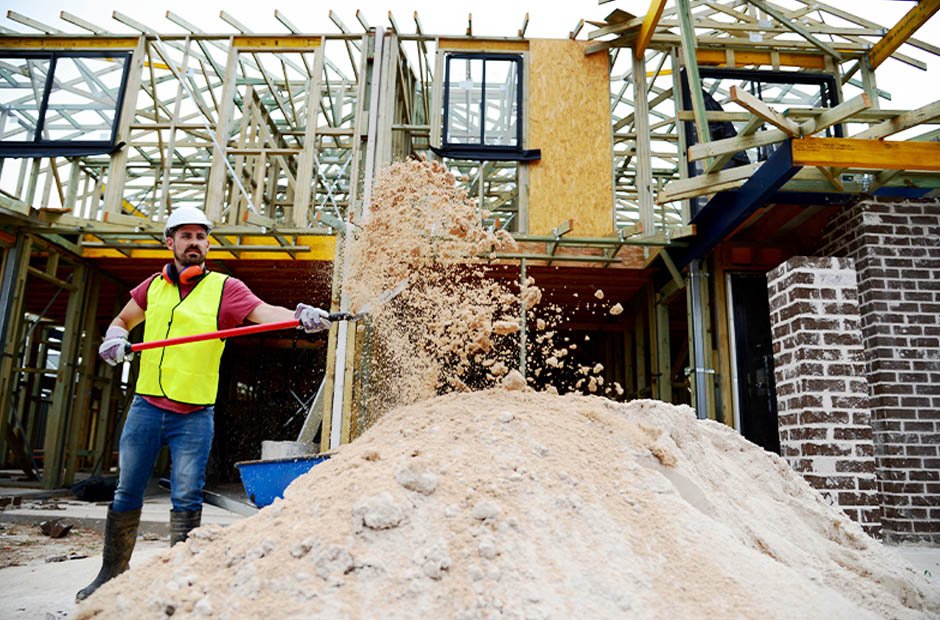
Most people don’t think twice about sand. It’s just sand, right? But here’s the problem: that casual attitude toward what seems like the simplest building material is exactly why so many construction projects end up with serious structural issues years down the line. The sand you choose for a project isn’t just filler, it’s a critical component that affects everything from concrete strength to drainage performance.
The Real Difference Between Beach Sand and Building Sand
Not all sand works the same way in construction applications. Beach sand might look perfectly fine, but it contains salt and organic materials that wreak havoc on concrete. The grains are also too rounded from water erosion, which means they don’t lock together the way angular particles do. Desert sand has the opposite problem, the grains are too fine and smooth, offering almost no structural integrity when mixed into concrete or used as a base material.
What builders actually need is sand with specific characteristics: angular grains that interlock, consistent sizing within a certain range, and freedom from contaminants. When contractors source construction sand from proper suppliers, they’re getting material that’s been washed, graded, and tested to meet building specifications. That matters more than most people realize.
When Concrete Starts Crumbling Years Later
The most expensive sand-related failures happen in concrete work. Concrete seems solid and permanent, but its strength depends entirely on the bond between cement paste and aggregate particles. If the sand contains clay, silt, or organic matter, these impurities prevent proper bonding. The concrete might look fine initially, but over time it starts developing cracks, spalling, and structural weaknesses.
Clay content is particularly nasty because it absorbs water and expands. Even small amounts, just 3-5% by weight, can reduce concrete strength by 20-30%. In freeze-thaw climates, this becomes a disaster. Water gets into those weak spots, freezes, expands, and breaks the concrete apart from the inside. What should have been a 50-year foundation might start failing in 10.
The grain size distribution matters just as much. Sand that’s too fine creates concrete that shrinks excessively as it cures, leading to cracking. Sand that’s too coarse leaves voids that weaken the mixture. Professional specifications call for a blend of particle sizes that pack together efficiently while still allowing proper cement coverage. Getting this wrong doesn’t just affect strength, it changes how much water the mixture needs, how easy it is to work with, and how it performs long-term.
Drainage Problems That Show Up When It Rains
Foundation drainage is another area where sand quality makes a huge difference. Many builders use sand as a drainage layer beneath foundations or around pipes, assuming any sand will work. But poorly graded sand with too many fine particles doesn’t drain effectively. Instead of channeling water away, it holds moisture against foundation walls, leading to dampness, mold, and structural damage.
This gets expensive fast. Fixing foundation drainage after construction means excavating around the entire building perimeter, a massive job that can easily cost $20,000-40,000 for a typical house. All because someone saved a few hundred dollars using whatever sand was cheapest instead of specifying drainage-grade material with the right permeability.
The same issue affects septic systems, French drains, and sports field installations. These systems rely on consistent drainage performance over decades. When the sand plugs up with fines or settles unevenly, the entire system fails.
The Settling Problem Nobody Sees Coming
Uneven settling is one of those problems that develops slowly enough that people don’t connect it to their original sand choice. When sand used as fill or base material hasn’t been properly compacted, or when it contains too much variation in particle size, different areas settle at different rates. This creates the cracks in driveways, the gaps under concrete slabs, and the uneven floors that show up 3-5 years after construction.
Proper construction sand has been tested for compaction characteristics. Engineers know how it will behave under load and how much it will settle over time. Random fill sand from unknown sources? That’s basically a gamble. Sometimes it works fine. Sometimes it creates voids that lead to catastrophic slab failures.
What Happens When You Mix Sand Types
Another common mistake is mixing different sand types within the same project, or switching suppliers mid-job without checking compatibility. Sand from different sources can have wildly different moisture content, grain shape, and particle size distribution. When you’re trying to maintain consistent concrete mixes or compaction levels, these variations cause real problems.
Professional contractors stick with tested suppliers and maintain consistent material sources throughout a project. They understand that construction sand isn’t a commodity where any source is equivalent. The performance characteristics matter, and they vary significantly from one deposit to another.
The Cost of Fixing Sand-Related Failures
Here’s what really drives home the importance of proper sand selection: the repair costs absolutely dwarf any savings from buying cheap material. A foundation repair might cost $15,000-50,000. Replacing failed concrete work runs $8,000-25,000 for typical residential projects. Fixing drainage issues that require excavation and rework? Plan on spending at least $10,000-30,000.
Compare that to the actual cost difference between proper construction sand and random fill material, usually just a few hundred to maybe a couple thousand dollars for a typical residential project. The math isn’t even close. Spending an extra $800 on proper sand versus risking a $25,000 repair bill should be an obvious choice, yet contractors and DIY builders make the wrong call constantly.
Testing and Specifications Actually Matter
Construction specifications exist for good reasons. When plans call for sand meeting ASTM C33 standards (the common spec for concrete aggregate), that’s not arbitrary. Those standards ensure the sand has appropriate gradation, cleanliness, and durability. Materials that don’t meet these specs might work in non-critical applications, but they create risk in structural elements.
The problem is that testing costs money and takes time. Samples need to be sent to labs, sieve analyses need to be performed, and someone needs to review the results. Many smaller projects skip this step entirely, trusting that their supplier is providing good material. That works until it doesn’t.
Making Better Material Decisions
The solution isn’t complicated, it just requires taking sand selection as seriously as any other construction material choice. That means asking suppliers for test reports, verifying that material meets project specifications, and being willing to pay the appropriate price for quality. Sand that’s been processed, tested, and certified will always cost more than random fill, but the price difference is tiny compared to the risk reduction.
Understanding what makes construction sand different from other types, recognizing why specifications exist, and choosing suppliers based on quality rather than just price, these straightforward steps prevent the vast majority of sand-related construction failures. The projects that run into expensive problems years later are almost always the ones where someone decided that sand was too basic to worry about. Turns out, the basics matter most.