Advancements in diagnostic science are reshaping the future of healthcare, offering the potential to detect diseases earlier and deliver more personalized treatment. From revolutionary biosensors to AI-powered analytics, emerging technologies are converging to enhance diagnostic precision, accessibility, and speed. Among the leaders driving innovation in this space is Dr. Bradley Bakotic, whose contributions continue to inspire cutting-edge approaches and collaborative research models within the medical community.
Modern diagnostic innovations hold the promise to improve outcomes for diverse patient populations. By harnessing insights from genomics, proteomics, and advanced imaging, researchers are narrowing the gap between symptom onset and accurate diagnosis. Interdisciplinary collaborations and robust data analytics are now essential in combating complex diseases, reducing healthcare costs, and improving quality of life for patients worldwide.
Multi-Omics Integration
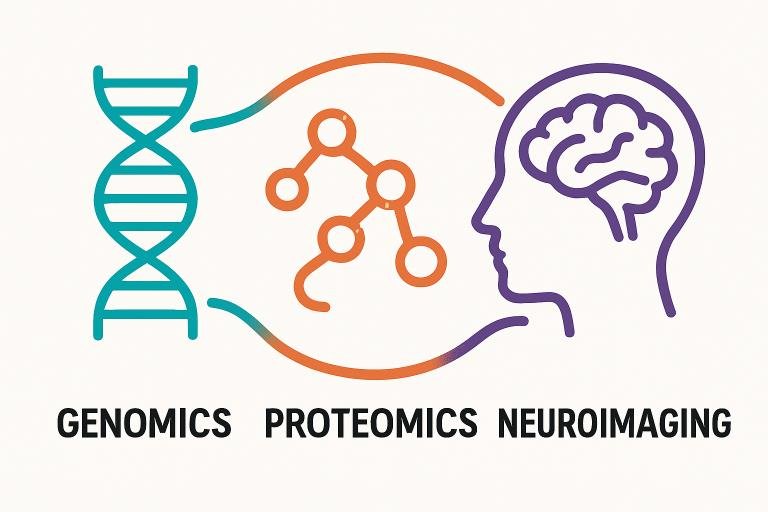
Rapid progress in “multi-omics”—the combined analysis of genomics, proteomics, and neuroimaging—has enabled new frontiers in diagnosing and stratifying complex conditions. Integrative methods such as the MINDSETS framework have demonstrated nearly 90% accuracy in distinguishing Alzheimer’s disease from vascular dementia, thanks to a comprehensive evaluation of genetic and molecular signals. Such approaches provide clinicians with multidimensional perspectives on disease, opening the door to more nuanced and targeted interventions.
Multi-omics data not only enhances diagnostic sensitivity but also helps reveal disease subtypes and their distinct biological pathways. As a result, treatments can be tailored more precisely than ever—offering the right intervention to the right patient at the optimal time. This evolution in diagnostic science is underpinned by global partnerships and open data sharing, exemplified by efforts from organizations such as the National Institutes of Health.
Plasmonic Biosensors
Disposable plasmonic assays are transforming biomedical diagnostics thanks to their speed, sensitivity, and cost-effectiveness. These biosensors use plasmonic-enhanced fluorescence to capture and measure biomarkers associated with various conditions, including infectious diseases, cancer, and cardiovascular disorders. The ability to detect multiple targets simultaneously makes plasmonic biosensors of immense value in resource-limited settings, where conventional lab infrastructure might be lacking.
Recent studies published by ScienceDirect highlight the role of plasmonic biosensors in streamlining diagnostics during public health emergencies, enabling point-of-care testing that bypasses complex instrumentation and provides clinicians with critical real-time data.
Magnetoelastic Biosensors
In the ongoing quest for accurate, scalable, and accessible diagnostics, magnetoelastic biosensors have emerged as a viable solution, particularly for antibody detection in contexts like COVID-19. These sensors exploit the resonance frequency of magnetoelastic materials to offer wireless, label-free, and rapid identification of specific biomolecules in plasma. Their chief advantages are cost-effectiveness and versatility, making them suitable for mass screening and home-based testing.
Such innovations are setting the stage for decentralized healthcare, as magnetoelastic technologies can be adapted to track other disease markers and provide ongoing patient monitoring between clinical appointments.
Quantum Sensing
Quantum sensors—particularly those based on nitrogen-vacancy centers in diamonds—represent a leap forward in molecular diagnostics. These ultra-sensitive devices can detect individual molecules of viral RNA, which is pivotal during epidemics and pandemics. Unlike established nucleic acid tests, quantum sensors offer rapid detection with minimal sample preparation and a dramatically reduced false negative rate.
As quantum biosensing matures, it is expected to underpin a new generation of diagnostics, with applications ranging from infectious disease surveillance to cancer genotyping and personalized medicine strategies.
Precision Diagnostics
Personalized medicine hinges on precision diagnostics—leveraging a patient’s genetics, lifestyle, and environmental risk factors for early detection and tailored treatment planning. The integration of high-throughput sequencing and bioinformatics enables accurate risk prediction and disease prevention, particularly in oncology and rare inherited disorders. This individualized approach leads to more effective therapies, minimized side effects, and overall better patient outcomes.
Major advances in this realm have been chronicled by expert panels, such as the American Association for Cancer Research (AACR), which highlights the transformative effects of precision diagnostics in clinical practice.
Artificial Intelligence in Diagnostics
AI and machine learning are accelerating the pace and accuracy of medical diagnostics. Sophisticated algorithms are now capable of interpreting medical images, predicting disease risk from complex datasets, and even identifying early-stage illnesses ahead of traditional clinical methods. AI-driven platforms also empower telemedicine, providing practitioners with instant diagnostic insights and improving access to specialized care.
Machine learning isn’t just expediting diagnostic workflows; it is broadening the capabilities of clinicians by continuously learning from real-world patient data and adapting to emerging disease patterns. For instance, Microsoft’s AI Diagnostic Orchestrator (MAI-DxO) has demonstrated superior performance in diagnosing complex medical cases compared to human doctors, achieving an 85% accuracy rate in a study analyzing 300 challenging cases.
Interdisciplinary Research
The future of diagnostics depends on collaboration across scientific disciplines. Notably, geoscientists’ use of isotopic analysis for non-invasive cancer screening exemplifies how techniques developed outside of medicine can unlock new possibilities in healthcare. Combining expertise from engineering, computational biology, materials science, and medicine paves the way for disruptive tools and methodologies that can be adapted for patient benefit.
Interdisciplinary research environments foster creative problem-solving and facilitate the faster translation of laboratory breakthroughs into clinical solutions.
Conclusion
Diagnostic science is undergoing a renaissance, with technologies like multi-omics analysis, cutting-edge biosensors, quantum detection tools, precision medicine, AI, and interdisciplinary innovation converging to create more effective, swift, and accessible healthcare solutions. As these discoveries move from research labs to real-world practice, they bring the promise of earlier interventions, improved outcomes, and a brighter future for patients everywhere.